The weed that knows when you need it
- Roland Koronya


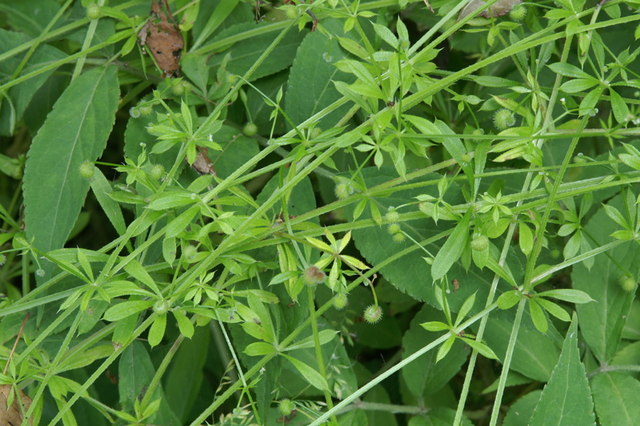
There is a weed that grows in almost every British hedgerow, ditch, and garden edge at this precise moment of year.
And it will, if you brush past it without paying attention, attach itself to your coat sleeve with a patience that borders on the personal.
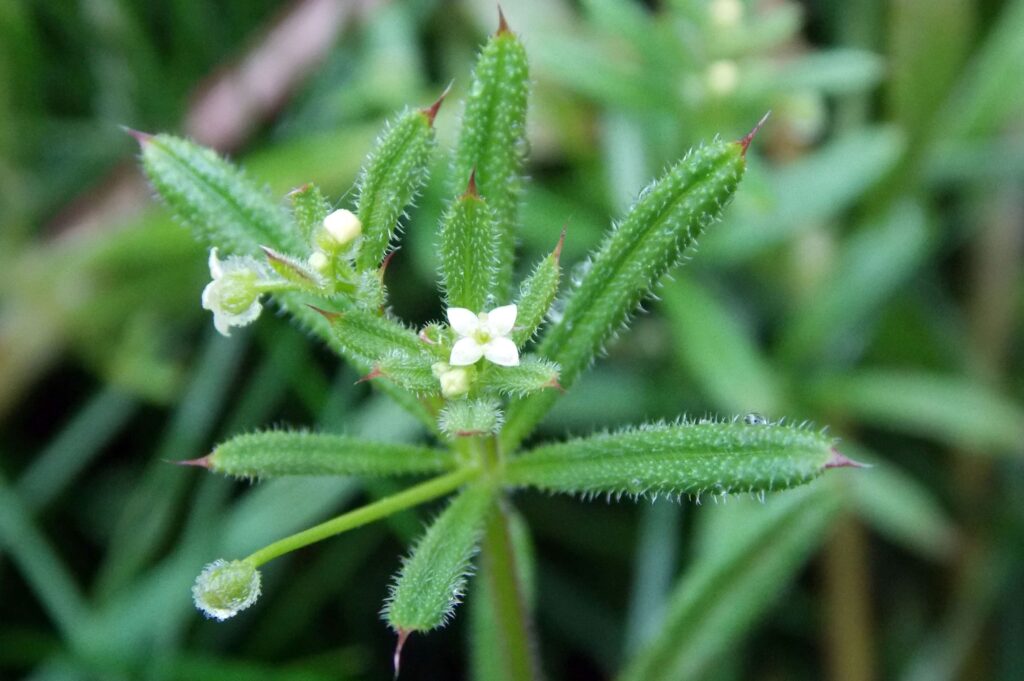
Cleavers. Galium aparine. Sticky Willy. Goosegrass. A plant so unremarkable in appearance, so thoroughly classified as a nuisance, that most people spend their entire lives removing it from their trouser legs without once considering what it might be for.
Which is, in a way, exactly the point.
The Timing
Here’s what’s worth noting about cleavers.
It doesn’t emerge in May when the hedges are full and the weather has decided to cooperate. It comes now—in the cold, uncertain weeks of early March, when the ground is still reluctant and most plants haven’t yet committed. Cleavers is already here, whorls of sticky leaves reaching upwards through last year’s debris, arriving at precisely the moment when the body needs it most.
This is not coincidence.
It is, in the vitalist herbalism tradition, exactly how plants are understood to operate: as intelligent presences shaped by and responsive to the same seasonal patterns that shape us. The herbalist’s task isn’t to extract and isolate—it’s to read the relationship between what’s emerging outside and what’s asking to shift inside.
And what cleavers is responding to, in March, is winter stagnation.
What Winter Does
Consider what several months of cold and contracted living does to the lymphatic system.
Unlike the cardiovascular system, the lymph has no dedicated pump. It moves through the action of breath and muscle and activity. In winter, when we’re less active, eating heavier foods, spending more time indoors and compressed against ourselves, lymphatic fluid can slow to something approaching stagnation.
The result shows up quietly.
Swollen glands that linger too long after a winter cold. A skin that looks a little dull and thick. A heaviness in the body that isn’t quite illness but isn’t quite vitality either.
This is the tissue state that cleavers specifically addresses.
How It Works
Its primary actions: lymphagogue and alterative work together as a kind of gentle housekeeping for the body’s inner water system.
As an alterative, it restores proper function gradually, supporting the body’s elimination pathways: the kidneys, the skin, the lymph. As a lymphagogue, it encourages the movement of stagnant lymphatic fluid, easing the congestion of a system that has been running slowly for months.
Cleavers is working on the “inner waters” of the body: the lymphatics, the urinary tract, and the fluid channels that together maintain the body’s internal environment. Its energetic character is cooling and gently moistening in the short term, with a drying quality that works over time to resolve dampness and stagnation.
For a body that has been running cold and slow through winter, this is a precision fit.
What It Tastes Like
There is also the matter of its taste.
Cleavers is mildly salty (a quality that speaks to its mineral richness) and fresh and green in a way that immediately communicates something leafy and alive. This is an herb that wants to be taken fresh, in the way that March itself is something to be taken fresh: a little raw-tasting, a little bracing, with something unmistakably alive at its core.
The simplest preparation is a cold infusion made overnight with fresh cleavers. A handful suspended in a jar of cool water, left on the kitchen shelf from evening to morning. Cold water draws out its mucilaginous and mineral qualities better than heat, and the resulting liquid is mild, green, and gently clarifying.
A quart drunk over the course of a day is a reasonable spring practice. It is one of the primary spring tonic herbs for exactly this kind of transitional support. Those who harvest it straight from the hedgerow can eat young spring shoots as a trail nibble, or blend fresh herb into a succus (a preserved juice) using equal parts fresh plant juice and honey or vegetable glycerine.
What It Isn't
What it is not, notably, is dramatic.
Cleavers is gentle medicine. It does not force or purge. It opens gently, coaxes, restores normal movement to systems that have contracted. This is the vitalist principle at its most modest and most accurate: that the body knows how to do what it needs to do, and sometimes what it requires is simply the right nudge at the right moment.
The Calibration
March is, in this sense, cleavers season.
Not because someone decided to classify it that way, but because the plant and the season are perfectly calibrated to each other. One moves slowly, uncertainly, carrying the residue of what came before. The other arrives quietly and sticks around until you pay attention.
The body, given the chance, knows how to read this.
Learning to read it alongside the plants, to understand what stagnation looks like, why lymphatic movement matters, which herbs suit which seasons and which constitutional patterns is the kind of grounded, patient knowledge that forms the heart of our Herbal Foundations Course. It’s a place to begin learning what the hedgerow has always been trying to tell you, starting with the weed that’s clinging to your sleeve right now.