The Red Globes: How Britain Forgot the Medicine It Once Sent Schoolchildren to Harvest
- Roland Koronya


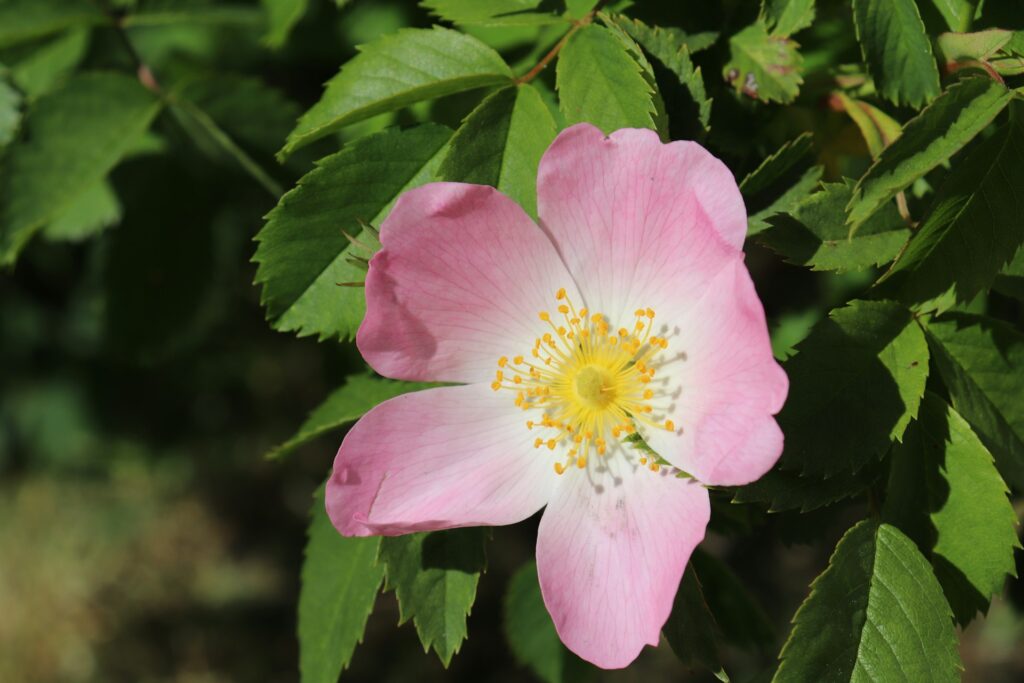
In late September, driving almost anywhere in rural England, you will see them.
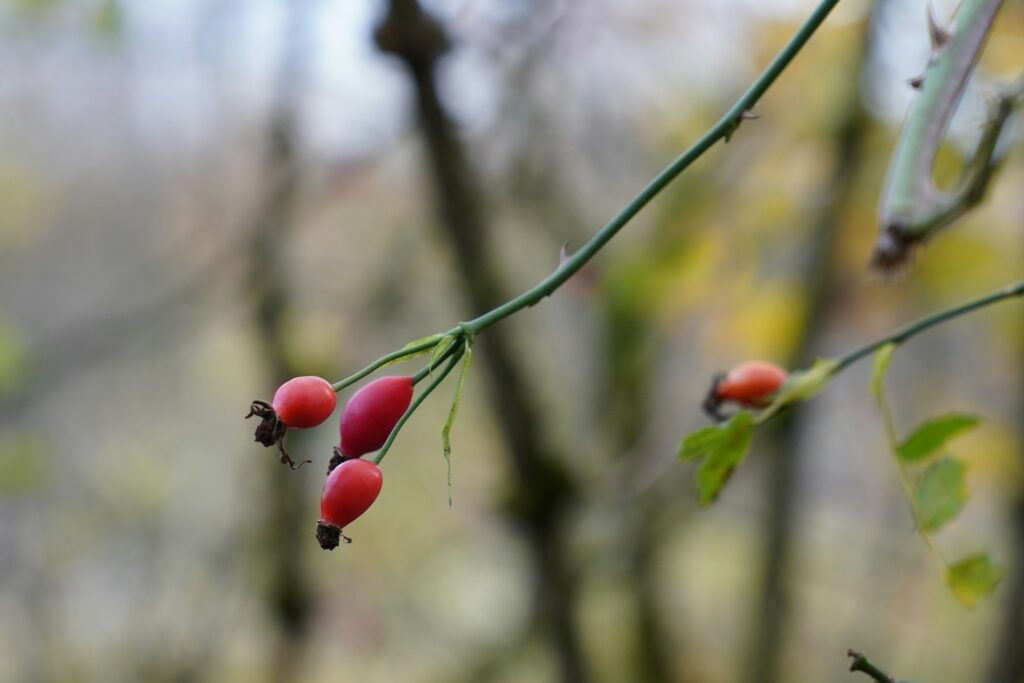
Little red-orange globes, strung along the hedgerows like something a child might have hung there, luminous against the browning leaves, plump and waxy and quietly urgent.
The hips of the dog rose. Rosa canina. Holding the last warmth of the year in their skin.
Most people drive past them. Some stop to look.
Almost nobody picks them.
This is strange, when you consider the history.
The Schoolchildren
During the Second World War, when imports of citrus fruit dried up, the British government organised mass rosehip harvesting campaigns.
Schoolchildren collecting hips from hedgerows across the country. Millions of bottles of rosehip syrup, distributed as a source of vitamin C. Hundreds of thousands of people knew what those red globes were for.
The dog rose, canina, the humble, the wild, the one that scrambles over every hedge and woodland margin in Britain, is one of the oldest documented medicinal plants on these islands. John Gerard wrote about it in 1597. Nicholas Culpeper in 1652. The Anglo-Saxons before them, in herbal manuscripts that predate the Norman Conquest.
A plant that has been understood, harvested, and used continuously on this island for over a thousand years.
And now we drive past it.
The Mistake
Here is the thing most people who think they know rose do not know.
The petal and the hip are almost nothing alike as medicine. They operate on different tissue states, through different constituents, with different energetic characters.
Understanding this distinction is what separates a genuine knowledge of rose from the vague cultural sense that it is a flower for sentiment.
Two medicines. One plant. Almost entirely different.
The Petal
The petal is cooling, drying, astringent, and nervine.
It tastes subtly bitter, pungent, and astringent, a complex combination that places it firmly in a cooling, drying energetic profile. Tannins are its primary structural constituent, alongside volatile oils, those aromatic compounds responsible for the scent that has made rose one of the most valued aromatics in human history.
These volatile oils have a direct action on the nervous system: calming, opening, and moving pent-up or held-in emotion.
This is rose’s most distinctive territory, and its most ancient.
Rose has been associated with the heart, both the physical organ and the emotional centre, since antiquity. In Ayurveda, it is considered medhya: improving to the intellect and calming to both heart and mind, used to nourish the nerves and manage anxiety and depression over the long term.
The specific clinical picture is this: the person for whom emotional suppression has become physical. Grief held as tension in the chest. Restricted breathing. The particular exhaustion that comes from carrying something without being able to set it down. The heart that has closed around something painful and cannot easily release it.
Rose opens what has clenched.
It is specific for grief, for heartbreak, for the person who describes feeling emotionally frozen or shut down. This is not romantic language in the botanical sense. It describes a recognisable presentation in which something has been held too long and the body is showing the cost.
On the skin, the same cooling, astringent, anti-inflammatory action addresses hot, inflamed conditions like eczema, or psoriasis, where heat and irritation need to be cooled and tissue toned simultaneously. Applied as rosewater or infused oil, it is one of the oldest and most effective herbal skin preparations, documented from the Roman Empire to the present day.
For the female reproductive system, rose is an astringent and a tonic, specifically useful for excess patterns including heavy menstrual bleeding and postpartum recovery. Paired with lady’s mantle or raspberry leaf, it forms part of the classical British tonic tradition for the post-birth body, documented by both Parkinson and Culpeper.
The Hip
The hip is something else entirely.
Cooling and astringent at the level of the tannins it shares with the petal, but also warming, nourishing, and nutritive through its dense concentration of vitamins, carotenoids, flavonoids, and organic acids.
Rosehips are extraordinarily rich in vitamin C, far richer than oranges, which is precisely why the wartime government reached for them. But their medicinal depth extends well beyond ascorbic acid.
The hip tastes sour.
In the energetic tradition, sour-tasting plants consistently demonstrate affinity for the cardiovascular system and the liver, reducing heat and inflammation in the vasculature, supporting the liver’s metabolic work. The flavonoids in the hip have well-documented anti-inflammatory and cardiovascular-protective effects.
Clinical trials have investigated rosehip preparations for osteoarthritis with positive results. The anti-inflammatory mechanisms documented in this research, suppression of NF-κB pathways, reduction of inflammatory markers, are relevant to cardiovascular health as much as joint health.
This is autumn medicine. Harvested after the first frosts, when the tannins have softened and the sugars have concentrated. Warming in net effect despite the cooling of its tannins. A plant that holds the heat of summer within an autumn coat.
The hip is restorative and anti-inflammatory in the way that a nutritive food is: not dramatically cooling or warming, but stabilising. It suits the depleted body that needs to rebuild slowly, taken daily as a quiet circulatory tonic over months, as much as it suits the acute inflammatory episode.
This is not the medicine of the jam jar. This is a serious cardiovascular and anti-inflammatory herb that has been growing on every hedgerow in Britain since before anyone thought to write it down.
The Flower and the Thorns
A soft, fragrant, open flower surrounded by thorns. Strong enough to protect its delicacy, not so armoured as to make approach impossible.
Rose suits those who have lost the ability to protect themselves from emotional harm, the person too open, too easily affected, too quickly overwhelmed. And it suits those who have overcompensated, the grief held rigid, the heart defended past the point where it could also receive.
Both patterns sit within rose’s territory because the flower itself embodies both qualities simultaneously.
The hip carries its own signature: a ripening that happens after the flower has gone, after summer has passed, containing within a protective outer skin seeds wrapped in fibrous hairs, hard to reach, but worth the effort.
It is autumn medicine in every sense.
The Preparations
Rose petal tea: Dried petals, steeped covered for ten minutes. Subtle, faintly floral, barely astringent, which is partly why rose works better in combination than as a simple. It pairs naturally with hawthorn for the heart, with lemon balm for the hot and anxious nervous system, and with lady’s mantle for the female reproductive system.
Rosehip syrup: The wartime preparation. Fresh hips simmered in water, strained through fine cloth, the fine hairs around the seeds are irritating and must be removed completely, then honey or sugar added and reduced. Stored in the fridge, it keeps several weeks. Taken by the spoonful through winter, providing the anti-inflammatory, nutritive, and immune-supporting qualities of the hip in entirely accessible form.
Rosehip infusion: Dried, deseeded hips steeped as tea, pleasantly sour, copper-coloured, excellent taken daily as a circulatory and anti-inflammatory tonic. Check that any dried rosehips purchased are properly prepared, with seeds and hairs removed.
Fresh petal in honey: A preparation as old as Ayurveda itself. Soothes oral and pharyngeal inflammation while the honey adds its own antibacterial quality.
What the Hedgerow Remembers
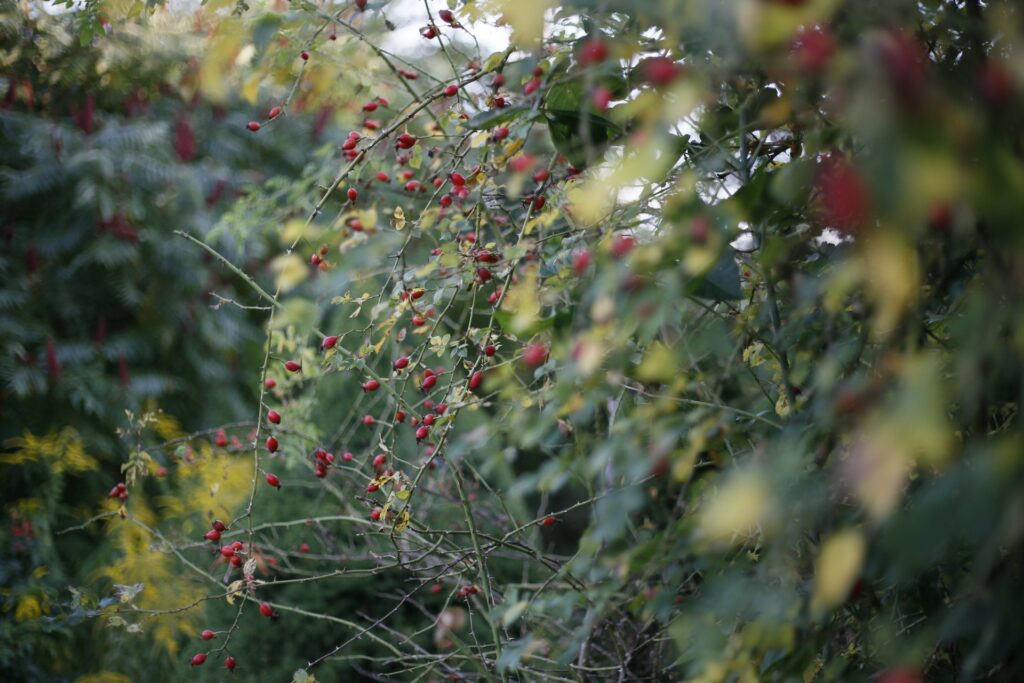
The dog rose grows on every hedgerow in Britain.
Petals available through June and July. Hips from September onwards, deepening in colour and flavour after the first frosts. No plant is more accessible. No plant is more overlooked.
This is worth sitting with.
One of the most historically continuous medicines in the British tradition, mobilised nationally during wartime, described by every major British herbalist from the Anglo-Saxons to Culpeper to Gerard, has been reduced in contemporary consciousness to a jam ingredient and a wartime memory.
The schoolchildren who filled those bottles in 1942 understood something their grandchildren do not: that those red-orange globes strung along the hedgerow in September are not decoration. They are medicine.
They have always been medicine.
The hedgerow has not forgotten.
We have.