The May Mystery: Why Hay Fever Begins in October
- Roland Koronya


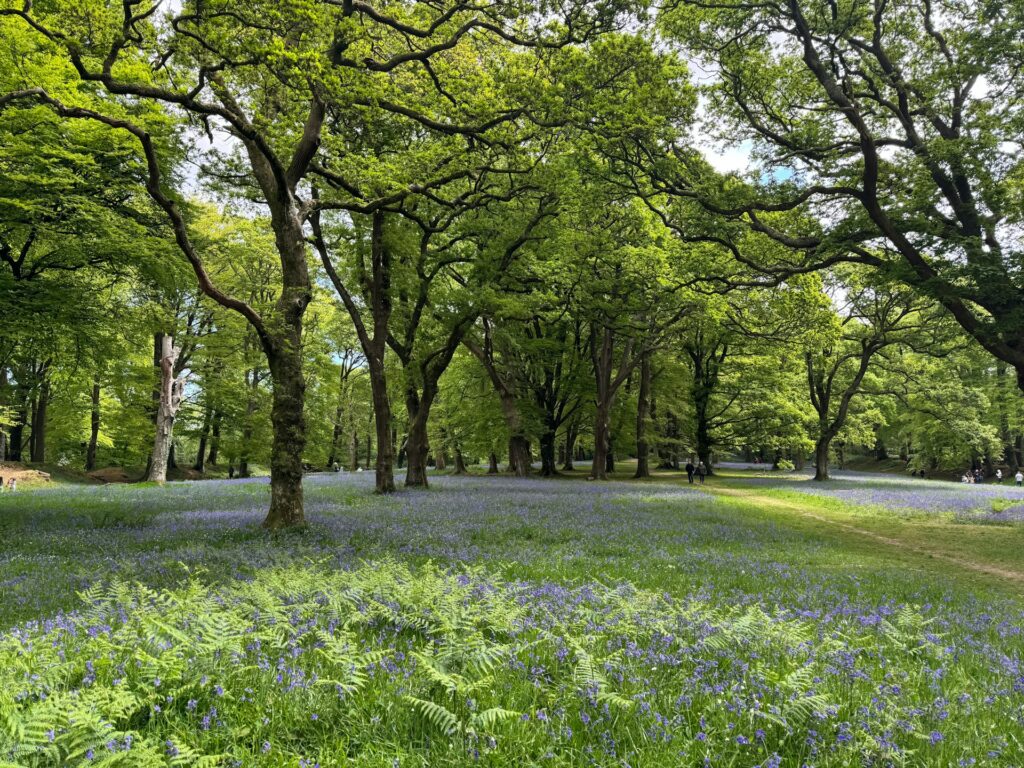
Every May, something happens in Britain that is so widespread it has almost stopped registering as strange.
Millions of people step outside into the warmest, greenest, most alive weeks of the year, the hawthorn in blossom, the grass long and soft, the light lasting almost into evening and their eyes begin to itch. Their nose runs. Their throat tightens.
They return indoors, draw the windows against the pollen, and accept that this is simply what May does to them now.
This has become, somehow, an ordinary thing.
But here’s what’s worth pausing on: the assumption buried in most people’s relationship with hay fever goes largely unexamined. The assumption that pollen is the cause.
Pollen is the trigger. The cause is something that built up long before the grass flowered.
The Bucket
Imagine the body has a tolerance of a hundred units for inflammatory stimulus before symptoms appear.
Over winter, that bucket slowly fills.
A food intolerance here. Chronic low-grade stress there. A gut that has been slightly permeable since a course of antibiotics two autumns ago. A pet sleeping in the bed. A diet higher than it should be in processed seed oils.
None of these, alone, crosses the threshold.
Together, they fill the bucket to ninety-five.
Then May arrives, the grasses release their pollen, and the body’s response is immediate and apparently disproportionate. Itching eyes, flooding sinuses, the relentless inflammation of hay fever—all apparently caused by the countryside doing what the countryside does in spring.
But pollen didn’t cause this. Pollen was the last five units.
The bucket was already almost full.
The Real Timeline
This framing is more than a useful metaphor. It is, in the vitalist view, a fundamentally different question about what treatment means.
If the bucket was filled across the other eleven months of the year, then addressing hay fever only during its acute presentation in May is addressing the overflow, not the container.
The herbs and strategies that help most are the ones deployed long before the pollen count rises.
Which raises an obvious question: What fills the bucket?
Chronic Stress
Chronic stress tops the list.
Not merely the psychological pressure of deadlines and crowded commutes, but the sustained physiological state that compromises cortisol regulation and, in doing so, steadily undermines the body’s capacity to modulate inflammation.
An immune system operating under chronic stress is one that cannot regulate its own reactivity well. When the adrenals have been pushed hard all winter, the inflammatory response in spring has less capacity to stay calibrated.
The Leaky Gut
A significant proportion of immune activity is coordinated in the intestinal tract.
When the gut wall becomes more permeable than it should be (from antibiotics, from pro-inflammatory dietary patterns, from chronic stress acting on the gut-brain axis), substances that should remain in the digestive tract enter the bloodstream and provoke immune responses they have no business provoking.
The immune system, already busy responding to what is leaking through the gut, has less tolerance when pollen season arrives.
The Missing Nutrients
The mast cells, the immune cells that release histamine, producing the characteristic symptoms of hay fever require specific nutrients to remain stable.
When those nutrients are depleted, mast cells become more easily triggered.
The modern British diet, even when superficially varied, frequently falls short in exactly the minerals and nutrients that regulate mast cell behaviour.
All of which is to say: by the time someone is sneezing in a field in May, they are dealing with the accumulated consequence of the previous year, not just the pollen in today’s air.
Roots Before Flowers
The most important herbs for hay fever, in the vitalist approach, are not the ones you reach for when your eyes are streaming.
They are the ones that have been quietly working since February.
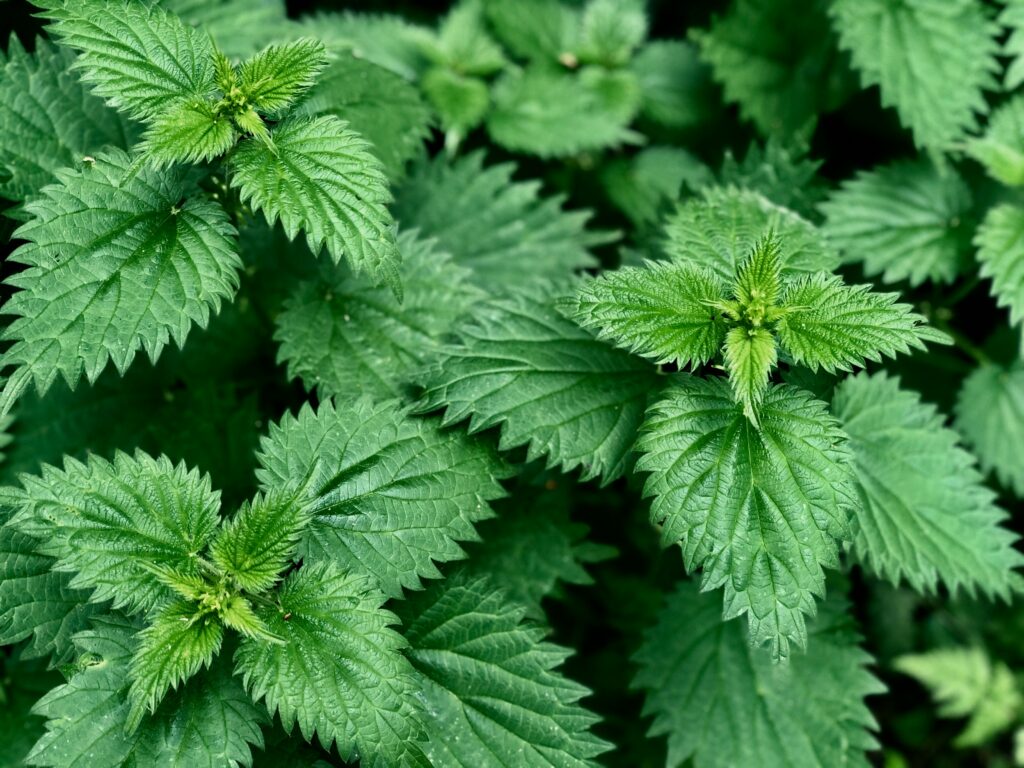
Nettle is the cornerstone.
Freeze-dried nettle leaf is the most effective preparation for acute allergy management, as the freeze-drying process preserves the specific compounds that stabilise mast cells and inhibit histamine release. But nettle’s deeper value is as a nutritive tonic taken consistently across late winter and early spring: nourishing depleted tissues, supporting kidney function, and delivering the minerals that the immune system needs to stay regulated.
A long overnight infusion (a full ounce of dried leaf in a quart jar, left to steep through the night) is the form that delivers the most mineral density. Taken daily from January onward, it changes the picture considerably by the time May arrives.
Plantain is the most underused British native for allergic reactivity.
Growing at the edge of every path and lawn in the country, plantain is a mast cell stabiliser of quiet effectiveness, cooling, slightly astringent, with a particular affinity for the mucous membranes of the upper respiratory tract. It works specifically for acute reactions, including the skin swelling from stings and bites, which share the same histamine pathway as hay fever.
A simple tea, or fresh leaf taken regularly through May, is a reasonable and entirely accessible addition to the seasonal strategy.
Elderflower opens now across British hedgerows, and its timing is instructive.
As an anticatarrhal and gentle diaphoretic, elderflower has a specific affinity for the upper respiratory tract in its hot, reactive, congested state. The runny eyes and streaming sinuses of hay fever are an acute expression of heat and reactivity in exactly the tissues that elderflower addresses.
A tea of fresh or dried flowers (harvested now, before the blooms begin to brown) taken two or three times daily through the peak pollen weeks offers cooling, anticatarrhal support that works with the body’s attempt to clear rather than suppressing it.
Hibiscus is not a British native, but it is widely available and worth including.
It works specifically as a mast cell stabiliser with a cooling energetic, well-suited to the heat and reactivity of an over-stimulated immune response. Pleasant as a cold infusion on a warm May day, and constitutionally appropriate for the hot, reactive pattern that acute hay fever represents.
October Through March
So we return to our question: When should you actually be addressing hay fever?
Not in May, when you’re already sneezing. In October through March, when the bucket is filling.
This means supporting gut integrity. Reducing inflammatory dietary patterns. Tending the nervous system through winter. Building the nutritive foundation that stable mast cells depend on.
Nettle infusions. Bitter tonics for the liver. Attention to the gut. Consistent sleep and nervous system support through the darker months.
These are dull interventions by the standards of acute allergy management.
They are also the ones that actually address the root.
The Pattern
Hay fever is not a random affliction and May is not the problem.
It is the month when a pattern that has been quietly developing becomes visible. The body has been trying, across the cooler months, to manage an accumulating load (inflammatory dietary choices, gut vulnerability, stress, depletion) and when the pollen arrives, the tolerance is simply exceeded.
Learning to read seasonal patterns this way, to see May’s symptoms as the late consequence of October’s choices is one of the most practically useful shifts that herbal thinking offers.
The most alive weeks of the year don’t have to be the weeks you spend indoors with the windows closed.
But the work begins long before the hawthorn blossoms.