The Lung That Forgot: Elecampane and the Medicine of Slow Repair
- Roland Koronya


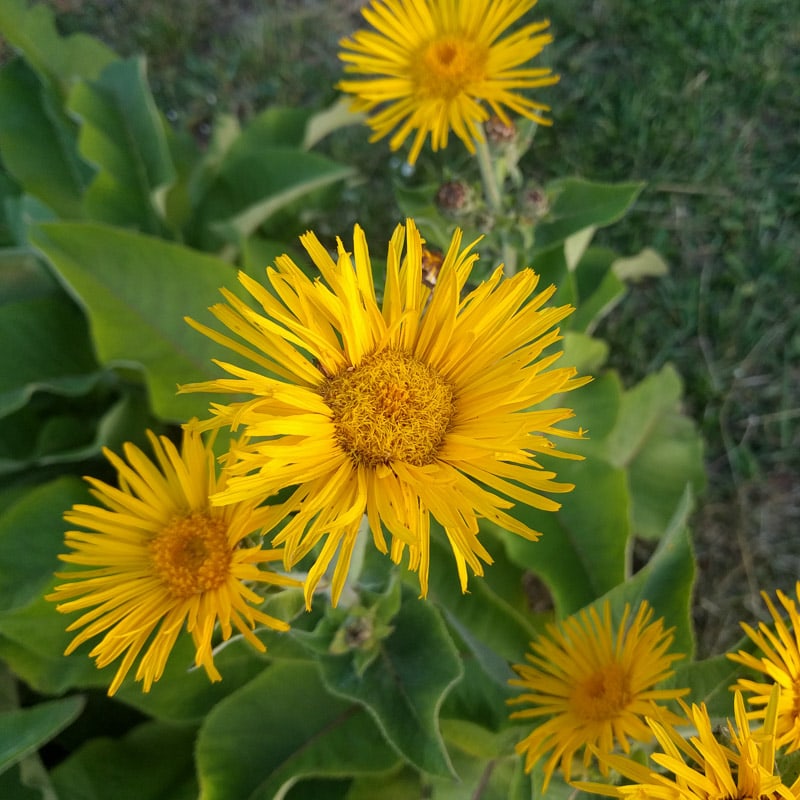
In the mythology surrounding this plant, Helen of Troy wept, and where her tears fell elecampane sprang from the earth.
The Romans named the species helenium for her.
The Anglo-Saxons, who had no particular interest in Trojan mythology, simply called it elfwort, one of the sacred herbs, a plant with an older, stranger power than the Greeks had given it credit for.
Both names have survived. The plant has outlasted the civilisations that named it.
Elecampane grows to shoulder height and sometimes beyond, with leaves so broad that a single one can span a forearm, and flower heads of intense, clear yellow that open in late summer like small unruly suns. It looks, to the uninitiated, like something that arrived from somewhere tropical and never quite left.
In fact it has been in Britain since at least 995 AD.
It does not naturalise freely across the open countryside. It persists, reliably and for centuries, near the human settlements and gardens that first grew it. Find an old cottage garden, a neglected physic plot, a roadside bank beside a church ruin or abandoned farmhouse, and there is a reasonable chance elecampane is there. Architectural. Self-sufficient. Quietly extraordinary.
Most people who see it do not know what they are looking at.
This is the beginning of the problem.
The Root
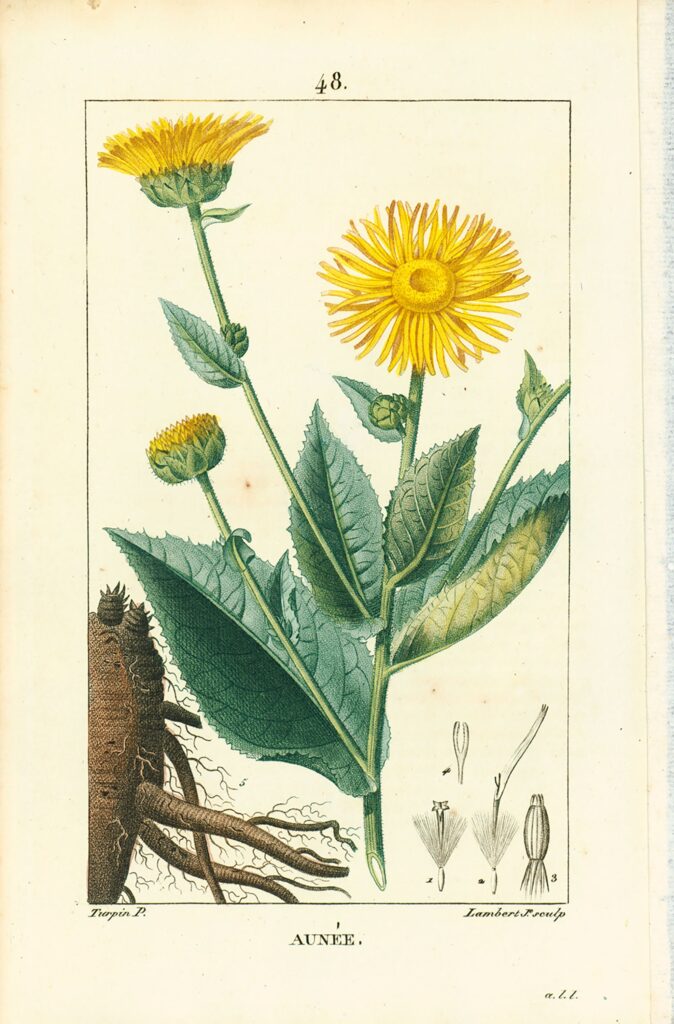
Dig elecampane root in autumn, from a plant in its second year, and the smell alone is instructive: pungent, resinous, camphoraceous, the volatile oils announcing themselves immediately.
Taste a small piece of the fresh root and several sensations arrive at once.
A sweetness from the inulin. A bitterness from the sesquiterpene lactones. And a sharp, warming, aromatic heat from the volatile oils that spreads through the chest as you breathe after swallowing.
This is a root doing several things simultaneously, and the taste tells you what they are. The bitterness announces liver and digestive stimulation. The aromatic heat announces the stimulant expectorant action, those volatile oils driving heat and circulation into the respiratory mucosa, breaking up what has settled there.
And the sweetness of the inulin announces something that changes everything
The Paradox
Volatile oils that stimulate the respiratory mucosa have a problem: stimulation, applied to already-irritated tissue, tends to irritate further.
A purely warming, stimulating respiratory herb drives heat into the lung and risks aggravating the very tissue it is trying to help.
Elecampane solves this from within itself.
The inulin (a prebiotic polysaccharide from which the compound’s name is actually derived, Inula giving us inulin) is demulcent. Soothing. Tissue-coating. It coats the same mucosa that the volatile oils are stimulating, preventing the aromatic heat from becoming irritation.
Stimulating and soothing simultaneously.
The plant contains both its action and the thing that makes its action safe. This is the central paradox of elecampane, and it is the key to understanding why it does what it does.
The Boggy Lung
Elecampane addresses a precise tissue state: cold/depression giving way to damp/stagnation in the respiratory system.
Not the acute, hot, inflamed lung of pneumonia. Not the dry, irritated, tickling cough of atrophy.
Elecampane is for the lung that has become boggy.
The chronic, heavy, mucus-laden respiratory pattern that settles in and refuses to shift. The cough that has been present for weeks. The chest that feels damp and congested every morning. The person who seems always to be on the edge of a cold, never fully well, never quite ill enough to take to bed, the respiratory system functioning at a permanently reduced level.
This is the pattern of chronic bronchitis. Of occupational lung exposure. Of the smoker trying to clear a chest that has accumulated damage over years. Of the post-viral respiratory lingering that modern medicine has recently begun to take more seriously.
It is, not coincidentally, a pattern that British damp and British winters reliably produce.
The Word That Changes Everything
Here is where elecampane becomes something rarer than a good respiratory herb.
Most respiratory herbs are chosen for acute situations. They address the cough that appeared this week, the infection of this winter, the fever of this illness. Elecampane does this too.
But it is also a respiratory trophorestorative.
This term appears infrequently in Western herbalism, and it is worth pausing on. A trophorestorative does not merely address an organ’s acute symptoms. It restores the organ’s structural and functional integrity over time. It rebuilds.
In the case of elecampane, this means it does not simply expel mucus from congested lungs. It re-establishes proper mucosal secretions. It strengthens the lung tissue itself. It clears the chronic patterns of damp stagnation that have settled into the respiratory system after repeated insult.
This is a category distinction with real practical implications.
An acute respiratory herb is taken for a week and then stopped. A trophorestorative is taken over months, in small consistent daily doses, while the body gradually rebuilds what has been depleted or damaged.
The distinction is the difference between clearing today’s congestion and restoring the lung’s capacity to not become congested in the first place.
What the Tradition Knew
Elecampane’s respiratory reputation is not folklore dressed up as medicine.
Alantolactone (one of the primary sesquiterpene lactone constituents) is anti-inflammatory, mucus-reducing, and immune-stimulating. The volatile oils drive expectoration by directly stimulating the respiratory mucosa. The inulin coats and soothes the same mucosa as the volatile oils do their work.
The combined result simultaneously stimulates the productive cough, reduces the excess mucus production, soothes the inflamed tissue, and supports immune activity in the lungs, a range that few single herbs can honestly claim.
And there is this: in vitro evidence that elecampane root preparations kill tuberculosis bacteria.
Historically, this was one of its most significant applications. A 2022 Irish research paper confirmed antimicrobial sesquiterpene lactone content in traditionally prepared root extracts, grounding the traditional preparation method in modern analytical evidence.
This is not a herb that requires modern science to justify its use. But where the science has looked, it has confirmed what the tradition already knew.
The Lung and the Gut
There is a connection here that is not incidental.
The same volatile oils that drive expectoration in the lungs act as digestive stimulants in the gut, increasing bile flow, improving appetite, addressing the damp stagnation that produces poor digestion alongside poor respiratory function.
In the vitalist tradition, the lung and the large intestine share a correspondence. They are the two primary organs of elimination, the routes through which the body expels what it no longer needs.
Elecampane addresses both in the same clinical picture.
The patient who arrives with chronic respiratory congestion and chronic digestive sluggishness is often presenting two faces of the same pattern. Elecampane addresses both faces simultaneously, not because it happens to be good for two unrelated things, but because in this framework they were never unrelated to begin with.
Preparation
Harvest the root in autumn, from second-year plants, when the energy of the plant has returned below ground. First-year roots contain insufficient inulin and volatile oil to be clinically useful. Elecampane spreads readily and can be divided, so harvesting some roots while leaving others does not compromise a healthy stand.
The root requires decoction (simmering, not infusion) to extract both the water-soluble inulin and the volatile oil fraction. Simmer one to two teaspoons of dried root per cup for fifteen to twenty minutes in a covered pot. The result is amber, strongly aromatic, distinctly bitter, and noticeably sweet underneath.
It is not unpleasant. But it is unmistakably medicinal.
The taste is challenging enough that many benefit from combination with more palatable herbs (thyme, elderberry, licorice) which also happen to be synergistic for the same respiratory pattern. The classic wet cough syrup uses exactly this logic: elecampane decocted with ginger, horehound, and thyme, finished with raw honey.
As a tincture, fresh root at 60–70% alcohol captures the aromatic and bitter profile and is the preparation of choice for long-term trophorestorative use, where a daily decoction is impractical. But note: since inulin is water-soluble, only the decoction captures the prebiotic, demulcent inulin layer fully. The tincture delivers the volatile oils and bitter compounds; the decoction adds the soothing inulin. Both have their place.
For acute fever with the cold/damp pattern, elecampane works as a hot decoction with elderflower and yarrow. For the long-term course, three to six months for a genuinely depleted respiratory system, a daily tincture dose in warm water, paired with thyme tea and attention to the cold, damp conditions that created the pattern.
Avoid in pregnancy. Those with Asteraceae allergy should approach with caution.
The Baseline
There is a quality to chronic respiratory diminishment that is easy to normalise.
The person who has not taken a full breath in years, not dramatically, not in any way they would describe as breathlessness, simply breathes shallowly, carries a slightly congested chest, catches every winter cold going, and considers this ordinary.
It has been this way for so long that the diminished version has become the baseline.
Elecampane is the herb that questions that baseline.
Not by suppressing the cough or drying the mucus or opening the bronchioles pharmacologically, but by addressing the pattern that produced the diminishment in the first place, and rebuilding the lung’s capacity to function fully from the inside out.
This is slow work. It takes months, not days.
But it is the kind of work that produces a change the person notices gradually and then suddenly: they are breathing more fully, catching fewer colds, waking without the chest heaviness that became so familiar they stopped noticing it.
The plant that grows beside abandoned farmhouses and forgotten physic gardens, architectural, self-sufficient, mistaken for something tropical by everyone who walks past it has been offering this the whole time.
It knows, perhaps better than we do, that some repairs take time.