The Herb That Won’t Let You Hurry: Lemon Balm and the Body Stuck in Overdrive
- Roland Koronya


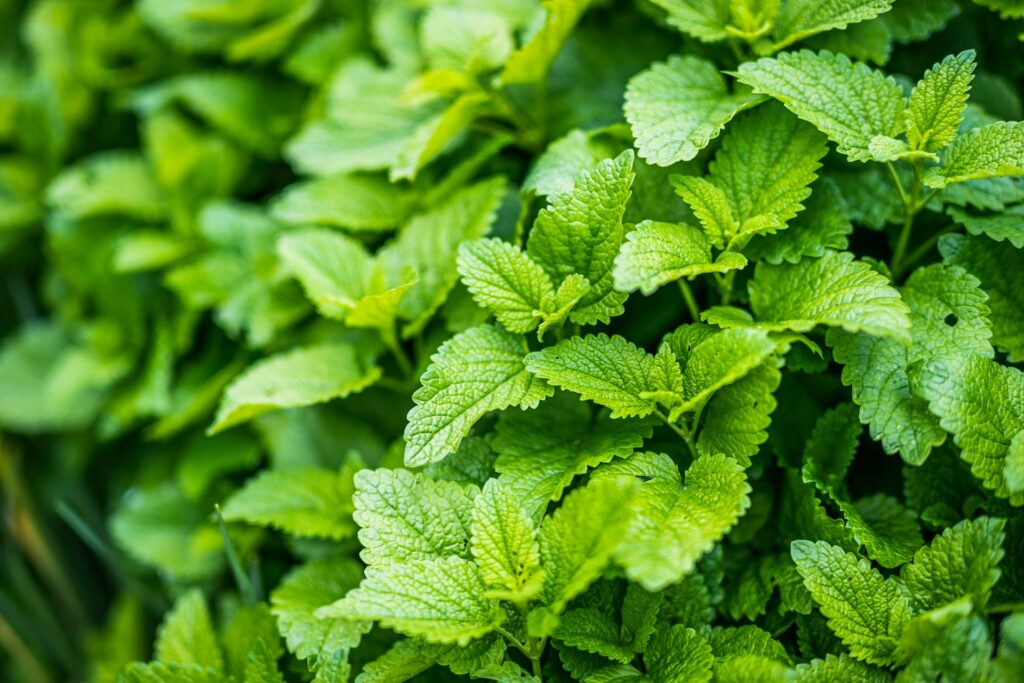
Pick a leaf of lemon balm and crush it gently between your fingers.
The scent that rises is immediate and disarming: clean, bright, unmistakably citrus, but warmer than a lemon, rounder somehow, as if someone had taken the sharp edge off and replaced it with something almost kind.
It is difficult to smell lemon balm and feel urgency.
The plant does not allow it.
This is not incidental. In the language of herbal medicine, a plant’s most immediate sensory qualities are its first communication, a direct expression of what it does and who it is for. The scent of lemon balm, arriving before you have consciously decided what to make of it, is performing precisely the action the herb itself performs in the body.
Before we name what that action is, consider who might need it.
The Person
This is the herb for the person who cannot quite stop.
The one whose thoughts run ahead of their body. Whose stomach turns over before the difficult conversation. Whose heart races when the inbox fills. Not crisis, exactly, just the low, sustained hum of a system running fractionally too fast, for fractionally too long.
It is, in other words, a herb for a great many people in Britain right now.
The Unusual Taste
Lemon balm tastes sour.
This is worth pausing on, because sourness is genuinely uncommon in the Western materia medica. Most herbs are bitter, pungent, sweet, or astringent. The sour taste tends to arrive in berries and fruits rather than leaf medicines.
In the energetic tradition, the sour taste signals cooling action and a particular affinity for the cardiovascular system. It sedates heat. It draws things inward and downward. It is the taste of something that slows a racing system without pushing it into collapse.
Beneath the sourness runs a distinct aromatic quality, the volatile oils that give the plant its fragrance. These are carminative: they increase circulation to the digestive tract, ease gas and bloating, and relax spasm in smooth muscles.
Sour and aromatic together is an unusual combination. It produces a herb of unusual range.
The Same Pattern in Different Clothes
Lemon balm addresses two tissue states that frequently occur together in the same person: heat/excitation and wind/tension.
Heat/excitation is the pattern of a system running hot: irritated, overactive, inflamed at the functional level. The nervous system generating anxiety rather than alertness. The heart beating fast when there is no physical cause. The digestion responding to stress before the mind has consciously registered it.
Wind/tension is the pattern of constriction: the gut that knots, the pore that won’t release, the muscle that won’t relax even when the threat has gone.
These seem like different problems. They are not.
The knotted stomach and the racing heart are the same pattern wearing different clothes. Both are expressions of a system that has been unable to return to baseline. Both respond to the same cooling, relaxing, antispasmodic action that lemon balm provides.
This is what the unusual combination of sour and aromatic is designed to address.
The Four Territories
The nervous system is lemon balm’s first and most established territory.
As a nervine relaxant, it eases anxiety, nervous tension, and that particular quality of mental agitation where thoughts will not settle. It achieves this without sedation, which matters more than it sounds. Lemon balm calms without weighing down, which makes it appropriate for daytime use in a way that heavier nervines like valerian cannot be.
It restores those who are overwrought and exhausted. Students. New parents. Anyone in the sustained middle distance of chronic low-level stress. Gentle enough for sensitive constitutions, which is why it is particularly well suited to children, pleasant-tasting enough not to require disguise, effective enough to make a genuine difference.
The digestive system is the second major affinity, and the connection to the nervous system is what makes lemon balm precise.
Nervous digestion, the stomach that responds to anxiety before the body has registered any physical cause, is one of the most common patterns in modern practice and one of the most direct indications for this herb. The carminative volatile oils ease gas, bloating, and cramping. The nervine action treats the underlying driver.
Lemon balm addresses both simultaneously. This is why it tends to work where other digestive herbs only partially help. They address the symptom. Lemon balm addresses the symptom and its source, at the same time.
The cardiovascular system receives lemon balm’s sour, cooling action through its influence on the vasculature and the heart itself.
The particular pattern is the anxious heart: palpitations, arrhythmias, a racing heartbeat that arrives not from physical exertion but from nervousness. The herbalist Matthew Wood identifies sweaty palms under stress as a useful indicator for this herb, pointing to a deeper cardiovascular involvement in the anxiety pattern.
Lemon balm relaxes the vasculature as it relaxes the gut and the nervous system. It is the same action, expressed in different tissues.
Febrile conditions benefit from the relaxant diaphoretic action.
Where fever creates a tense, hot, restless state, the person who cannot sleep, whose pores seem sealed, who cannot sweat, lemon balm releases that constriction. Hot tea amplifies this action considerably, since hot water itself is mildly diaphoretic and reinforces the direction of action.
The Antiviral Detail
Lemon balm’s antiviral activity is well documented, particularly through its essential oil content.
It supports the body through respiratory viral illness and is used topically for herpes simplex outbreaks.
This antiviral quality running alongside the relaxant nervine action makes it one of the most useful herbs available for a combination that modern medicine tends to handle as two separate problems: physical illness and the anxiety that tends to accompany it. Lemon balm handles both at once, from the same energetic foundation.
The Thyroid Twist
There is a detail about lemon balm that illustrates constitutional herbalism’s precision as clearly as anything in the materia medica.
Lemon balm offers symptomatic relief for patterns associated with hyperthyroidism: the nervousness, palpitations, digestive agitation, and insomnia that accompany a hyperactive state. The energetic picture of hyperthyroidism is precisely the heat/excitation and wind/tension pattern that lemon balm addresses.
But those with hypothyroidism should use it with care.
The same property that makes lemon balm useful in a hyperactive thyroid state, its mildly inhibitory effect on thyroid function, becomes a caution in the opposite condition.
The herb has not changed. What has changed is the pattern it meets. This is constitutional discrimination: the same plant doing different things to different bodies, depending not on the label of the condition but on the underlying energetic state.
A Note on Preparation
Fresh plant preparations are consistently preferred by experienced practitioners.
Lemon balm loses its medicinal volatile oils more readily than most herbs when dried. A fresh tincture made at 75–80% alcohol captures the full aromatic profile. Dried herb tea is still useful: steep one generous tablespoon per cup for fifteen to twenty minutes, covered, so the volatile oils do not escape with the steam.
In summer it makes an excellent cold infusion, a small handful of fresh leaves in cool water for thirty minutes produces something that tastes far better than the description suggests.
It combines naturally with linden for the heat/tension pattern in the cardiovascular system, with chamomile for nervous digestion in children, and with milky oats and skullcap for the depleted nervous system that is simultaneously agitated and exhausted.
The Herb of Our Times
There is a constitutional picture that lemon balm addresses with particular precision.
The person who runs warm rather than cold. Who flushes easily. Who tends toward anxiety rather than depression. Whose digestion is the first thing to suffer under stress. Whose heart responds to a difficult email the way other people’s hearts respond to exercise.
A body that has not malfunctioned. A body that has been running at a fractionally elevated pitch for long enough that it has forgotten what rest feels like.
This pattern is not rare.
It may, in fact, be the defining constitutional challenge of life in contemporary Britain, the ambient hum of a society that valorises busyness and treats the inability to switch off as a virtue. We have built an entire culture around the heat/excitation and wind/tension pattern, and we have told ourselves it is success.
Lemon balm does not judge it. It simply offers the thing the body is asking for: a cooler temperature, a slower breath, a release of the tension in the gut and the chest that has been held since some moment so long ago it is difficult to name.
Crush the leaf. Let the scent rise. The plant will do the rest.