The Herb Shakespeare Said Was “For Remembrance”
- Roland Koronya


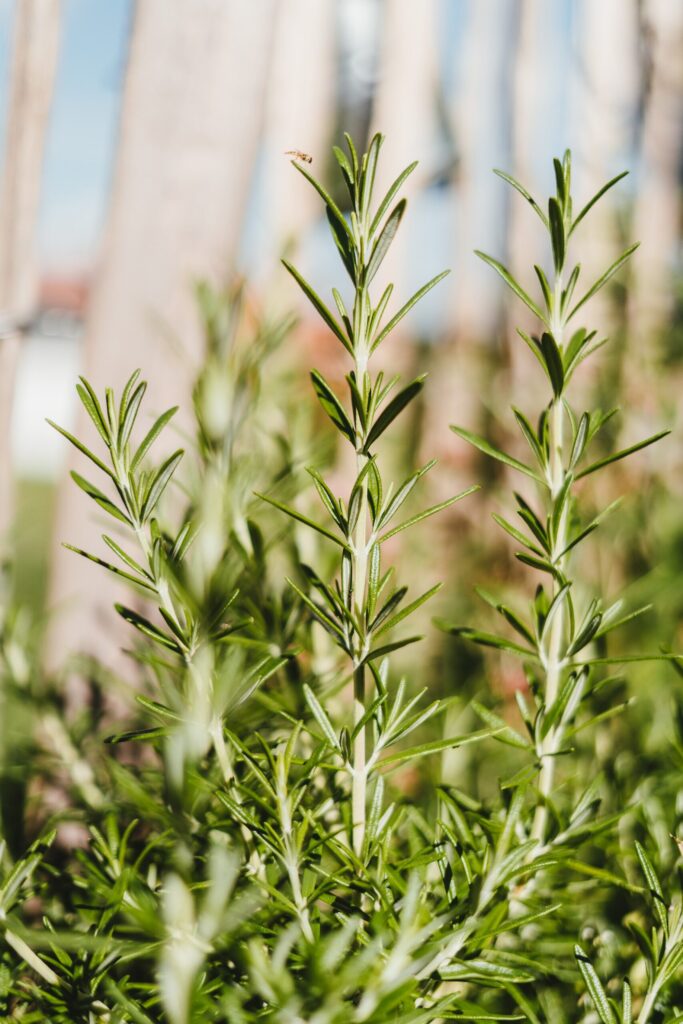
In ancient Greece, students preparing for exams wove rosemary into their hair.
They wore sprigs of it in garlands while they studied, convinced that the herb sharpened the very memory they were about to be tested on.
This was not a superstition dressed up as science. It was an early and remarkably consistent observation: this plant, more than almost any other in the Mediterranean herb garden, seemed to clear the fog and pull concentration into focus.
Two and a half thousand years later, rosemary sits in a plastic pot on a supermarket shelf, sold as a cooking herb, occasionally as the scent note in a candle, rarely as anything more than that.
The Thing That Survived, and the Thing That Didn't
Here is the strange part.
Somewhere between the exam garland and the roasting tin, the plant kept its reputation for remembrance while the culture around it forgot what that reputation was actually for.
We still say it. “Rosemary, that’s for remembrance.” We tuck it into wedding buttonholes. We reach for it in the kitchen without quite knowing why the scent feels bracing rather than merely pleasant.
The phrase survived. The belief behind the phrase did not.
Which raises a question worth asking of a herb this familiar: what if the old association was not poetry at all, but an accurate description of something the plant actually does?
The Scent Is the Medicine
Rosemary announces itself before it does anything else.
Strong, resinous, sharp enough to cut through a room, woody and balsamic with a thread of mint running underneath.
In the older logic of herbal medicine, a plant this assertive to the senses was assumed to be assertive in the body too. And in rosemary’s case, that assumption happened to be correct.
The scent is not decoration. It is volatile oil, and volatile oil is exactly the class of compound that stimulates circulation, sharpens the nervous system, and pulls sluggish function back into motion.
This is worth sitting with, because it is easy to read “the ancient Greeks thought a strong-smelling herb helped their memory” as folklore in the dismissive sense.
It was closer to a working hypothesis. Tested by generations of students under exam pressure. And it happened to identify a genuine mechanism centuries before anyone could explain what a volatile oil was.
Ophelia's Line
By the time Shakespeare put the words in Ophelia’s mouth in Hamlet, the association needed no explanation to an English audience.
Rosemary had become the plant used at both ends of life: woven into wedding garlands to mark a bond that should not be forgotten, and carried at funerals to signal that the dead would not be either. The same herb, doing the same conceptual work, whether the occasion called for celebration or grief.
And rosemary is not a British native.
It belongs to the dry, sun-baked coastal scrub of the Mediterranean, and its arrival in England is tangled somewhere between legend and record. Roman introduction is often assumed, though the evidence is circumstantial rather than certain.
What is documented, and rather charmingly specific, is a shipment sent in 1338 to Philippa of Hainault, queen consort to Edward III, along with detailed instructions for its cultivation and its supposed virtues. Whatever came before that date, by the fourteenth century rosemary had already become important enough in England for a queen to receive it as a considered gift, not a curiosity.
From there it settled in thoroughly. By the Tudor period it was a fixture of English knot gardens, valued as much for structure and scent as for medicine, and it has stayed in British gardens more or less continuously ever since. Never native. Never quite foreign either.
What the Fog Actually Is
Rosemary is warming, drying, and unambiguously stimulating, with a pungent, slightly astringent bite that follows its aromatic sweetness.
In the vitalist framework, this combination points directly at one tissue state: cold and depression, the pattern in which the body’s functioning has slowed, dampened, and become less dynamic than it should be.
Cold and depression shows up as heaviness, sluggishness, and fatigue. As weakened circulation and cold extremities. As sluggish digestion. And, most relevantly here, as the specific cognitive slowdown recognisable to anyone who has ever tried to think clearly on too little sleep or too little movement.
Here is the connection that most people miss.
Brain fog is not a separate complaint from poor circulation. It is frequently the same tissue state, expressed in a different organ.
Nootropic and Nervine
This is where rosemary’s dual character becomes clinically interesting rather than merely poetic.
It works as both a nootropic and a nervine at once, a combination not every stimulating herb manages.
Most warming, circulatory stimulants work on the body generally. Rosemary reaches the brain specifically, increasing cerebral blood flow while simultaneously toning and steadying the nervous system it is stimulating.
So the effect is less like a jolt and more like a room slowly coming into better light.
The Brain It Was Named For
Contemporary research has done something unusual for a folk remedy this old. It has largely confirmed the mechanism the Greeks guessed at, rather than quietly disproving it.
Studies on elderly participants given rosemary at doses of roughly 750 milligrams have recorded measurable improvements in the speed of memory recall, a finding that lines up precisely with the traditional claim rather than complicating it.
The proposed pathway is exactly the one the energetic picture predicts: better circulation to the brain produces sharper, faster cognitive function, particularly in a nervous system that was previously running cold and sluggish rather than one already functioning at full capacity.
None of this makes rosemary a cure for anything, and it is worth being precise about that.
What the evidence supports is a plant that reliably improves circulation and alertness in a body or brain caught in cold, damp, understimulated functioning. That is a genuinely useful and fairly specific action, and it does not need inflating into something larger to be worth taking seriously.
Growing and Gathering
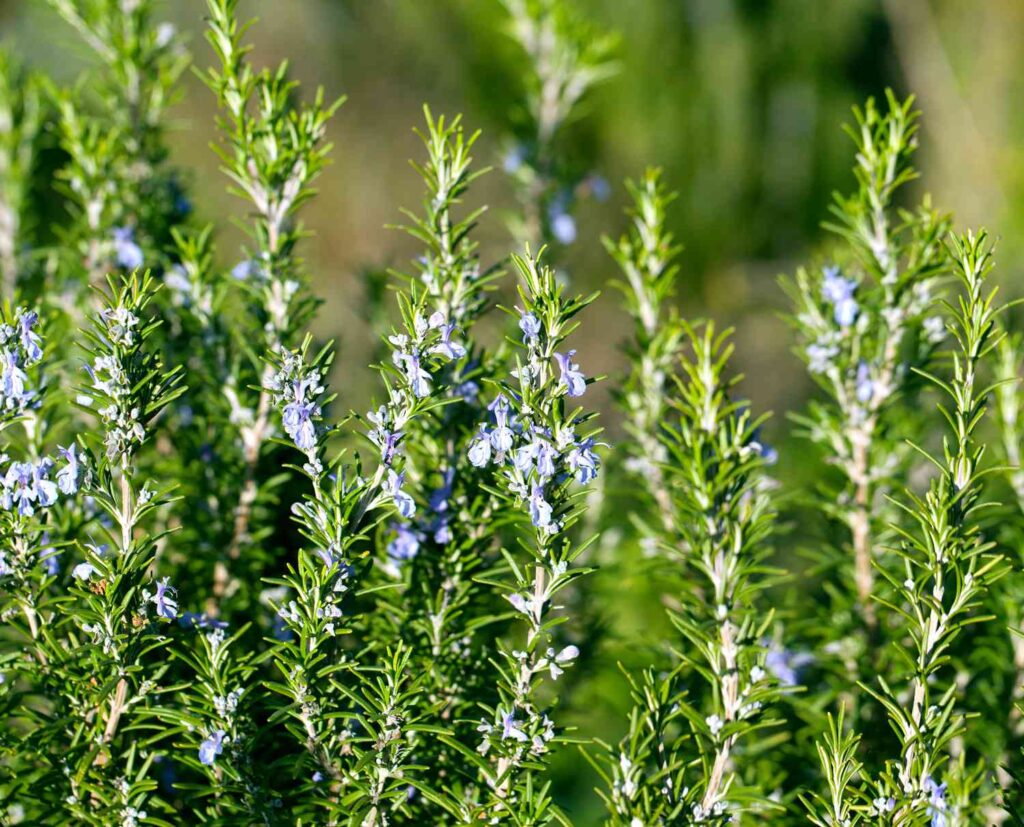
Rosemary wants exactly what it evolved for: full sun, sharp drainage, and a position against a warm wall if one is available.
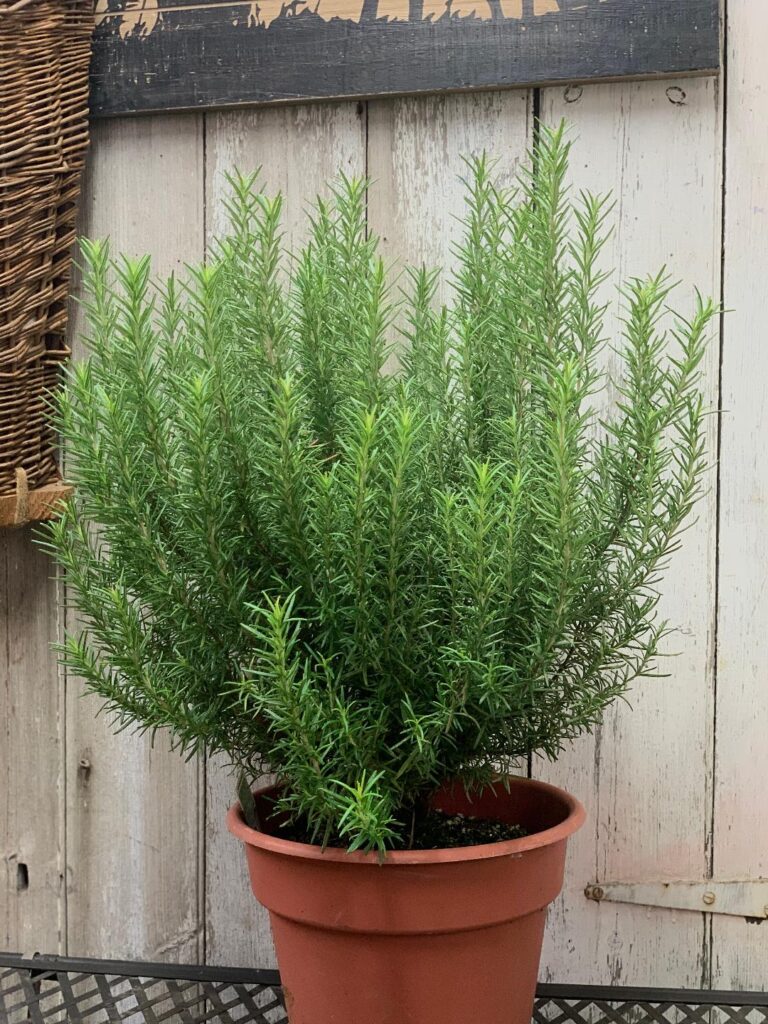
It thrives in southern and coastal English gardens with barely any attention, tolerating poor, dry soil far better than rich, damp ground, which will rot its roots faster than any frost will kill its leaves. In the colder, wetter parts of the country, particularly Scotland and higher inland ground, a hard winter can still kill an established plant, so gardeners in those areas do well to grow it in a pot that can be moved under cover, or against a sheltered south-facing wall.
Harvest leaves and flowering tops at any point through the growing season, ideally on a dry day, cutting just above a leaf node to encourage bushier new growth. Rosemary dries well and keeps its potency for a long time, which is part of why it became such a dependable year-round kitchen herb in a country that could not grow it fresh through winter.
Preparation and Use
Rosemary memory elixir, a traditional formula that pairs the herb with brandy and raw honey, is a straightforward way to take rosemary as a daily tonic rather than an occasional seasoning. Steep four parts dried rosemary leaf in brandy for around six weeks, shaking occasionally, then strain and stir in raw honey to taste. A modest daily dose, around thirty drops, is the traditional measure.
Rosemary tea, infused for ten minutes from the fresh or dried leaf, delivers the same warming, stimulating action more gently, and is a reasonable everyday way to counter sluggish circulation or midafternoon mental fog.
Rosemary hair rinse, made by steeping the leaves in water and using the cooled infusion after washing, is a much older use than modern haircare marketing would suggest, and follows the same circulatory logic applied to the scalp rather than the brain.
Rosemary in medicinal quantities is generally avoided in pregnancy, since it has a traditional reputation as a uterine stimulant, and rosemary essential oil should be used with particular caution by anyone with epilepsy, as its stimulating action can be too strong applied in concentrated form.
The Herb That Was Never Actually Forgotten
The strange part of rosemary’s story is not that it lost its reputation.
It never did.
Every wedding that still tucks a sprig into a buttonhole, every kitchen that reaches for it without quite knowing why the scent feels bracing rather than merely pleasant, is running on an association that has survived two and a half thousand years mostly intact.
What has been lost is not the plant’s meaning but the habit of taking that meaning seriously. Of treating “for remembrance” as a description of an actual physiological action rather than a phrase left over from an old play.
Recovering that habit, learning to read a familiar kitchen herb as a precisely characterised plant with a real mechanism rather than a decorative one, is exactly the kind of attention we build slowly in our Herbal Foundations Course.
The rosemary is still there on the windowsill, still doing what it has always done.
It is simply waiting, as it has for a very long time, for someone to remember what it was for.