The Dandelion Mistake: Why Most People Are Using the Wrong Part
- Roland Koronya


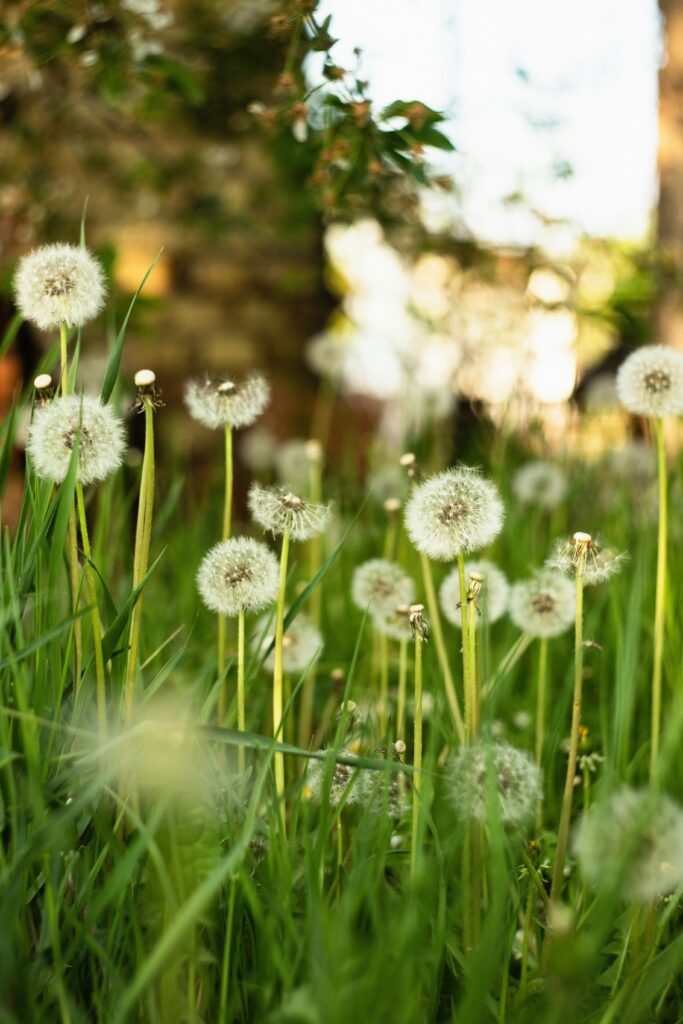
Here is a plant that almost every British child knows by its seed head.
One breath and it’s gone, a cloud of white parachutes lifting off over a lawn, over a garden wall, into a neighbour’s carefully tended vegetable patch.
Dandelion: cheerfully invasive, chronically overlooked, and almost universally treated as a problem to be solved rather than a medicine to be understood.
Walk past one now. The rosette of jagged leaves pressed low to the grass. The thick taproot driving straight down through compacted soil with a determination that has broken through paving slabs. The hollow stem with its small bead of milky latex where the flower was.
This is not a weed. This is one of the most comprehensively medicinal plants in the British flora, a plant that offers, in one herbalist’s phrase, “perhaps the best widely applicable diuretic and liver tonic” available in the Western materia medica.
And yet most people who have ever used dandelion, if they have used it at all, have used it carelessly.
The Mistake
Here’s what typically happens.
Someone decides they want to use dandelion. They’ve heard it’s good for “detox” or “cleansing” or “liver support.” They go to the nearest health shop. They buy whichever dandelion product happens to be on the shelf, usually whatever is cheapest or most conveniently packaged. Root or leaf. Doesn’t matter. It’s all dandelion, isn’t it?
They take it for a few weeks. Maybe they feel better. Maybe they don’t. Maybe nothing happens at all. Eventually they stop, having learned nothing except that herbal medicine is vague and probably doesn’t work very well.
Here’s the problem: they’ve been using the wrong part.
Or more precisely, they’ve been using a part without knowing which part they need, which is the same as using the wrong part, because the root and the leaf are not the same medicine. They are not even doing the same job.
They share a name, a family, a garden, and a milky sap and beyond that, they are pointed at different systems, different tissue states, and different moments in the body’s seasonal calendar.
Which brings us to a question that almost nobody asks: Why would the same plant make two completely different medicines?
Pull the Root
Pull a dandelion root and taste it raw.
It is bitter… deeply, persistently bitter, with an earthy undertone and a faint sweetness that does not quite cut through.
That bitterness is the primary diagnostic clue. In traditional herbalism, bitter plants speak most directly to the liver and gallbladder. They are cooling and drying by nature. They stimulate the production of bile in the liver and prompt the gallbladder to release it. They work downward and inward, prompting the body’s deeper eliminatory processes to clear what has accumulated.
Dandelion root does all of this with a particular gentleness.
Where a pure bitter like gentian is strongly cooling and drying (appropriate for robust constitutions in genuine excess) dandelion root tempers its bitterness with a degree of sweetness, making it less cold, less stripping, and accessible to a wider range of people. It is less bitter, slightly sweet, possibly moistening. An excellent general bitter tonic precisely because it does not push too hard.
The liver is the organ that makes the most sense of dandelion root’s medicine.
In traditional frameworks, the liver’s characteristic excess pattern is damp stagnation: a state of sluggishness and congestion in which bile flow slows, fats accumulate, the blood thickens, and a general heaviness pervades. This is the pattern that builds over a long winter of heavier foods, reduced activity, and contracted living. The liver, in this state, is not inflamed or feverish, it is more like a slowly silting river, moving but not moving well.
Dandelion root, with its bitter cooling quality, acts on that damp stagnation directly. Stimulating bile production and flow. Supporting the liver’s eliminatory work. Cooling the latent heat of congestion. And through its high inulin content (best extracted by slow decoction) feeding the beneficial bacteria that form the gut’s first line of digestive intelligence.
This is why dandelion root is understood as the autumn and late-winter root medicine. Harvest it in autumn, when the plant has drawn its resources back into the taproot and the inulin concentration is highest. Use it when the body is carrying the residue of a season of excess, or when the digestive system is sluggish and heavy after months of cold and contraction.
Pick the Leaf
The leaf is a different conversation entirely.
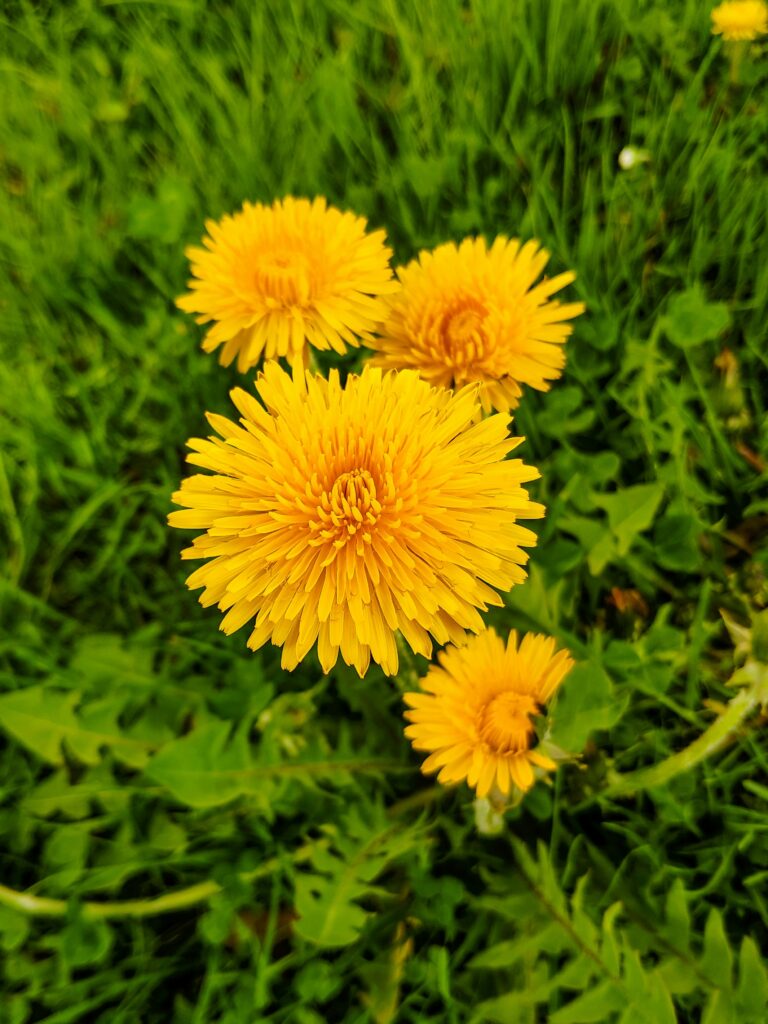
Young dandelion leaves in early March (before the plant flowers, while they are still mild and mineral-tasting) are one of the finest nutritive herbs available in this country, and one of the most strategically timed.
They emerge precisely when the body is most depleted: at the end of winter, when reserves are low, when the kidneys have been working through cold and contracted months in a system that has been moving less water, and when the accumulated dampness of winter is ready to be released but has nowhere to go.
The leaf’s primary therapeutic character is not bitterness but mineral richness.
It is high in potassium, calcium, iron, and vitamins A and C, a genuinely nutritive herb that nourishes depleted tissues with its own nutritional density. Where the root works by stimulating and clearing, the leaf works partly by replenishing and rebuilding. It feeds the tissues that have grown thin and deficient over winter.
But the leaf’s most distinctive action is as a diuretic.
And here’s where it gets interesting.
The Built-In Correction
Dandelion leaf is not an irritating diuretic in the manner of juniper berries, which stimulate the kidneys through mild chemical provocation.
It is an aquaretic: a diuretic that works through mineral exchange rather than irritation, balancing sodium and potassium electrolytes to promote fluid release without stripping the body of what it needs.
Now here’s the extraordinary feature, and one of the more elegant examples of a plant’s internal coherence:
Dandelion leaf supplies the potassium that its diuretic action would otherwise deplete.
Unlike most pharmaceutical diuretics, which require supplemental potassium to prevent deficiency, dandelion leaf contains its own correction. The medicine and its safeguard are built into the same plant part.
The tissue state the leaf most directly addresses is damp stagnation in the kidney and urinary system, the kind of held fluid that manifests as puffiness, a feeling of waterlogged heaviness in the body, or the sluggishness of elimination in a system that has been running slow and cold.
In spring, after the contracted months of winter, this is close to a universal pattern. The kidneys are ready to move water more freely. The body is ready to release what it has been holding. The fresh dandelion leaf, emerging precisely at this moment, meets that readiness with a gentle, nourishing push.
Two Structures, Two Intelligences
So we return to our question: Why would the same plant make two completely different medicines?
The answer reveals something fundamental about how plants work.
A plant is not a homogeneous substance. It is a complex living being whose different structures have concentrated different kinds of chemical intelligence in service of different physiological conversations.
The root goes down into the earth and deals with the liver, the deep, downward, eliminatory organ that processes everything that passes through the body.
The leaf goes upward into the light and deals with the kidneys, the organ that regulates the body’s inner waters, that balances what is released and what is retained.
This is not metaphor, or rather, it is not only metaphor. The biochemistry bears it out.
The root is rich in sesquiterpene lactones and inulin, which are the compounds that drive its bitter tonic and liver-supportive actions. The leaf is rich in potassium and flavonoids, which underpin its diuretic and nutritive character.
The plant has, in effect, made two separate medicines and stored them in different places.
The Precision Question
Which returns us to that person in the health food shop, standing in front of the dandelion products, trying to decide which one to buy.
They don’t know about tissue states. They don’t know about organ affinities. They don’t know about seasonal timing. They just know they’ve heard dandelion is good for them, and they want to feel better.
So they guess.
And if they guess wrong, if they take the root when they need the leaf, or the leaf when they need the root, then they’re taking a medicine pointed at the wrong system, at the wrong time, for the wrong pattern.
The root addresses damp stagnation in the liver. Best in autumn and late winter. For people who feel heavy and congested after months of rich foods.
The leaf addresses damp stagnation in the kidneys. Best in early spring. For people who feel depleted and waterlogged at the end of winter.
Same plant. Completely different jobs.
The herbalist’s task is simply to know which one to reach for, and when.
What the Weed Teaches
What dandelion teaches through this contrast is something that gets to the heart of traditional herbal thinking.
Herbs are not simply lists of actions. They are not substances with effects. They are plants understood in their full character, including which parts carry which intelligence, and why.
This kind of patient, attentive learning, learning to read a plant’s internal complexity, understanding how tissue states and organ affinities and seasonal timing all fit together, is what distinguishes a practitioner who uses dandelion as a general health herb from one who uses it with precision.
It is also what makes the study of even a single weed feel inexhaustible. There is always more to understand. Always a finer distinction to draw. Always a moment when a familiar plant reveals a new dimension.
That seed head you blew on as a child? That weed in your garden?
It was never just one thing. It was always two medicines, waiting for someone to learn the difference.