
beginner herbalism course
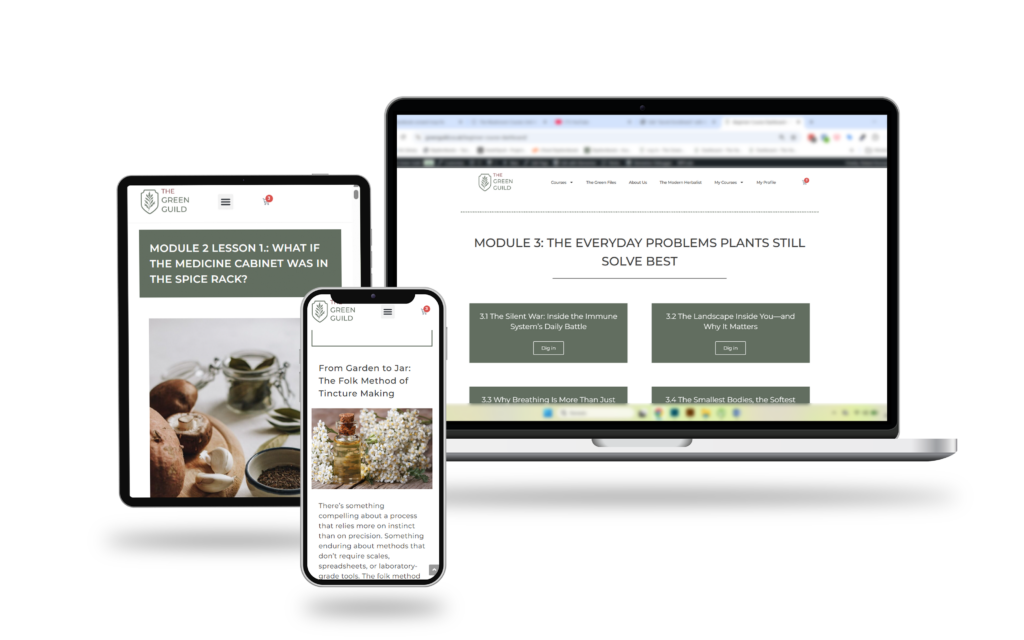
MODULE 1: The Beginning of Something Ancient
Lesson 1: A Quiet Welcome to the World of Herbs
- Introducing the Course
- Why Herbs?
- Ancient Greek and Roman Medicine
- Chinese Medicine
- Ayurveda
- Herbal Energetics
- How Herbs Work
- Whole Plants and Synergy
Lesson 2: From Plant to Preparation
- How to Choose Good Quality Herbs
- How to Store Herbs
- What You’ll Need to Make Herbal Preparations
- Store-Bought Herbal Products
Lesson 3: The Teapot and the Tincture Bottle: Two Paths to Plant Power
- Infusions
- Decoctions
- The Tea Booklet
- Making Tinctures
- Tincture FAQ
Lesson 4: The Sticky Solution: How Syrups and Salves Tell Different Stories
- Syrups
- Topical Water-Based Solutions
- Herbal Oils
- Creams and Balms
- Chewed and Crushed Herbal Preparations
- Poultices
- Topical vs. Internal Use
Lesson 5: When Plants Speak the Body’s Language
- Introduction
- Description of Herbal Actions
Lesson 6: What If Medicine Was Growing at Your Feet?
- Trees as Medicine
- Fungi
- Algae and Seaweeds
Lesson 7: The Balancing Act Inside You: A Beginner’s Guide to Anatomy
- Basic Anatomical Concepts
- Homeostasis
- Anatomy of Organ Systems
Lesson 8: How We Gather What We Know About Plants
- Materia Medica: A System for Herbal Knowledge
- How to Create Your Own Herbarium
MODULE 2: WHY THE MOST POWERFUL HERBS ARE ALREADY IN YOUR KITCHEN
Lesson 1: What If the Medicine Cabinet Was in the Spice Rack?
- Spice Things Up
- Spices as Antimicrobial Agents
- Take a Closer Look at Your Spices
- Get to Know Your Spices
Lesson 2: The Medicine Hiding In Your Kitchen
- Kitchen Herbs for Healthy Digestion
- Kitchen Herbs for a Healthy Respiratory System
- Kitchen Herbs for Inflammation
- Kitchen Herbs for a Healthy Nervous System
- Even More Kitchen Herbs
Lesson 3: Where Food Becomes Medicine: The Quiet Power of Kitchen Preparations
- Herbal Vinegars
- Herbal Honeys
- Herbal Cooking Oils
Lesson 4: The Quiet Revolution in Your Backyard
- Kitchen Gardens
- Medicinal Gardens
- A Few Gardening Tips
- Easy-to-Grow Herbs for Beginner Gardeners
- Guidelines for Growing Herbs
- Guidelines for Harvesting
- Preserving Herbs
Lesson 5: The Hunt for Healing in the Wild
- Protected Plants
- Guidelines for Wildcrafting
- Some of Our Wild Herbs
- Wildcrafting and the Seasons
- Herbal First Aid “Kit”
MODULE 3: THE EVERYDAY PROBLEMS PLANTS STILL SOLVE BEST
Lesson 1: The Silent War: Inside the Immune System’s Daily Battle
- The Role of the Immune System
- The Immune Response
- Elements of the Immune System
- Immunomodulators
- Immunostimulants
- Recipes for Immune Health
Lesson 2: The Landscape Inside You—and Why It Matters
- Support Your Body with a Healthy Digestive System
- Foods That Support a Healthy Terrain
- So, How Can You Eat Properly?
- Support Your Terrain with Cleansing and Detoxification
- Minimize Environmental Toxins in Your Home
- Tonic and Adaptogenic Herbs
Lesson 3: Why Breathing Is More Than Just Staying Alive
- The Respiratory System
- Allergies
- Colds
- Coughs
- Bronchitis
- Influenza
- Recipes for Colds and Flu
Lesson 4: The Smallest Bodies, the Softest Medicines
- The Wilderness Just Steps Away from Your Front Door
- Creating Small Gardens for Children
- Herbs in Childhood
- Safety and Dosages
- Herbal Recipes for Kids
- Herbal Treats
Lesson 5: Cycles, Seeds, and Secrets: A Herbal Approach to Reproductive Health
- Nourishment and Balance: Foundational Tonic Herbs
- The Moon Cycle: Menstrual Health
- Pregnancy
- Menopause
- Supporting the Prostate with Herbs
Lesson 6: Vitamin D
- The Importance and Sources of Vitamin D
MODULE 4: HOW THE NERVOUS SYSTEM HEALS – WITH A LITTLE HELP FROM PLANTS
Lesson 1: The Body’s Electrical Web: Inside the Nervous System
- Central Nervous System
- Peripheral Nervous System
- Enteric Nervous System
Lesson 2: Stress: The Story Your Body Keeps Telling
- The Acute Stress Response
- Chronic Stress
- Herbs for Stressful Times
- Lifestyle Changes for Managing Stress
Lesson 3: What a Headache Is Really Trying to Tell You
- Types of Headaches
- Herbs for Relieving Headaches
Lesson 4: Why Sleep Is the First Thing We Lose—and the Last Thing We Fix
- Insomnia
- Herbs for Healthy Sleep
- Sleep Hygiene
Lesson 5: The B Vitamins
- The Role of B Vitamins
- B Vitamins by Name
Sources of B Vitamins
MODULE 5: WHAT HAPPENS WHEN YOU TREAT YOUR BODY LIKE AN ALLY
Lesson 1: Skin: The First to Know, the Last to Speak
- The Anatomy of the Skin
- Skin Health
- Common Skin Issues
- Herbs for Healthy Skin
- Topically Applied Herbs
Lesson 2: Soaks, Scrubs, and Salves: Old Remedies for Modern Bodies
- Inner Health = Outer Health
- The First Step… Accept Yourself
- Topical Herbal Oils
- Creams and Balms
- Body Butters
- Salt and Sugar Scrubs
- A Relaxing Bath
Lesson 3: The Face in the Mirror—and the Plants That Care for It
- Cleansers
- Moisturizers
- Toners
- Hair Care
- 10 Common Body Care Ingredients to Avoid
Lesson 4: How to Age Without Growing Old
- Healthy Aging from a Traditional Perspective
- New Research, New Ideas
- Herbs for Healthy Aging
MODULE 6: WHEN EVERYTHING’S CONNECTED, EVERYTHING MATTERS: THE HOLISTIC APPROACH
Lesson 1: The Holistic Approach: Overview
- Modern Allopathic Medicine
- The Roots of the Holistic Model
- The Herbalist’s Holistic Perspective
- How to Bring This into Your Own Life
Lesson 2: The Body That Thinks, Feels, and Heals as One
- Building a Theoretical Framework
- The Power of the Mind: The Placebo Effect
- The Holistic Approach in Practice
Lesson 3: From Apothecaries to Pharmacies—and Back Again
- Early Herbalism
- Early Western Herbalism
- The Eclectics
- The First Hospitals
Lesson 4: How to Practice Medicine Without Forgetting the Human
- The Next Steps
Lesson 5: The End of the Course, Not the Journey
Frequently Asked questions
Can I take the course without technical knowledge?
Yes. If you can use a web browser, you’re all set.
I added the course to my cart, had to leave, and when I came back later, the price had increased. What happened?
Most likely, the course was accidentally added to your cart more than once—a common mishap. Luckily, it’s easy to fix: check your cart here: https://greenguild.co.uk/cart/
Remove any duplicate items, and you’re good to go.
After completing the course, is it guaranteed that herbs will always work for me?
This is where we have to be honest: no.
Any course—or product—that promises miracle results is selling fiction. Herbs aren’t magic bullets, and this course doesn’t come with a guarantee of instant success. There are always variables: your body, your consistency, your context.
What we can promise is that this is the most comprehensive herbal course available in the Netherlands. And while we’ve received powerful stories from past students—many who’ve seen real improvements in their health—those results were earned through dedication, not shortcuts.
The tools will be there. How you use them is up to you.
Can I join the course from abroad or outside the city?
Absolutely. The course is entirely online, and everything is hosted inside a private member area. Geography isn’t a barrier.
What if I fall behind?
You won’t. The course is self-paced. There’s no clock ticking.
You can go fast or slow, pause or repeat. And if questions come up, you’ll have access to our private Facebook group—where you can talk to us, and to other students walking the same path. You’ll also have lifetime access to everything, so nothing disappears if life gets in the way.
Will I need to spend a lot on herbs and supplies outside the course?
No. In fact, you could complete the course without spending anything extra—but we don’t recommend that.
Practical learning is what makes herbal knowledge stick. And most of what you’ll need is probably already in your kitchen: pots, jars, spoons. Anything missing can be found inexpensively. Herbs themselves are affordable—and if you grow them, they’re free.
The only higher-cost item might be alcohol for tinctures, but even that won’t break the bank.
Herbalism isn’t an expensive pursuit. It’s a practical one.
How much time should I spend on the course each week?
We suggest spending 2–3 weeks per module. That gives you enough time to absorb the material, try the recipes, and reflect. Some parts are hands-on, others are more introspective. Either way, you set the pace. The more attention you give it, the more natural it becomes.
How long will I have access to the course?
For life.
That includes all current content and anything we add in the future.
I’d love to join, but I can’t afford it right now. What should I do?
If you’re in a difficult financial situation—especially if you’re dealing with debt—we recommend focusing on stabilizing things first. Don’t stretch your budget. Even herbs can’t resolve financial stress.
Here’s a full lesson from the course—a small window into what it feels like to learn this way: https://greenguild.co.uk/beginner-course-look-inside-lesson/