
How We Study a Plant: Urtica dioica
This is a full monograph from The Green Files.
Every plant inside the library is built using the same structured framework — energetics, taste, tissue state, affinities, actions in context, and safety.
What you’re about to read is not a summary.
It is the real structure.
Take your time with it.
Notice how the plant begins to make sense when viewed through pattern rather than symptom.
Nettle (Urtica dioica)
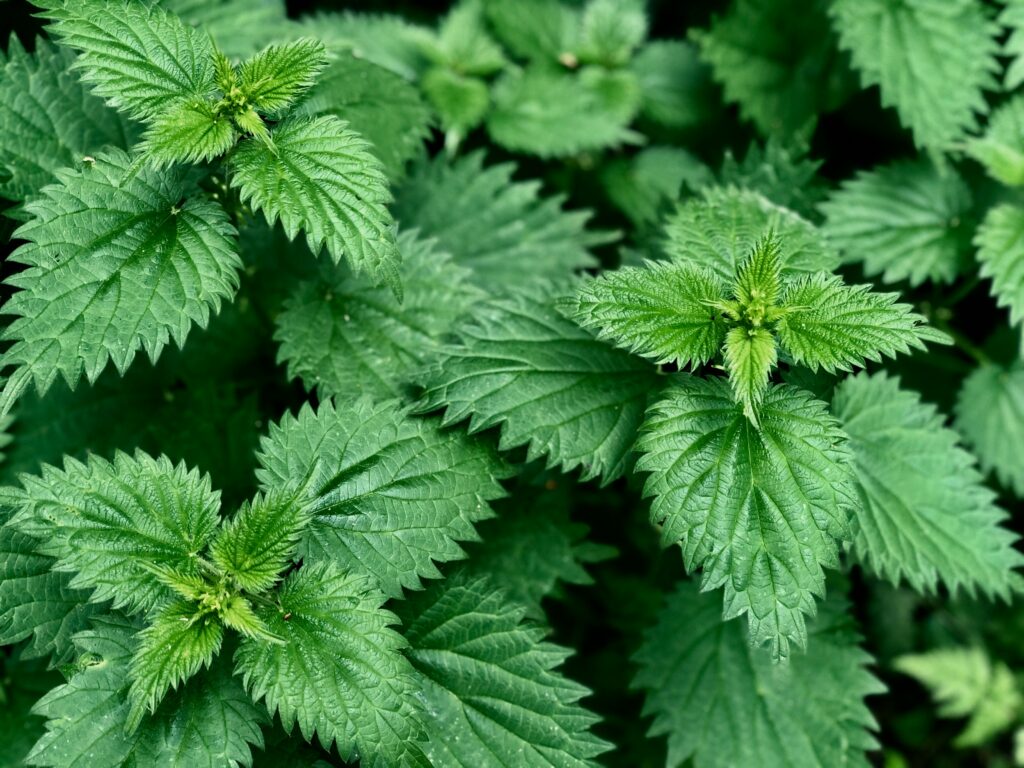
There’s something peculiar about Nettles.
They are ignored by the inattentive and adored by those who know what to look for. Hated by hikers and wanderers—those who brush up against them unknowingly—and yet deeply cherished by herbalists. That contrast alone is telling. Because if there’s one thing Nettles teach us, it’s this: pay attention, and you’ll be rewarded.
This is one of the most iconic herbs in Western herbalism. Not because of marketing or modern rediscovery, but because no matter where it appears—in the hedgerows of Europe or the forests of North America—people eventually figure out what it can do. They always have. Its uses span centuries. Maybe even millennia. And the deeper you go, the more surprising it gets.
What’s curious is that while European traditions embraced Nettle both as medicine and as food, it didn’t hold the same weight among many Indigenous North American traditions. It was used, yes—but not revered. And yet, despite that, Nettle has crept its way through North, Central, and even South American herbal paradigms, quietly proving its versatility again and again.
So what makes it special?
Part of it is how adaptable it is. Nettle can be taken by nearly anyone. Any constitution. Any condition. It sits right on that line between food and medicine. That makes it accessible—for beginners, a natural entry point. But here’s the paradox: for experienced clinicians, its very familiarity can make it easy to forget.
This profile is an attempt to shift that. To place Nettle not at the edge of your practice, but at the center. Because once you understand it fully—its leaf, seed, and root—you’ll see that this is not a single herb. It’s three, maybe more. And each part carries its own signature, its own set of actions, almost as if they’re different plants entirely.
Which brings us to the anatomy of the plant:
- Common Name: Nettle, Stinging Nettle
- Latin Name: Urtica dioica, Urtica urens
- Family: Urticaceae
- Parts Used:
- Leaves – harvested in early spring.
- Seeds – gathered in late summer.
- Roots – dug in early autumn.
These are not trivial distinctions. Each part operates differently in the body. Which means, depending on what you use, you’re working with a different expression of the plant entirely. And that’s what makes Nettle remarkable—not just its versatility, but its range. It adapts to what’s needed. Which, when you think about it, mirrors where it likes to grow: in the shaded, damp, disturbed places of the world. Just like the places in the body where it’s most useful.
So let’s start there: in the margins, in the overlooked zones—both in the ecosystem and in the apothecary. Because that’s where Nettle tends to show up. And that’s often where the real medicine begins.
The 5 Pillars of Nettle
Taste
Let’s begin with taste.
It’s easy to overlook flavor as a clinical tool. We’re conditioned to think of it as subjective—personal, even irrelevant. But in herbalism, taste is diagnostic. It tells us something vital about what a plant does, and how it behaves in the body. And with Nettles, the taste says more than you might expect.
Take the saltiness.
It’s not just a quirky note on the tongue—it’s a clue. Saltiness almost always signals something: minerals. And Nettles are no exception. They’re mineral-rich—deeply so. And this places them squarely in the company of other salty herbs like Horsetail or Celery. These are plants that work on the kidneys, the urinary tract. That help nourish, flush, rebuild. Salty plants have a certain direction in the body, and with Nettles, that direction is unmistakable.
But then there’s the sweet.
It’s quieter, less obvious. The saltiness tends to overshadow it at first. But if you slow down—really pay attention to the taste—there it is: a subtle heaviness, a grounding sweetness. And that matters. Because in the world of herbal energetics, sweet isn’t just pleasant. It’s restorative. Sweetness builds. It nourishes tissues, strengthens the constitution, supports systems weakened by dryness, by depletion, by neglect.
So when we say Nettle is salty and sweet, we’re not just describing a flavor profile. We’re revealing its role. A mineral-rich, tissue-building plant. Something that replenishes. Something that restores. And already, with just two tastes, you start to see why Nettles deserve more than just a passing glance.
Primary Actions
Let’s talk about water.
Or more specifically, how the body moves it, holds it, and lets it go. Because when you’re working with herbs like Nettle, understanding water isn’t just helpful—it’s essential.
Nettle is a diuretic. That’s one of its primary actions. And that might sound straightforward: it helps the kidneys, increases urination, flushes excess fluid. But the real story runs deeper than that.
Look at where Nettle grows—moist soils, damp ditches, shady, water-rich places. That environmental preference gives us a clue. This is a plant that works with the Water Element. And not just at the level of organs—it operates systemically. That’s the distinction most people miss.
Yes, Nettle acts on the kidneys. But it also relieves swollen ankles. It drains ascites in the gut. It draws fluid out of puffy, inflamed joints. This is what true herbal diuretics do: they move water out of the tissues and out of the body. They dry. That’s their nature.
And with that comes a consequence.
All diuretics, by definition, have a drying effect on the constitution. They don’t just clear fluid from swollen tissues—they shift the moisture balance of the whole body. That’s something to be aware of, especially in people who are already dry or depleted.
But here’s where nature reveals her subtle intelligence.
Many herbal diuretics—Nettle included—are rich in potassium. That matters. Because potassium is water-soluble, it gets excreted quickly during urination. In pharmaceutical medicine, this creates a dilemma. Patients with high blood pressure are often prescribed loop diuretics, which aggressively flush out water but also deplete potassium to dangerous levels. So doctors prescribe potassium supplements alongside them.
Nature takes a different approach.
In herbs like Nettle, Dandelion (Taraxacum officinale), and Horsetail (Equisetum arvense), the solution is already built in. The potassium you lose through urination is simultaneously replenished by the plant itself. It’s a self-correcting mechanism. Elegant. Functional. Complete.
And yet, Nettle’s diuretic action is only part of its broader role.
It’s also an alterative. And that term—vague as it may be—is central to understanding how Nettle works in the body.
Alteratives are the great recalibrators. They open up elimination pathways. They nudge metabolism back into rhythm. They facilitate absorption, distribution, and waste removal. And though the definition may be loose, the results are often profound.
In the case of Nettle, we see a specific affinity for the kidneys and urinary tract—expected, given its diuretic nature. But the effects don’t stop there. Nettle works on the blood. And on the skin. It builds the blood, thanks to its mineral richness. And it detoxifies it—flushing out stagnation, clearing waste, restoring clarity.
In folk traditions, this was called “bad blood.” A catch-all for the slow, lingering conditions that modern medicine still struggles to name: chronic skin eruptions, low-grade infections, dampness in the tissues, sluggish digestion, systemic acidity, liver torpor.
Nettle has been used to treat all of them. Not by targeting symptoms, but by restoring function—quietly, steadily, from the inside out.
Let’s return to something we touched on earlier—Nettle as food.
Not metaphorically. Literally.
Because Nettle isn’t just a medicinal plant—it’s a deeply nourishing one. It stands at that fascinating intersection where medicine ends and food begins. Or maybe, more accurately, where the two become indistinguishable.
Nettle is one of the most nutrient-dense plants in the Western materia medica. Look at its profile: iron, protein, chlorophyll, vitamin C, potassium, silica, calcium, fiber. The list reads like a multivitamin. Historically, it was added to soups and stews—a subtle way of feeding the body while rebuilding it. Today, many herbalists turn it into pesto. Delicious. And profoundly effective.
This kind of nourishment is not trivial.
It makes Nettle ideal for the malnourished, the emaciated, the pale and weak. For anyone lacking the vital nutrients needed to sustain cellular function. Nettle builds blood in cases of iron deficiency anemia. It strengthens connective tissue. It supports protein metabolism. It nourishes on a level that’s hard to quantify, but easy to feel once you’ve experienced it.
But Nettle doesn’t stop at feeding the body.
It tones it too.
Its leaves have reliable astringent properties, making them particularly useful when tissues have become loose, lax, or weak. This is especially important in organs like the intestines, uterus, and blood vessels. In conditions such as leaky gut, uterine bleeding, or prolapse after childbirth, Nettle brings tone. Structure. Resilience.
And astringency has its own tradeoff—drying. But in cases where tissues are overly damp or uncontained, that’s exactly what’s needed.
Then there’s one of Nettle’s most unusual qualities: it’s a rubefacient.
That means it increases circulation when applied to the skin. You’ve probably heard of the practice—Nettle flogging. It sounds dramatic, and in some ways, it is. But the logic is ancient and sound.
When you strike the skin with fresh Nettle, it stings. But that sting brings blood rushing to the surface—fresh, oxygenated, nutrient-rich. The tissues wake up. Stagnation breaks apart. Waste products are flushed. In Russia, this practice is traditional. Among herbalists, it’s a rite of passage. And the results? Pain relief that can last up to eight days. Especially in sore joints, stiff muscles, and low-grade chronic aches that nothing else seems to touch.
Pain, paradoxically, gives way to relief.
And finally, there’s Nettle’s influence on inflammation.
Chlorophyll, one of its defining constituents, cools and alkalizes. And we see this inflammation modulating action show up across the body—arthritic joints, inflamed digestive tracts, overheated cardiovascular systems, swollen urinary passages, irritated wombs, and prostates. Few herbs move as seamlessly through so many systems.
That versatility makes Nettle unique. It clears water, builds blood, tones tissues, increases circulation, and cools inflammation. And through all of that, it remains deceptively simple. Common. Even ordinary.
But as with many plants, the ordinary is often the most extraordinary—once you learn how to look.
Affinities
To understand a plant fully, you have to ask a different kind of question.
Not just what does it do, but where does it go?
Because herbs are not generalists. They move through the body in patterns—toward certain systems, certain tissues, certain organs. And Nettle is no exception. Its influence is wide, yes. But it’s also targeted. Precise. Predictable, once you know what to look for.
Let’s start with the kidneys and urinary tract.
This is where Nettle makes one of its boldest impressions. All parts of the plant contribute here, but especially the leaves and seeds. As a diuretic, Nettle helps drain excess fluid, increase urination, and flush the body’s waters. But the seeds offer something unique—a regenerative quality. They’ve been used in cases of kidney damage, dialysis, even failure. That’s not just support—that’s restoration. A trophorestorative effect that few herbs can claim.
Then there’s the blood.
Nettle doesn’t just purify the blood—it helps build it. And that dual action is rare. It strengthens the connective tissue lining blood vessels, tightens their walls, and improves tone and resilience in the entire circulatory system. It’s nourishing and tonifying at once. And it works quietly—without the drama of more aggressive cardiovascular herbs.
The liver is next.
Here, Nettle’s role is focused but meaningful. It supports detoxification, particularly in relation to protein metabolism and the processing of water-soluble toxins. It doesn’t act like a cathartic—it doesn’t push. Instead, it filters. Clears. Assists. A steady partner in the body’s most unglamorous, but essential, daily work.
And then we come to the connective tissues.
This is where Nettle becomes surprisingly holistic. Its reach extends from arteries to joints, from muscles to bones, from hair and nails to the skin. And it does this not through any single mechanism, but through nourishment—through the deep, cellular-level nutrition we discussed earlier. Add in its ability to modulate inflammation, and suddenly you have a plant that supports structural integrity across multiple systems at once.
What about the uterus?
The astringent properties of Nettle make it a valuable ally during pregnancy and in the postpartum period. It tones and strengthens the womb, helping to restore vitality after childbirth. Again, Nettle doesn’t just act—it supports function. Quietly. Firmly. Reliably.
The skin, too, carries a signature connection.
Externally, you know the feeling—brush against the plant and the reaction is immediate. But internally, Nettle can be used for skin conditions that resemble that reaction: red, irritated, inflamed. The logic is visual as much as physiological. The plant shows you what it treats.
The root, meanwhile, turns its attention to the prostate.
This is a different personality altogether. Inflammation modulatory, decongesting. The root helps reduce swelling, improve urine flow, and address the symptoms of BPH—frequent urination, incomplete emptying, that nagging discomfort. It’s a targeted action, and it’s well-documented.
And then, finally, the seeds.
Their effect on the adrenals is more anecdotal than clinical—but worth mentioning. Some practitioners have observed a notable stimulating quality. Not just gentle uplift—but real, potent activation. One tablespoon in a smoothie kept someone awake for two nights. That’s not a placebo response. That’s a physiological shift.
Which brings us back to the core insight.
Nettle is not a single experience. It’s a layered one. Different parts of the plant move to different places. Leaf, seed, root—each with its own story. Each with its own affinity. And each reminding us that plants, like people, often do their best work when we bother to ask where they’re trying to go.
Energetics
To really understand how an herb works, you sometimes have to go beyond the chemistry. You have to ask how it feels—not just in the mouth, but in the body. Because plants don’t just contain constituents. They carry patterns. They express tendencies. And in herbal energetics, those tendencies are mapped through temperature, moisture, and tone.
With Nettle, the pattern is clear: it’s cooling, drying, tonic, and stimulant.
And that tells us a lot.
These traits make Nettle especially useful in what Chinese medicine would call a “damp-heat” condition. The tissues are inflamed—hot, swollen, boggy. There’s heat, yes, but also fluid congestion. This is where Nettle excels. It drains the excess moisture and cools the excess heat. It brings clarity to a system that’s overloaded and sluggish.
Now, some sources describe Nettle as heating. And at first glance, that might seem contradictory. But here’s where nuance matters. That “heat” isn’t necessarily a reflection of its temperature—it’s a reflection of its stimulation.
Because Nettle does stimulate.
It activates tissues. It energizes organs. It sharpens physiological response. But that doesn’t make it hot in the classic sense. It doesn’t inflame—it invigorates. It’s a stimulant, yes, but also distinctly inflammation modulating. And it’s loaded with chlorophyll, which cools and alkalizes the body. So in practice, it calms heat more often than it contributes to it.
And this is where metaphor becomes useful.
Think about what happens when you touch a live Nettle. The sting, the rash, the heat, the tingling. Now apply that to tissue states inside the body. Nettle treats internal irritation that resembles the very reaction it creates externally. Redness. Swelling. Irritability. But when taken internally, it works in reverse—it cools that heat and drains that fluid.
Its tonic and astringent actions add another layer.
When tissues have become flaccid, loose, or under-functioning, Nettle brings tone. It firms things up. It sharpens the edges of the body’s responses. And as a stimulant—not in the caffeine sense, but in the vitalist sense—it lifts the body out of a state of depression or sluggishness. It wakes things up, restores tone, and reminds the body of what it’s capable of.
So while Nettle may sting at first, what it offers, ultimately, is clarity. Cooling for heat. Drying for damp. Tone for laxity. And stimulation for stagnation. It’s not an herb that just moves—it recalibrates.
When you start looking at herbs through the lens of tissue states, something shifts.
You begin to see that plants aren’t just categorized by what condition they treat, but by how they interact with the body’s terrain. Not unlike the concept of doshas in Ayurveda, tissue states describe the underlying quality of the tissues themselves—their temperature, moisture, tone, and vitality.
And Nettle? Nettle is unusually versatile.
It’s best known for its effects on cold/depression and damp/stagnation, but it also has meaningful applications in patterns of heat/excitation and dry/atrophy. That range is rare. And it begins, quite naturally, with its work on dampness.
Because if there’s one tissue state Nettle was made for, it’s damp/stagnation.
Let’s break that down. Dampness in the body isn’t just extra water. It’s water that’s stuck—stagnant. It no longer flows efficiently, and when that happens, everything slows: nutrient delivery, oxygenation, waste removal. The tissues become boggy, congested, toxic. And in response, the immune system ramps up inflammation in an effort to force a cleanse. The result is a pattern Chinese medicine calls “damp/heat.”
This shows up in a number of ways:
- Weepy eczema
- Swollen, inflamed arthritic joints
- Arteriosclerosis
- Food allergies and intolerances
These are not just surface-level problems. They’re signs of deeper systemic sluggishness. And this is where Nettle excels.
Through its diuretic, astringent, and alterative actions, Nettle stimulates the tissues, clears the extracellular fluids, and moves water out—toward the kidneys, toward elimination. In other words, it gets things flowing again.
But there’s more.
Damp stagnation often coincides with poor protein metabolism. And that has consequences. As proteins break down, they release nitrogenous waste. In small amounts, this is manageable. But when clearance is impaired, nitrogen builds up. And nitrogen, governed by the Fire Element, becomes inflammatory when stagnant.
Nettle addresses both layers of the problem.
It aids detoxification and, just as importantly, it cools the inflammation that arises when detoxification is impaired.
One of the clearest examples? The bladder and urinary tract.
In cases of damp accumulation here—think cloudy urine, mucous discharge, low-grade infection—Nettle acts as a clearing agent. It dries out hypersecreting membranes. It cools the inflammation. It dispels the mucous. And perhaps most famously, it helps resolve edema—water pooling in the ankles, feet, fingers, or elsewhere. Even gout, a condition tied to a protein-rich, acidic diet, responds to Nettle’s unique combination of drainage and inflammation modulation.
This is a plant that doesn’t just mop up excess water. It addresses why the water’s there in the first place.
Now let’s shift to another pattern—cold/depression.
At first glance, it might seem counterintuitive. Nettle is often described as cooling, so how could it be useful in a condition that’s already “cold”? But this is where the language of energetics requires a little unpacking.
“Cold” here doesn’t just mean temperature. It describes a quality—a sluggishness, a lack of stimulation, a kind of physiological inertia. The tissues are underperforming. The organ is checked out.
And this is where Nettle steps in.
Despite its cooling action, Nettle is unmistakably stimulating. You know this the moment you brush against it. It provokes a reaction—immediately, unavoidably. Internally, it acts in much the same way. It wakes things up. So when an organ system—like the liver, kidneys, or circulatory system—has fallen into a state of dormancy, Nettle helps bring it back online. Low blood pressure. Sluggish detox. Weak elimination. These are all signs of depression in the tissue sense. And in those moments, Nettle isn’t too cold—it’s just right.
Now let’s consider dry/atrophy.
This one requires nuance. Yes, Nettle is drying—diuretic, astringent, alterative. So in individuals with dryness as a baseline—dry skin, dry eyes, dry constipation—caution is warranted. But when the dryness is paired with atrophy, the story changes.
Atrophy is not just dryness. It’s deterioration. The tissues aren’t just lacking moisture—they’re losing structure. Muscle wasting after injury. Connective tissues becoming thin and weak. Glands that no longer secrete. Here, the concern isn’t just hydration. It’s rebuilding. And this is where Nettle’s role as a nutritive tonic becomes so valuable.
It nourishes. It strengthens. It stimulates.
Nettle doesn’t just provide the building blocks for tissue recovery—it also initiates movement where there was none. It reawakens dormant function, and at the same time, supports structure. That’s what makes it a trophorestorative. It rebuilds. It replenishes. It returns vitality to parts of the body that have forgotten how to function. As herbalist Matthew Wood put it, “It also works internally on inactive kidneys, thyroid, menstruation, hormones, nerves, muscles and so forth, to bring them back into effective operation.”
That’s not a narrow niche. That’s a wide spectrum.
Finally, we arrive at heat/excitation.
It’s easy to think of Nettle as too stimulating for this pattern—but that’s the paradox. Because while it is a stimulant, it’s also profoundly cooling and alkalizing. That makes it a natural fit for tissue states marked by irritation and inflammation.
Take seasonal allergies, for example.
Here you see the classic signs of damp/heat: red, watery eyes, streaming sinuses, and mucous membranes that have lost their containment. Fluids leak out in thin, clear streams. The membranes are lax, the inflammation is high, and the discomfort is constant.
Nettle addresses all of it.
It reduces inflammation. It cools the tissues. And as an astringent, it tones the mucosa—helping to hold fluids in, rather than letting them leak out. That blend of drying, tightening, and cooling makes it specific for this kind of allergic reaction. Not just symptomatic relief, but functional support.
It’s worth noting that Nettle has also been used in homeopathy for conditions like burns and fevers—classic heat/excitation patterns. And in older texts, like those of Nicholas Culpeper, it was classified as a “hot” plant. That’s not a mistake—it’s a reflection of its stimulating nature. But stimulating doesn’t always mean heating. And that distinction matters.
Because Nettle, like Echinacea, is a cooling stimulant. It activates without inflaming. It restores without overheating. And that, perhaps more than anything, is what makes it so versatile.
It’s a plant that refuses to be easily categorized. And in doing so, it teaches us that the most valuable remedies often live in the spaces between.
Specific Indications
Let’s shift our attention from the physical to the psychological.
Because plants, like people, don’t operate on just one plane. And Nettle—so tactile, so unmistakably bodily in its effects—turns out to have a surprisingly nuanced psychological profile as well.
Matthew Wood captures one end of the spectrum: mental dullness, lack of focus, a kind of heaviness that sets in before the day even begins. This is the person who struggles to rise from a chair, sighs or grunts with the effort, moves slowly through the morning fog but—once activated—stays on task. The skin tone is pale. The energy is flat. The pace is slow.
Sharol Tilgner adds more detail: sensitivity to cold, to damp air, to touch. Symptoms that return seasonally. These are the markers of a deeper pattern—where the vitality is suppressed, and the body recoils from external stimulus.
But then there’s the other side of the story.
Because for some people, Nettle addresses something very different: heat. Not physical heat, necessarily—but emotional. Sharpness. A readiness to snap. Bloodshot eyes. A red face. A temper that flares quickly and intensely, often over nothing at all. These are people who seem wired to react—prickly, reactive, inflamed. In Chinese Medicine, this is called “liver fire rising.” In everyday language: anger, irritability, frustration.
What’s striking is that Nettle appears to help both groups.
On the one hand, the cold, slow, pale person who yawns through their morning. On the other, the quick-tempered, red-faced individual who lashes out before they’ve had time to think. Two completely different patterns. And yet, Nettle finds its place in both.
This raises a question.
How can one plant treat such opposite states? How can it support someone who is dull and deficient, and also someone who is hot and excessive?
To answer that, we have to lean into one of the deeper principles of herbalism: polarity.
Every force in nature has its opposite. Night and day. Yin and yang. Cold and heat. Weakness and excess. And sometimes, a remedy doesn’t simply choose a side—it balances the scale.
That’s what Nettle does.
This quality—of adapting its action based on the context—is called amphoterism. It means a plant can move in two seemingly contradictory directions. It warms cold tissues by stimulating function. It cools hot tissues by reducing inflammation and dispersing excess. It tones what is lax, and softens what is tense. It doesn’t follow a rigid rule—it responds to need.
This is what gives Nettle its wide reach. And it’s also what makes it easy to misclassify. Is it warming or cooling? Stimulant or relaxant? Is it for people who are depleted and tired? Or fired-up and irritable?
The answer is both.
Because Nettle, like many of the great herbs, operates with a kind of intelligence. It’s not just about chemistry—it’s about responsiveness. In Ayurvedic terms, we might call this its prabhava—a special property that defies easy explanation, but reveals itself in practice.
Yarrow (Achillea millefolium) is another example. It can stop excessive bleeding, but also stimulate circulation and menstruation. It seems contradictory. But really, it’s adaptive.
That’s the mark of a complex plant. And with Nettle, it’s a clear sign: this is a remedy worth knowing deeply. Not because it fits neatly into a category—but because it doesn’t.
Clinical Patterns
1. Diuretic Alterative for Dampness
Let’s begin with an old idea—one that feels almost folkloric now.
“Bad blood syndrome.”
That’s what the early physicians called it. A catch-all diagnosis, yes, but also a strikingly accurate one. Today, we’d probably describe it as systemic toxicity: an accumulation of metabolic waste products the body hasn’t successfully cleared. But the experience is the same—damp heat lodged in the tissues, erupting as chronic skin conditions, arthritic swelling, gout, or persistent edema.
And in this pattern, Nettle stands out.
Why? Because it doesn’t attack one symptom. It shifts the whole terrain. Its diuretic, alterative, and astringent actions work together to change the way the body processes fluids, waste, and inflammation. Nettle doesn’t just reduce swelling—it helps the body remember how to drain.
It’s why Nettle earned its place as a “spring cleanser.”
After a long winter diet—once based on preserved meats and root vegetables, heavy and acidic, short on fresh greens—the body slowed. The blood thickened. Dampness gathered. And just when it was needed most, Nettle appeared. Early spring. One of the first fresh vegetables to break through the cold ground.
And this timing wasn’t incidental. It was instructive.
Because what Nettle offers isn’t just purification—it’s balance. It helps the liver metabolize the waste products left over from a dense, protein-rich winter diet. It stimulates circulation in the plasma and blood. It pushes fluid toward the kidneys. And along the way, it brings something else: minerals, vitamins, trace nutrients. A full-spectrum restoration.
What starts as a gentle spring tonic becomes a model for deeper work.
The same mechanisms that help clear winter sluggishness apply to more entrenched problems—especially where dampness accumulates in the joints. Inflamed, puffy, painful arthritis has long been treated with Nettle, either through the more dramatic method of topical flagellation or with steady internal use to drain fluids and modulate inflammation. It’s also uniquely suited to arthritic conditions caused by mineral buildup—when stiffness comes not from injury, but from crystallized waste lodged in the tissues.
And then there’s gout.
Less common now, but unmistakable when it appears. Uric acid crystals, deposited in the small joints—most often the toes. The farthest point from the heart, the hardest place for blood to circulate against gravity. It’s not subtle. It’s searing. Patients often can’t walk.
This is where Nettle’s action becomes precise.
It dissolves those protein waste products. Uric acid. Mineral buildup. It draws them into the bloodstream, pushes them to the kidneys, and ushers them out. Matthew Wood put it this way: “Nettle extract, fresh juice, or tea is used to leech uric acid from the tissues, bring it into the bloodstream, and cause it to be taken up by the kidneys and excreted. It also probably prevents proteins from breaking down as quickly and cluttering up the system.”
In nineteenth-century medicine, this cluster of symptoms was known as the “uric acid diathesis.” The name may have faded. But the pattern remains. And so does the remedy.
Nettle doesn’t just cleanse. It recalibrates.
Gout is just one version of a broader pattern—solid matter precipitating out of the body’s internal waters.
It doesn’t stop with uric acid. Stones and gravel—mineral deposits that settle in the kidneys and urinary tract—follow a similar path. And here again, Nettle proves its usefulness. With its strong affinity for the kidneys, Nettle has been used to help flush out stones, soothe pain, and prevent further buildup. This might be signaled by discomfort in the lower back or blood in the urine—both indicators of kidney stress.
Now, kidney stones are serious. The pain is legendary—often described as one of the worst a human can endure. So yes, medical supervision is essential. But as a supporting ally, Nettle earns its place. Not just because it moves water, but because it clears what the water carries.
That diuretic action, combined with Nettle’s astringency, makes it valuable in other areas too—especially in cases of mucous buildup. This isn’t limited to the urinary tract. It can appear in the respiratory system, in the gut. Old herbalists called it catarrh. In Ayurvedic and energetic terms, it’s dampness. Phlegm. Ama. Whatever name you use, the picture is the same: thick, congested fluids the body can’t clear. And Nettle dries them out.
But the real strength of Nettle lies in its range.
As a nutritive tonic and trophorestorative, it supports not just elimination, but restoration. This is especially clear in cases of kidney weakness—a pattern marked not by acute illness, but by long-term depletion. The tissues aren’t inflamed—they’re tired. Thin. Struggling. Nettle nourishes and tones simultaneously. And that makes it one of the few remedies that addresses both the symptom and the terrain.
Nowhere is this more evident than in edema.
Edema is a perfect example of internal dampness made visible. Fluid seeps out of the vessels and into the surrounding tissues—often pooling in the legs, ankles, feet. It’s a sign of cardiovascular insufficiency. And again, Nettle steps in on multiple levels.
First, it drains. Systemically, not just locally. Its diuretic action doesn’t just stimulate the kidneys—it moves fluid out of the tissues themselves.
Second, it builds. Nettle increases the mineral content of the blood, improving its viscosity. That thicker, more robust plasma is less likely to leak. Meanwhile, its astringent action tones the blood vessels, strengthening the walls so they hold better. It’s a dual strategy: reduce the burden and improve the integrity.
There’s even a side effect: improved circulation and, in some cases, a correction of low blood pressure—caused not by a weak heart, but by plasma escaping the system.
And then there’s the thyroid.
Nettle doesn’t directly “treat” hypothyroidism. But it helps. It addresses the symptoms. Hypothyroidism is essentially a state of internal slowing. Metabolism drops. Nutrients aren’t absorbed properly. Waste builds up. The body becomes cold, damp, heavy. Tired.
This is Nettle’s terrain.
Its detoxifying actions help clear the blood. Its nutritive properties rebuild what’s been lost. It supports function—not by replacing hormones, but by giving the body what it needs to function more efficiently.
In some cases—according to anecdotal reports—Nettle has even helped restore activity in a sluggish or atrophied thyroid gland. The explanation is speculative, but plausible. Clean blood allows for clearer hypothalamic signaling. Better nutrition allows for healthier tissue function. The organ remembers how to respond.
And that’s the larger lesson of Nettle.
It doesn’t impose change. It creates the conditions for the body to remember what health looks like. That’s not magic. It’s intelligent design. And it’s why Nettle remains one of the most quietly powerful herbs in the Western tradition.
2. Nutritive Tonic for Atrophy and Weakness
If you want to understand Nettle’s full potential, you have to look beyond its ability to remove. Because just as important as what it clears—is what it builds.
This is the other side of the remedy. Not the springtime cleanser, but the deep systemic nourisher. And its reach, again, is broader than it seems at first glance.
At the center of this effect are two fundamental tissues: blood and muscle.
Now, we often don’t think of blood as a tissue. But it is. And more than that, it’s the one tissue that touches every single organ. It’s the vehicle for oxygen, for nutrients, for repair. Which means that to build the blood is to build the entire body. The muscles—both skeletal and smooth—are the machinery. They move us, yes, but they also line the vessels, control the organs, regulate the passage of fluids and breath.
So when we say Nettle strengthens blood and muscle, what we’re really saying is: it strengthens everything.
This is where Nettle’s trophorestorative action comes in.
It supports the uterus, the nerves, the bones, the kidneys, the liver, the gut, the cardiovascular system, even the lungs. Not because it targets them individually, but because it restores the basic structure and function that all of them rely on. It’s not a laser—it’s a light that reaches the whole room.
Let’s take anemia.
Nettle supports blood-building in two ways: first, by supplying the raw nutrients needed to produce red blood cells. And second, by helping the liver—our primary blood-recycling organ—do its job more effectively. That’s why it’s useful for low blood pressure, too. When blood is thin, or scarce, or poorly circulated, symptoms emerge: paleness, weakness, dizziness on standing, fatigue, mental fog. Nettle supports all of them.
And then there’s muscle wasting—post-surgery, post-injury, or simply the slow loss of strength with age. Nettle helps reverse that arc. Which is why it’s such a valuable ally for older adults—both men and women—who find themselves growing more fragile with time.
Nowhere is this more clearly seen than in the female reproductive system.
Nettle is used in pregnancy, but not as a stimulant or a sedative. It’s used for nourishment. Quiet, sustaining, deep nourishment—for both the mother and the growing fetus. It strengthens the uterus, prepares the muscular tissue for labor, increases the strength of its contractions. And afterward, its astringency helps reduce postpartum bleeding. A single herb—supporting both expansion and contraction.
But to really understand how Nettle does this, you have to look at protein metabolism.
Proteins are the builders of the body. They form enzymes, cellular structures, hormonal messengers. They’re central to repair, to signaling, to growth. And Nettle doesn’t just provide protein—it seems to support every step of how the body uses it: digestion, absorption, distribution, assimilation, elimination.
There’s a kind of intelligence here.
Nettle doesn’t just deliver nutrients. It helps the body remember how to use them.
Which is why it can help restore organs that have become atrophied, underfunctioning, or simply forgotten by the body’s energy systems. Whether it’s the thyroid, the uterus, the kidneys, or the blood vessels—Nettle brings them back online.
This is what makes it a polycrest remedy: a plant with broad systemic action, useful across multiple organ systems and conditions. Not because it’s vague—but because it’s foundational.
It strengthens from the roots up. And that changes everything.
3. Astringent for Bleeding, Diarrhea, and Catarrh
Of all the things Nettle is known for—its minerals, its sting, its blood-building power—its role as an astringent is perhaps the most overlooked.
And yet, it’s one of its most quietly effective qualities.
Astringency, in herbal terms, is about tone. It’s about restoring tension to tissues that have become too loose, too relaxed, too open. When this “relaxation” goes too far, the result is loss—of fluids, of containment, of control. Chronic runny noses, loose stools, bleeding that doesn’t resolve. The body leaks, and can’t quite stop.
That’s where Nettle comes in.
As a tonic astringent, it doesn’t just tighten on contact. It strengthens tone over time. Which is why it’s used for chronically loose stools, especially those tied to protein-rich diets or digestive infections. Now, a caution here: diarrhea is often a vital, intelligent response—part of the body’s effort to purge. But when it becomes excessive or persistent, especially when paired with mucous in the stool, that’s where Nettle is most applicable.
Because this isn’t just about digestion. It’s about mucous membranes—wherever they show up in the body.
Nettle’s pattern is clear: it dries excess mucous. Bowels, bladder, lungs—it doesn’t discriminate. Wherever tissues are dripping, oozing, overproducing, Nettle helps tighten and restore balance. In the urinary tract, that might mean clearing cloudy, mucous-laced urine. In the gut, it could be resolving damp bowels. In the lungs, it shows up in the old herbal term: respiratory catarrh.
And this is where historical context gives us something new.
Nicholas Culpeper, writing over 350 years ago, described Nettle as “a safe and sure medicine to open the passages of the lungs, which is the cause of wheezing and shortness of breath and helps to expectorate phlegm… it likewise helps the swelling of both the mouth and throat if they be gargled with it.” What he’s describing here isn’t exotic. It’s astringency. Applied to the lungs, to the throat, to tissues that are swollen, damp, and uncontained.
That same astringency shows up in bleeding.
Nettle has long been used to stop internal hemorrhage—especially in cases where gravel, heat, or inflammation erode the tissues of the urinary tract. You might see blood in the urine, or a faint pink tint—small signs of something bigger. And Nettle, once again, offers both relief and repair.
This also holds true in the postpartum period, where excessive uterine bleeding demands a fast, reliable response. Nettle is often paired with Shephard’s Purse (Capsella bursa-pastoris) and Red Raspberry (Rubus idaeus)—a trio of astringents working in unison to dry, tone, and close what has been left too open for too long.
The takeaway?
Nettle isn’t just a plant that gives. It’s a plant that holds. That restores containment. That stops the unnecessary outflow—whether it’s fluids, blood, or energy.
4. Female Reproductive System
We’ve touched on Nettle’s role in the female reproductive system already. But it’s worth returning to—briefly—because what we find here is yet another example of Nettle’s unique duality.
As a nutritive tonic and astringent, Nettle strengthens the uterus in two important ways. First, it builds—providing bulk nutrition to both mother and fetus during pregnancy. And second, it tones—increasing the womb’s tensile strength, enhancing its expulsive power in preparation for childbirth. This isn’t just about nourishment. It’s about structural support. Nettle, in this context, becomes a true uterine tonic.
But its usefulness doesn’t stop at delivery.
After childbirth, Nettle’s astringency helps reduce excessive bleeding. It also shows up in more subtle cases—like spotting between menstrual cycles, where tissues have become too lax or unregulated.
And then there’s the paradox.
Nettle is generally considered a drying remedy. That’s part of its signature. And yet—it also stimulates lactation. It increases breast milk production. How does a drying plant do that?
The answer, again, lies in its complexity.
Nettle doesn’t just dry. It restores function. And in doing so, it makes the system work more efficiently—whether that means drying excess or producing more of what’s needed. In cases of low milk supply, it’s best paired with Fennel (Foeniculum vulgare) and Fenugreek (Trigonella foenum-graecum)—two traditional galactagogues that round out the formula.
It’s another reminder that Nettle doesn’t just do one thing. It meets the body where it is—and helps it find its way back to balance.
5. Seasonal Allergies
One of the more recent—and increasingly popular—applications of Nettle is in the treatment of hay fever and seasonal allergies.
And when you look at the plant’s overall actions, it makes sense. But not across the board.
This is a specific remedy for a specific allergic pattern.
The key here is damp/heat.
This is the person with red, itchy, watery eyes. Thin, watery mucus that drips from the sinuses—or more insidiously, slides down the back of the throat as post-nasal drip. Sneezing, flushed cheeks, swelling across the face. The tissues are irritated, wet, inflamed, and lax.
And Nettle, once again, fits that pattern perfectly.
It drains excess fluid. It tightens the mucosal membranes to prevent leakage. It cools the heat. It dries the damp. In essence, it restores the structure of tissues that have lost control of their secretions.
But here’s the catch: you need a lot of it.
Nettle doesn’t work like a pharmaceutical antihistamine. It’s not a one-pill fix. You need frequent, high doses—up to 6 to 12 freeze-dried capsules per hour to match the intensity of a full-blown allergic episode. That’s not a typo. That’s the scale required.
A strong decoction of the leaves—especially fresh—can work too. But you’ll be drinking large quantities, and yes, you’ll be running to the bathroom. Frequently.
There’s also the option of spagyric tinctures, which I’ve used in practice with mixed results. Three dropperfuls every hour helped some people—but it never fully resolved the picture. It eased the discomfort, but didn’t eliminate it.
And that points to something important.
Acute relief is only part of the story. The real work lies in lowering the total allergic load the body is carrying.
Think of it this way: your immune system has a threshold. A tolerance for allergens. Let’s say you can handle “100 points” of exposure before symptoms kick in. Maybe you’re already eating a food you’re mildly intolerant to—taking up 80 of those points. Maybe there’s pet dander or mold—another 10 or 20.
Now spring arrives.
Pollen floods the air, pushing your load to 120. Suddenly, you’re over the edge. Symptoms erupt—not because of the pollen alone, but because it was the last straw.
So yes, Nettle can help.
But it helps most when part of a bigger strategy—one that includes identifying and reducing background allergens, improving mucosal integrity, and rebuilding resilience. That’s the deeper work of herbal medicine: not just responding to symptoms, but understanding where they come from.
6. Kidney Trophorestorative
We’ve already seen how Nettle restores tissues across the body—blood, muscle, mucosa, even the uterus. But here, in the kidneys, it reveals one of its most remarkable capacities. So remarkable, in fact, that it deserves a section of its own.
Because kidney failure isn’t theoretical. It’s real. It’s dangerous. And when the kidneys stop functioning properly, the entire internal balance of the body begins to collapse. Fluids rise. Solids remain unfiltered. Toxins accumulate. And the heart—already under pressure—has to pick up the slack.
One of the earliest signs of this breakdown is edema, especially in the lower extremities. We’ve discussed this already. But what’s important to understand is that Nettle doesn’t just drain those fluids—it helps the kidneys recover.
That alone makes it unusual.
And much of this effect comes from a specific part of the plant: the seeds.
Nettle seed has been credited by some practitioners with halting—or even reversing—the path toward dialysis. That’s not folklore. That’s clinical observation. In some cases, the seeds have helped people avoid dialysis altogether. In others, they’ve supported enough improvement to get off it.
What that suggests is profound: a true trophorestorative action on the kidneys. We’re talking about direct repair of nephron structures, the glomerular capsule, filtration processes—real physiological restoration, not just symptomatic support.
And it doesn’t stop at kidney function.
The leaves, rich in nutrients, also contribute to this restorative process. They may not have the same direct action as the seeds, but they offer the foundational nutrition that supports the body’s rebuilding effort. Think of them as supplying the bricks. The seeds are more like the architect.
And then there’s the adrenal glands.
Anecdotally, some practitioners have reported Nettle seeds as trophorestorative here, too—helping rebuild worn-out adrenal glands. Anatomically, this makes sense: the adrenals sit right on top of the kidneys (ad = above, renal = kidney). Energetically, the connection is even clearer.
There’s one important caveat: dosage matters.
Take too much, and the seeds become stimulating—possibly too stimulating. One story stands out: a friend hearing Nettle seed could boost energy, added a full tablespoon of dried seed to her smoothie. The result? Three days without sleep. It worked, just… a little too well.
This isn’t a reason to avoid the seed. It’s a reason to understand it better.
Because in small, carefully modulated doses, Nettle seed might not just support the kidneys and adrenals—it might actually help rebuild them. And that’s the kind of action that challenges how we think about herbal medicine altogether.
It’s not just about managing decline. It’s about restoring function.
And in the case of Nettle, even structure.
7. Male Reproductive System
We often talk about Nettle’s role in the female reproductive system—with good reason. But what tends to get overlooked is that it holds a distinct affinity for the male reproductive system as well.
To understand why, you have to start with anatomy. In the male body, the reproductive and urinary systems are closely intertwined—literally. The prostate gland surrounds the urethra like a donut. When it becomes inflamed or begins to hypertrophy (that is, undergo excessive cellular division), it compresses the urethra. The result? A whole list of uncomfortable symptoms: slow urination, residual urine, dribbling, frequent urges without full relief, and interrupted sleep.
Nettle responds on multiple levels.
The leaves, as we’ve already seen, are reliable diuretics and tonic astringents. They help drain retained fluid and bring tone back to tissues that have become too loose—addressing the dribbling, the incomplete voiding, the fatigue in the urinary muscles.
But the real breakthrough lies in the root.
The root of Nettle has been studied extensively for its role in treating Benign Prostatic Hyperplasia (BPH)—a non-cancerous swelling of the prostate caused by unchecked cell division. And while the term “benign” implies safety, BPH can be a precursor to more serious pathology. Many cases of prostate cancer begin with BPH.
What makes Nettle root effective here isn’t its nutritional content—it’s its pharmacological action. It inhibits certain enzymes and hormonal pathways that drive prostate cell proliferation. That makes it one of the few herbs with a documented mechanism for shrinking the prostate. It’s often paired with Saw Palmetto (Serenoa repens) for this very purpose.
But the benefits go beyond prostate health.
Nettle also has a quiet reputation as a remedy for impotence. This isn’t just about increasing libido. It’s about restoring function. Impotence can arise when circulation is compromised—when the blood is stagnant, toxic, sluggish. Nettle, as an alterative, helps clean the blood. As a stimulant, it brings life back into underactive tissues. And as a nutritive tonic, it supplies the base-level nourishment that supports the regeneration of seminal fluids, sperm count, and glandular strength.
In the old days, they took this one step further—topical application of fresh Nettle leaves. Yes, really. The idea was simple: stimulate circulation, directly. But given what we now know about Nettle’s internal actions, this may no longer be necessary.
Because Nettle works from within. And that’s where most repair begins anyway.
8. Excessive Heat in the Tissues
And finally, we arrive at Nettle’s relationship with heat.
This is one of the herb’s more understated actions. It doesn’t come with the obvious flair of a febrifuge or the sharp relief of a diaphoretic. But in its own way, Nettle is a reliable modulator of inflammation—particularly where there’s deep, chronic heat locked inside the tissues.
I’ve often paired it with Turmeric (Curcuma longa) and Licorice (Glycyrrhiza glabra) for this very purpose. Turmeric for its inflammation-clearing precision, Nettle for its cooling and draining power, and Licorice to temper the drying effects of both. The combination works well—especially when the inflammation isn’t just acute, but constitutional.
We’ve already seen examples of this pattern: inflammation in the urinary tract, joints, gout, and arthritis. But there are two other applications that haven’t yet been covered—and they’re both telling.
The first is fever.
In older traditions, Nettle was used for intermittent fever—a type marked by sharp alternations between heat and chills, what was once called “ague.” And this isn’t just a surface-level imbalance. Intermittent fevers disrupt the nervous system, locking the body in a chronic sympathetic state—fight-or-flight mode.
This has far-reaching consequences.
Bloodflow to the core organs—the liver, spleen, and digestive tract—becomes restricted. Arterial circulation reroutes to the periphery, leaving the internal organs undernourished and under-functioning. Over time, this pattern can create a state of “liver wind” or liver constriction, disrupting digestion and detoxification. And in some cases, the liver tension may even be the cause of the fever in the first place.
Here’s where Nettle’s genius shows itself.
It doesn’t reduce fever like Elderflower (Sambucus spp.) or Peppermint (Mentha piperita)—it doesn’t trigger sweating or cool the skin. Instead, it seems to redistribute the heat, pulling it out of the tissues and draining it through the kidneys. This is subtle, but important.
Because in fevers associated with gout or kidney stones, where inflammation is rooted in waste accumulation, this draining action is exactly what’s needed. The body is trying to purge. Nettle helps it do so—quietly, efficiently, systemically.
The second use case is burns.
Here, Nettle operates both internally and topically. For surface treatment, a fomentation—a cloth soaked in a strong decoction—is ideal. It cools, soothes, and reduces tissue heat without aggravating the burn. Some apply the tincture directly, but that’s a delicate call—especially with alcohol on an open wound.
What’s happening in a severe burn is a kind of physiological storm: protein damage, immune overdrive, metabolic chaos. The tissue is raw, inflamed, and starved for structure. Nettle addresses all three.
Internally, it pulls heat out of the body and into the kidneys for excretion. It helps manage the waste products generated in the inflammatory aftermath. And, just as importantly, it feeds the body—bringing in minerals, micronutrients, and the building blocks needed to repair what’s been damaged.
That’s the kind of layered action Nettle offers. Cooling, yes. But not by suppressing. By redirecting. By supporting the body’s own processes, rather than overriding them.
Pharmacological Data
Let’s take a step back.
Because up to this point, we’ve looked at what Nettle does. But to really understand how it does it—to understand what makes this plant so versatile, so foundational—you have to look at what’s inside it.
And here’s where it gets fascinating.
Different parts of the Nettle plant contain different sets of compounds. Think of it as one organism playing several roles at once—roots speaking one language, leaves another.
The Leaves
The leaves are rich with flavonoids—quercetin, kaempferol, isorhamnetin. These are the compounds that calm inflammation, strengthen capillaries, and cool overheated tissue. They’re also antioxidant, vascular-protective, and deeply soothing to the mucous membranes. Alongside them, you’ll find minerals—iron, potassium, calcium, and silica—plus chlorophyll, carotenoids, and a group of biogenic amines, including histamine, acetylcholine, and serotonin.
That’s a lot in one leaf.
The Roots
The roots, on the other hand, are hormone specialists. They contain phytosterols—plant-based steroid-like compounds—that directly affect androgen pathways, most notably by inhibiting dihydrotestosterone (DHT). This is why Nettle root is so often used for prostate health. It doesn’t just reduce swelling; it targets the chemical signals driving that swelling. You’ll also find lignans, lectins, polysaccharides, coumarins (like scopoletin), and triterpenes—a set of tools more attuned to deep tissue regulation than surface cleansing.
Here’s where all of this starts to add up.
- The phenolic acids—especially in the leaves—modulate inflammatory cascades, impacting prostaglandins and leukotrienes. These are the messengers that fan the flames of inflammation. Nettle helps to quiet them down.
- The high potassium content is what drives the diuretic effect—it encourages fluid release not through irritation, but through nourishment.
- The phytosterols (again, especially in the roots) interact with the endocrine system, balancing hormones like testosterone and reducing unwanted cell proliferation in cases of BPH (Benign Prostatic Hyperplasia).
Which brings us back to the blood.
Calcium and silicic acid (silica) are critical minerals for building the bones, connective tissues, and muscles. But they also thicken and fortify the blood. Combine that with the protein and vitamin content, and you have a full-spectrum nutritive tonic—a remedy that literally builds the body from the inside out.
Even the irritant effects make sense.
The histamine in the fresh leaves is what causes the sting on contact—it’s also what triggers increased circulation to the skin. That rubefacient effect (drawing blood to the surface) is part of how Nettle stimulates healing. And what’s more: it contains serotonin and acetylcholine—neurotransmitters that shape mood, muscle movement, memory. This might help explain Nettle’s effect on people who are exhausted, foggy, neurologically depleted.
And there’s more.
Scopoletin, the plant’s primary coumarin, adds anti-inflammatory, antispasmodic, and antibacterial qualities. The polysaccharides in the root bring demulcent, immune-modulating, and softening actions—especially useful in cases of dry inflammation or irritation.
And finally: the flavonoids.
These cooling, vascular-soothing compounds help explain why Nettle works for seasonal allergies, especially when histamine is flooding the system. Quercetin, in particular, is already widely used as a supplement for allergies. The fact that it naturally occurs in Nettle—alongside histamine itself—is a paradox. But it’s a meaningful one.
Because once again, Nettle doesn’t just block or override. It regulates. It speaks both languages: the irritant and the antidote, the stimulant and the restorer.
And maybe that’s what makes it so useful. It doesn’t just carry a long list of constituents. It carries balance.
Safety
For all its versatility, Nettle isn’t without limits.
It’s easy to think of it as universally safe—a kind of gentle giant in the herbal world. And for the most part, that’s true. But there are a few situations where caution—not fear, just discernment—is warranted.
Let’s start with the kidneys.
Nettle is one of our best allies for kidney support. But if there’s already a kidney stone—especially an obstructive one, completely blocking the urinary tract—then using Nettle without supervision could make things worse. That’s because its diuretic effect could push fluid into a system that’s already backed up. Painful, yes. Potentially dangerous? Absolutely. In these cases, medical oversight is essential.
And then there’s the drying effect.
This is where energetics come in. Nettle clears dampness—but if there isn’t any dampness to clear, or if the person is already running dry, it can tip the scale too far. This might show up as dry mouth, dry eyes, constipated bowels, or irritated mucous membranes. In people with dry skin conditions, it can exacerbate the issue. In these cases, something like Burdock (Arctium lappa) might be a better fit.
Even season plays a role.
Nettle is a spring plant, and energetically, it feels like spring—cooling, cleansing, activating. But taken alone in the deep of winter, especially by someone already cold, it can create a kind of internal chill. I’ve felt it myself. The remedy is simple: add a bit of Ginger (Zingiber officinale). A touch of warmth to balance the cool.
What about drug interactions?
Surprisingly, there are no well-documented herb-drug conflicts with Nettle. But if someone is already taking thiazide or loop diuretics, you’d want to be cautious. The effect could be additive. More urination. More fluid loss. But—and this is important—it could also be beneficial. Because Nettle gives back what other diuretics tend to strip away. It replaces minerals. It supports the system even as it moves fluid.
Dosage and Preparation
If there’s one thing that makes Nettle special—beyond its effects—it’s its versatility.
This is a plant that doesn’t demand a particular preparation. Instead, it adapts—slipping easily into water, alcohol, vinegar, broth, tea, tincture, smoothie. You don’t extract Nettle. You invite it.
Let’s look at how.
Infusion / Decoction
Dried Nettle brews beautifully. But the difference between an infusion and a decoction is worth noting.
With an infusion, you get a gentle, grassy cup. Comforting. Soothing. But if you want the minerals—really want them—you’ll want to decoct it. Long and slow. Boil, then simmer. The result is dark, dense, earthy. A cup you can feel in your bones. Literally.
A tip? Dry the leaves whole, not powdered. Powder oxidizes. The whole leaf preserves vitality longer. Over a year old, and it starts to fade.
And don’t overlook its use in food. Nettle broth. Nettle stew. Add it to soup. This is plant as pantry staple.
Acetract (Vinegar Extraction)
Vinegar and minerals go hand in hand. That’s why Nettle vinegar works so well—not just as a tonic, but as a culinary infusion. Use the fresh plant. Let it steep. Take by the tablespoon. Or pour into salad dressings, over roasted vegetables, into bone broth (the vinegar helps pull minerals from the bones too).
Topically, it shines as a hair rinse—especially when paired with Rosemary (Rosmarinus officinalis).
Tincture
This is where Nettle gets interesting.
The fresh plant contains formic acid crystals—that signature sting. And that signature has therapeutic power, especially in the heat/excitation tissue state and seasonal allergies. That’s why fresh-plant tinctures work better than dried ones. The dried plant can still help—you just need more of it.
Use 50–60% alcohol to start, knowing it will dilute to about 40–50%. What you get is a dark, salty-sweet, green extract—the distilled essence of the whole plant.
Fomentation
Burns. Nettle’s not just for drinking. A strong decoction or infusion can be used topically, soaked into cloth and wrapped gently over the affected area. At the same time, drink the tea. Heal from both directions.
Powder
Nettle powder is food-as-medicine in its purest form.
Start with dried leaves—whole and vibrant. Strip them from the stems. Grind them just before use. Superfine is key, especially if you’re stirring it into smoothies or hot water. Grit ruins the moment.
Cheaper—and arguably better—than any fancy green powder on the market.
Dosage. And here’s where things really get flexible.
- Liquid extract (tincture): Homeopaths used 10 drops. Herbalists today use up to a teaspoon every hour for hay fever. The range is vast—because the plant is forgiving.
- Powder: 1 tablespoon, up to three times daily. But really, you can go higher. It’s food. 9–30 grams per day is entirely safe.
- Infusion / Decoction: At least 1 tablespoon of dried herb per 2dl water. For deep tonic effects, more is better. Again—think soup, not supplement.
- Acetract: 1 tablespoon, 3x daily for mineral repletion.
And that’s the final lesson Nettle teaches us:
It’s not about taking the “right” form. It’s about taking enough—in a way your body understands.

Formulation
By now, you’ve seen that Nettle isn’t just a remedy—it’s a shape-shifter. A base. A builder. A bridge between systems. But what happens when we combine it with other herbs?
That’s where the real art begins.
Because how you pair Nettle changes everything. It’s not about adding effects. It’s about orienting them—giving the plant a specific direction. Think of Nettle like a musical note that can harmonize with dozens of others, depending on the melody you want to create.
Let’s explore a few key pairings.
Hemostatic Pair
- Nettle (Urtica dioica) – 50%
- Yarrow (Achillea millefolium) – 50%
A simple, potent duo. Together, they stop bleeding—internally and externally. But more than that, they move blood intelligently. Yarrow brings in bitter liver action and circulatory warmth. Nettle, as always, nourishes and cools. Together, they calm the chaos. Useful for wounds, fevers, and congestion.
Hemostatic Triplet
- Nettle (Urtica dioica) – 33.3%
- Yarrow (Achillea millefolium) – 33.3%
- Shepherd’s Purse (Capsella bursa-pastoris) – 33.3%
This is where we move from good to great.
Shepherd’s Purse brings an especially sharp edge to internal and uterine bleeding—making this one of the most trusted combinations in cases of hemorrhage. You have a broad-spectrum hemostatic system here: styptic, astringent, restorative.
Cardiovascular Triplet
- Hawthorn (Crataegus monogyna) – 50%
- Yarrow (Achillea millefolium) – 25%
- Nettle (Urtica dioica) – 25%
This one comes straight from British herbal tradition.
The Hawthorn–Yarrow duo supports the heart and circulation—strong, warm, and steady. Add Nettle, and you bring in the blood-builder, the purifier, the one that addresses edema and brings tone to the vasculature. It’s not just a heart formula. It’s a heart ecosystem.
Nutritive Tonic–Astringent Pair
- Nettle (Urtica dioica) – 50%
- Red Raspberry (Rubus idaeus) – 50%
This is where Nettle gets maternal.
Both of these herbs are rich in minerals, nutrients, and astringent tone. They feed. They strengthen. They hold. Especially useful in pregnancy, postpartum recovery, or any case of depleted tissue integrity. But don’t let the reproductive focus fool you—this is a formula that feeds the frame, regardless of gender.
Female Reproductive Tonic Triplet
- Nettle (Urtica dioica) – 33.3%
- Red Raspberry (Rubus idaeus) – 33.3%
- Lady’s Mantle (Alchemilla vulgaris) – 33.3%
Now we’re refining.
Add Lady’s Mantle and the formula becomes laser-focused on the relaxation tissue state. Think of the womb that has lost tone, the cycle that has lost rhythm, the tissues that have lost memory. These three herbs—each astringent, each nutritive—bring it all back. This isn’t about stimulation. It’s about structure. And structure is power.
Nutritive Tonic Formula
- Nettle (Urtica dioica) – 25%
- Horsetail (Equisetum arvense) – 25%
- Red Raspberry (Rubus idaeus) – 20%
- Alfalfa (Medicago sativum) – 20%
- Ginger (Zingiber officinale) – 10%
This is mineral-rich medicine—functional food for the tissues. Nettle and Raspberry form the base: iron, calcium, magnesium, chlorophyll. Add Horsetail, and you bring in silica, which rebuilds connective tissue. Alfalfa adds broad-spectrum green nutrition. And Ginger? That’s your driver. It gets the nutrients where they need to go—opens the channels, fans the circulation, increases the body’s ability to receive what’s being offered.
This would be beautiful as a vinegar extract. A daily spoonful that nourishes from the bones out.
Alterative Pair
- Dandelion root (Taraxacum officinale) – 50%
- Nettle leaf (Urtica dioica) – 50%
This is a classic. A simple two-lane detox road.
Dandelion works the liver and gallbladder—the great digestive eliminators. Nettle works the kidneys and blood—the filters and fluid movers. You’re addressing two elimination pathways simultaneously. Different actions, same direction.
Alterative Triplet
- Echinacea (Echinacea angustifolia) – 33.3%
- Dandelion root (Taraxacum officinale) – 33.3%
- Nettle (Urtica dioica) – 33.3%
This is the same road—but now with an immune checkpoint built in.
Echinacea stimulates lymphatic flow and immune vigilance, helping the body clear out infection, stagnation, and leftover waste. If Dandelion and Nettle are the pipes, Echinacea is the pressure that pushes fluid through.
Alterative Formula
- Echinacea (Echinacea angustifolia) – 20%
- Red Root (Ceanothus americanus) – 20%
- Nettle (Urtica dioica) – 20%
- Cleavers (Galium aparine) – 10%
- Dandelion root (Taraxacum officinale) – 10%
- Burdock (Arctium lappa) – 10%
- Sassafras (Sassafras albidum) – 10%
Now we have a networked system.
This isn’t just a formula—it’s an internal cleanup crew.
- Echinacea and Red Root work the lymph.
- Nettle and Cleavers support the kidneys and drain fluids.
- Dandelion and Burdock clear the liver.
- Sassafras opens it all up—boosting circulation and helping the body mobilize the waste and inflammation that needs to move.
Each herb brings its own mechanism. But the direction is unified: purification through restoration.
Inflammation Triplet
- Nettle (Urtica dioica) – 33.3%
- Turmeric (Curcuma longa) – 33.3%
- Licorice (Glycyrrhiza glabra) – 33.3%
This is your inflammation modulating dream team.
Nettle cools and drains. Turmeric disrupts the inflammatory cascade at its biochemical core. And Licorice? It rounds it out—toning the adrenals, harmonizing the whole system, and preventing the formula from becoming too dry.
This trio slips easily into other formulas. It doesn’t demand center stage—it just gets things done.
Urinary Gravel Pair
- Nettle (Urtica dioica) – 50%
- Gravelroot (Eupatorium purpureum) – 50%
If you’ve ever passed a kidney stone, you know the word gravel isn’t poetic—it’s literal. These two herbs work together to dissolve, flush, and clear urinary deposits.
But pain—sharp, spasmodic, and unrelenting—is part of that picture. So we build on the base.
Urinary Gravel Formula
- Nettle (Urtica dioica) – 30%
- Gravelroot (Eupatorium purpureum) – 30%
- Kava-Kava (Piper methysticum) – 20%
- Crampbark (Viburnum opulus) – 20%
Now we’re not just clearing stones—we’re relieving suffering.
Kava targets the urinary tract directly, relaxing spasm. Crampbark supports the smooth muscle across the system. The synergy here is visceral. The formula moves with purpose and precision.
But what if there’s infection or bleeding in the mix? We keep building.
Urinary Gravel with Infection and Bleeding Formula
- Nettle (Urtica dioica) – 20%
- Gravelroot (Eupatorium purpureum) – 20%
- Kava-Kava (Piper methysticum) – 15%
- Crampbark (Viburnum opulus) – 15%
- Uva-Ursi (Arctostaphylos uva-ursi) – 10%
- Oregon Grape (Mahonia aquifolium) – 10%
- Yarrow (Achillea millefolium) – 10%
This is a seven-herb orchestra playing one cohesive song.
- Infection? Arbutin, berberine, and essential oils hit it from three sides.
- Bleeding? Astringents tighten and seal.
- Pain? Antispasmodics soften the experience.
- Stones? Diuretics clear the path.
It’s the kind of formula that doesn’t just treat—it understands.
BPH Pair
- Nettle root (Urtica dioica) – 50%
- Saw Palmetto (Serenoa repens) – 50%
A classic. This is what you reach for when the prostate begins to assert itself—too much.
Both herbs reduce levels of DHT, the hormone responsible for benign prostatic growth. But the genius is in what we can add to sharpen the edge.
BPH Formula
- Nettle root (Urtica dioica) – 30%
- Saw Palmetto (Serenoa repens) – 30%
- Hydrangea (Hydrangea arborescens) – 10%
- Sumac (Rhus aromatica) – 10%
- Yarrow (Achillea millefolium) – 10%
- Turmeric (Curcuma longa) – 5%
- Licorice (Glycyrrhiza glabra) – 5%
Hydrangea and Sumac bring tone. Yarrow cools inflammation and supports the urinary tract. Turmeric fights chronic irritation. Licorice moistens, balances, and amplifies.
It’s not a formula about force—it’s about function.
You’ve just spent time with one plant.
And sometimes that’s all it takes to notice a difference in how herbal study can feel — a little clearer, a little more structured, perhaps a little more reliable.
If that way of looking at plants resonated with you, there are two natural directions you might go next.
If you’d like to continue exploring plants through this same framework:
Explore The Green Files
A structured library of full plant monographs designed to help you think with plants rather than simply memorise them.
If you’d prefer to begin with a more guided introduction to the ideas behind it:
Start with Foundations
A gentler entry into the principles of energetics, patterns, and the way herbalists learn to interpret plants.