The Aspirin Plant: What the Pharmaceutical Industry Left Behind
- Roland Koronya


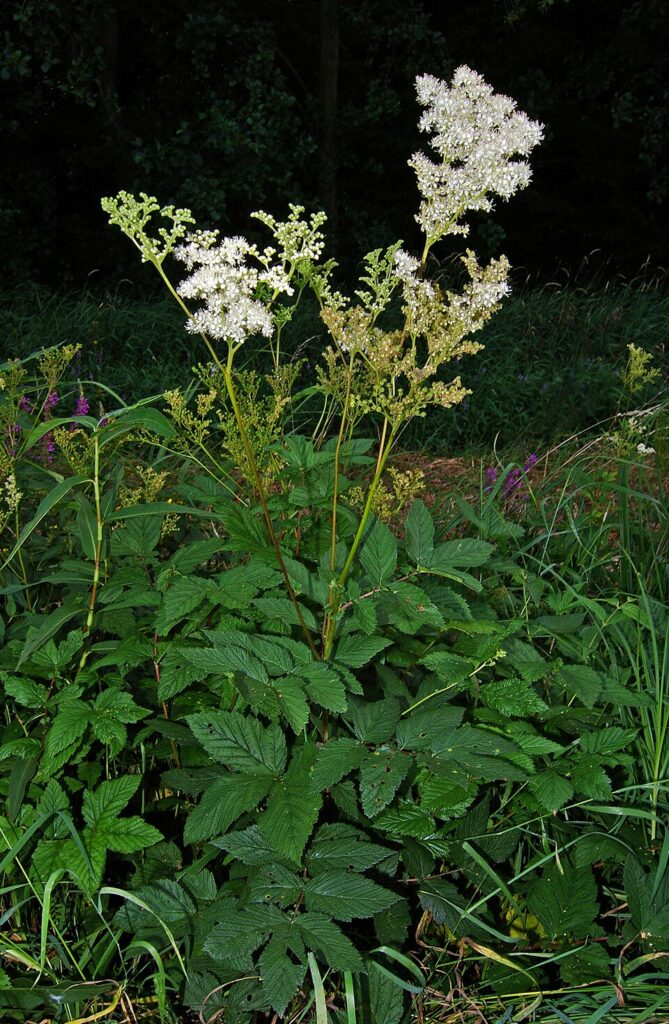
There is a strange footnote in the history of modern medicine that almost nobody knows.
The drug that transformed the twentieth century—the one we still reach for instinctively, the small white tablet synonymous with headache and heartache and inflammation—takes its name not from a laboratory but from a British meadow plant.
Aspirin. From a-Spiraea. From the plant now called Filipendula ulmaria, once classified under the genus Spiraea, whose flowers were first used to isolate salicylates in the nineteenth century, and whose chemistry eventually led to the synthesis of acetylsalicylic acid.
The pharmaceutical industry extracted one compound, purified and concentrated it beyond anything the plant contains, named the resulting drug partly after the plant’s old Latin name, and then proceeded to forget the plant entirely.
Meadowsweet noticed none of this. It went on flowering, creamy and sweet-scented, in every damp ditch and marshy meadow in Britain, quietly demonstrating that the whole is quite different from the part.
Which brings us to a puzzle.
The Paradox
If you take aspirin regularly—for pain, for inflammation, for headaches—you face a well-known risk: stomach ulcers.
Aspirin irritates and thins the stomach lining. This is not a rare side effect. This is one of the primary reasons people stop taking it. The drug that relieves your headache can, over time, create holes in your stomach.
Now here’s the puzzle: meadowsweet, the plant from which aspirin takes its name, the plant that contains the salicylates that inspired the drug’s creation, does something completely different.
Meadowsweet treats stomach ulcers.
Not causes them. Treats them.
How is this possible?
Reading the Habitat
There is a principle in traditional herbalism that a plant’s environment reflects its medicine—that if you learn to read where a plant grows and how it behaves, you are already reading something about what it does.
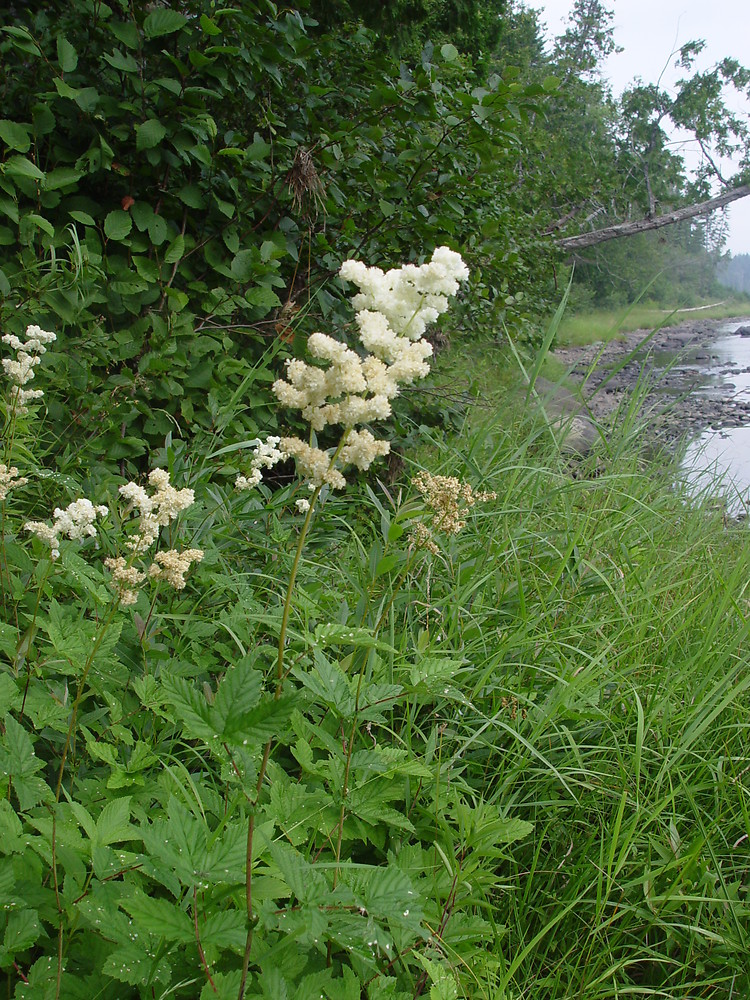
Meadowsweet grows in wet, acidic places. It prefers riverbanks, drainage ditches, boggy meadows, and the damp margins of streams. You will not find it on chalk downs or dry hillsides. It is a plant of the saturated, the slow-moving, the slightly acid and the overly damp. Its long stems, up to a metre and a half, rise from this waterlogged ground and hold aloft dense, frothy clusters of cream-white flowers—sweet and almond-scented in bloom, but with leaves that carry a sharper, more medicinal fragrance when bruised.
This environmental preference is, in traditional thinking, a direct reflection of its therapeutic territory.
Meadowsweet’s primary affinity is for hot, acid, damp conditions in the digestive tract—exactly the tissue state that mirrors its habitat. It is drawn to excess, to the overly wet and overly acid, and it works to tone, cool, and restore those states to equilibrium.
The plant is, in this sense, a map of itself.
The Two Tastes
Meadowsweet has two primary tastes: bitter and astringent. Each carries specific therapeutic intelligence.
The bitter quality supports the digestive and hepatic systems. It stimulates the release of digestive enzymes, cools excess heat, supports liver and gallbladder function. Old physicians considered meadowsweet among the finest digestive medicines available, particularly for the upper GI tract—the stomach and oesophagus—where excess heat, acidity, and irritation are most keenly felt.
The astringent quality is meadowsweet’s primary therapeutic identity.
Astringents tighten and contract tissues that have become overly relaxed or permeable—the mucous membranes of the gut wall, the tissues surrounding a wound, the inflamed lining of the stomach. They hold fluids where they belong, bind and consolidate tissues that are leaking or dissolving, create the structural integrity the body needs to heal.
Together, these two tastes make meadowsweet one of the most precisely targeted remedies for gastric ulceration.
And here’s where we return to our puzzle.
The Formula Unto Itself
Where aspirin can cause ulcers through regular use—irritating and thinning the stomach lining—meadowsweet addresses the pattern that underlies them.
The bitter quality cools the heat and inflammation of the ulcerated tissue and inhibits the bacteria associated with gastric ulcers. The astringent quality contracts the wound and strengthens the damaged mucosa. The salicylates provide their pain-relieving action.
It is, as one herbal framework puts it, something approaching a formula unto itself.
The whole plant—not the isolated salicylate content—is what gives meadowsweet its distinctive action. It works through a complex interplay of bitter compounds, tannins, mucilage, flavonoids, and salicylate-containing glycosides. It is slower, gentler, and more specifically targeted than its pharmaceutical descendant.
And notably, it does not thin the blood or erode the stomach lining.
This same cooling, drying, and toning action applies in the urinary tract, where meadowsweet helps with hot, burning urinary infections. Its action on clearing excess uric acid through the kidneys makes it traditionally useful in gouty arthritis and joint pain arising from that particular tissue state.
The Oldest Medicine
Meadowsweet is one of the oldest documented medicines in Britain.
Traces of the plant have been found in Bronze Age burial cairns scattered across England, Scotland, and Wales—placed with the dead, perhaps as medicine for the journey, or as a scent to sweeten the passage. Evidence suggests it was present in some of the earliest known mead, brewed in Scotland around 1000 BCE.
Maude Grieve records that meadowsweet, water-mint, and vervain were held as the three most sacred herbs of the Druids—plants of the highest ritual and medicinal significance. This is an herb that runs through the oldest layers of British plant memory.
It appears in the Welsh Mabinogion as one of three flowers—alongside oak blossom and broom—used by the magicians Math and Gwydion to create Blodeuwedd, the flower-faced woman. It was woven into bridal garlands and strewn along handfasting paths, earning it the name Bridewort.
Queen Elizabeth I reportedly declared it her favourite strewing herb. The 16th-century herbalist John Gerard wrote that its scent made the heart “merrie and joyful.”
Courtship and Marriage
Its folk name in Yorkshire captures something essential about the plant’s dual nature: Courtship and Marriage.
The sweet, almond-scented flowers representing the bliss of courtship. The sharper, more medicinal scent of the crushed leaves representing the more sober reality of married life.
Two aspects of the same plant. Both necessary. Both present.
This is not just folklore. This is observation.
How to Use It
Meadowsweet flowers make an effective tea for digestive complaints: steep one to two teaspoons of dried flowers in a covered cup of just-boiled water for ten minutes.
The lid matters. Meadowsweet’s volatile oils include methyl salicylate, and covering the vessel helps retain them.
For upper digestive conditions such as heartburn, acid reflux, or gastric irritation, a small cup taken before or after meals is the traditional approach. For headaches with a hot, pounding quality, the same infusion applies.
The flowers are the gentler preparation. The root, taken as a decoction, is traditionally reserved for fever reduction and stronger anti-inflammatory applications.
Attempting to use it as a like-for-like aspirin substitute is a category error. The herb works through a far more complex interplay than its pharmaceutical descendant.
The Cautions
Meadowsweet contains salicylates and should not be taken by anyone with a known allergy or sensitivity to aspirin.
It is contraindicated alongside blood-thinning medications such as warfarin, and should not be given to children or teenagers recovering from viral illness due to the association between salicylates and Reye’s syndrome. Those with asthma that is aspirin-sensitive should approach with caution.
As with all cooling, drying herbs, extended use in individuals who already run cold and dry constitutionally may be inappropriate.
What Was Left Behind
There is something quietly instructive about the meadowsweet story.
A plant holds within its whole form a range of actions that work in concert—cooling and binding, stimulating and soothing, addressing the symptom and the pattern beneath it simultaneously.
The pharmaceutical industry looked at this and saw one compound worth isolating.
What it left behind was the rest of the plant: the bitter that prevents the very damage the isolated compound could cause; the astringent that heals the tissues the isolated compound might wound.
This is the paradox we started with, now explained. Aspirin—the isolated compound—causes stomach ulcers. Meadowsweet—the whole plant—treats them. Same salicylates. Completely different outcome.
The difference is everything that surrounds the salicylates. The bitter. The astringent. The tannins. The mucilage. The intelligence of the whole.
Learning to see herbs this way—as wholes rather than as delivery mechanisms for isolated actives—is one of the most fundamental shifts in herbal thinking.
Meadowsweet, it turns out, is as good a place as any to begin.