The Boundary Problem Or: What a Painful Weed Reveals About the Logic of Constitutional Medicine
- Roland Koronya


There’s a question that’s always bothered herbalists, though most won’t admit it: Why would evolution design a plant that simultaneously attacks you and feeds you?
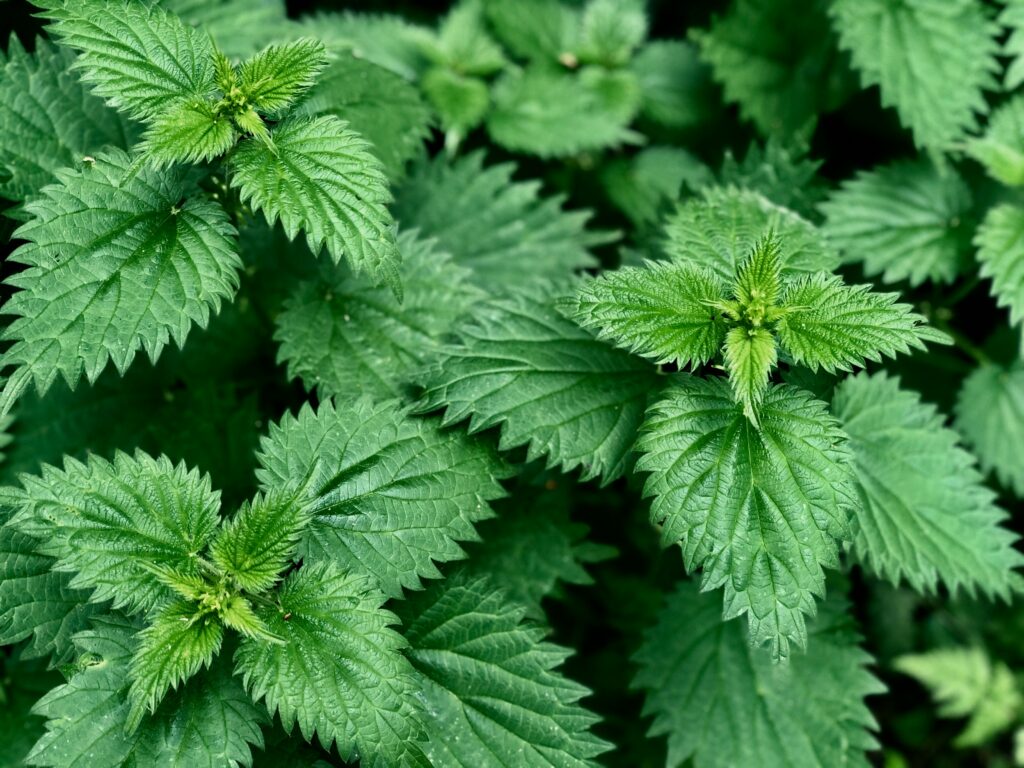
Consider the nettle. Every February, while the British landscape still looks dead, Urtica dioica pushes through half-frozen ground armed with hollow hairs filled with histamine, acetylcholine, and formic acid. Touch one carelessly and you get a hot, prickling sting that can last for hours. It’s aggressive. Almost hostile. The plant has boundaries, and it enforces them.
But here’s what makes no sense: beneath those stinging hairs lies one of the most nutritionally dense plants in Britain. Packed with magnesium, calcium, iron, and protein in forms the body readily absorbs. Traditional herbalists called it a “spring tonic.” Modern analysis confirms they were right.
The plant that literally hurts you is also trying to feed you.
This isn’t a design flaw. It’s a clue.
The Geography of Depletion
Let’s call it the Depletion Pattern.
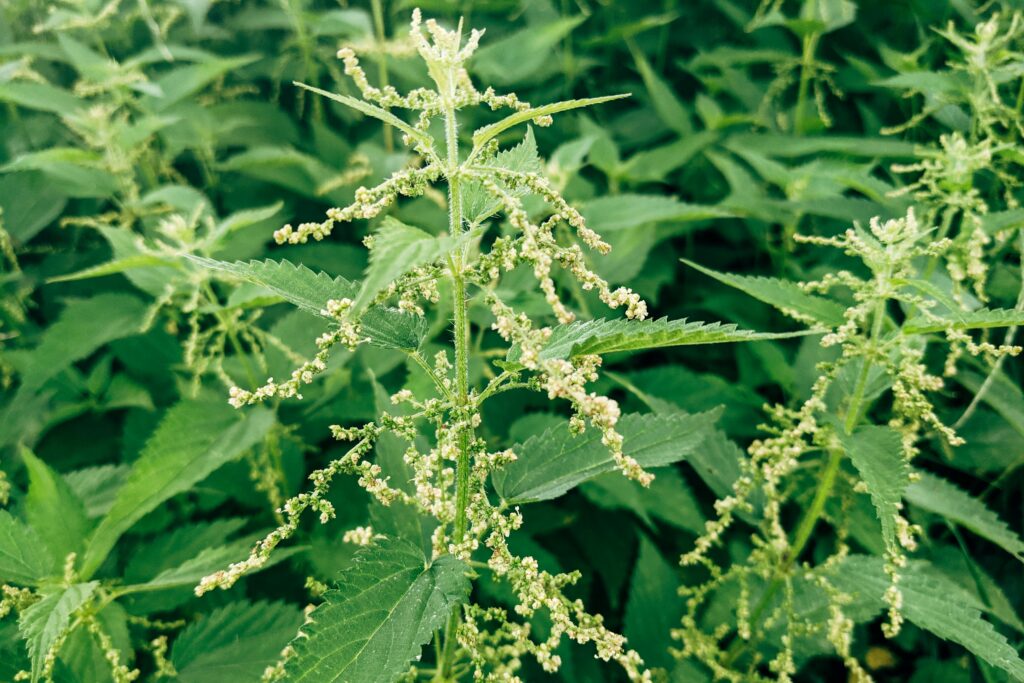
Nettle doesn’t grow in manicured gardens. It seeks out waste grounds—disturbed soil, abandoned lots, the margins where nothing else particularly wants to grow. It likes its feet wet, clustering near streams and low-lying areas where water collects. Most gardeners consider it a weed.
But watch where it chooses to grow. Nettle proliferates in exactly the kind of ground that mirrors the tissues it heals.
This is where vitalist herbalism—the framework that views plants as intelligent beings with specific affinities rather than mere chemical delivery systems—gets interesting. Because nettle’s attraction to depleted, exhausted soil isn’t random. In the traditional language of plant signatures, it’s revealing something about its medicine.
In the human body, nettle targets atrophy. The herbalist Matthew Wood describes it as working with people who are “pale, anemic”—individuals whose systems have become undernourished not from lack of food, but from an inability to properly absorb and utilize what they’re given. Their tissues, like waste ground, have lost their vitality.
Think about that parallel for a moment. The plant arrives in depleted soil the same way it arrives in depleted bodies: first, before anything else, with exactly what’s needed.
What the Sting Teaches
Now, about those stinging hairs.
The sting isn’t something that would be better eliminated to make the plant more user-friendly. That sting is precisely what tells you how to understand nettle’s deeper medicine. Because the plant that has the strongest boundaries also teaches your body how to establish boundaries at a cellular level.
Here’s what’s happening energetically: nettle is cooling and astringent. Two qualities that work together to tighten and tone lax tissues. An astringent draws things together, creates integrity, establishes borders. In traditional Western herbalism, astringents were prescribed for conditions where tissues had become too loose, too open, too permeable. Heavy menstrual bleeding. Chronic diarrhea. Leaky capillaries causing nosebleeds. Mucous membranes that couldn’t hold their shape.
This is what nettle does in the urinary tract, where herbalists have used it for centuries to address chronic infections and water retention. It tightens what has become too lax. It reminds the body where its edges are.
The British Romans understood something about this. Invading from warmer climates, they reportedly flailed themselves with nettle to stay warm—driving circulation to the skin’s surface. They were working with nettle’s ability to move stagnant energy, to stimulate boundaries that had become numb and unresponsive.
The sting, paradoxically, wakes up the very tissues it appears to attack.
The Migration Test
Here’s a detail worth pausing over: nettle appears on every continent except Antarctica. Some species of Urtica travelled the world with humans, carried deliberately across oceans and mountain ranges during migrations that happened thousands of years ago.
Think about what that means. Our ancestors, packing for journeys into the unknown, chose to bring nettle. Not just seeds for food crops, but nettle.
What did they understand that we’ve forgotten?
They understood constitutional medicine—remedies that work not on symptoms but on fundamental patterns of health and depletion in the body. They understood that in new lands, facing new stresses, the first thing that would break down would be the body’s ability to nourish itself. And they knew nettle could restore that capacity.
The traditional use of nettle as an alterative—a term from the physiomedical tradition meaning a plant that “alters” or shifts the body’s metabolic patterns—speaks to this deeper understanding. Nettle doesn’t just add nutrients. It helps the body remember how to process nutrients, how to eliminate waste, how to strengthen tissues that have forgotten their proper function. It works slowly, gently, rebuilding from the ground up.
This is why herbalists recommend nettle for fatigue caused by iron deficiency, but also for the bone-deep exhaustion that comes after prolonged illness or chronic stress. Why nettle tea or infusion becomes a daily practice rather than a quick fix. You drink it for weeks, months, letting it slowly restore what has been depleted not just in your tissues but in your body’s capacity to maintain itself.
The Timing Question
Perhaps the most elegant aspect of nettle is its timing.
It arrives in British hedgerows at the end of winter, when our own reserves are depleted, when we’ve been living on stored energy for months and haven’t seen fresh green food since autumn. Before daffodils bloom. Before gardens show any sign of life.
This isn’t coincidence. It’s relationship.
The vitalist understanding rests on this idea: that we are part of nature, not separate from it, and that the plants around us respond to the same patterns of depletion and renewal that move through our own bodies. Nettle grows in waste ground because it knows how to transform depletion into vitality. It arrives in spring because that’s when the work of rebuilding begins.
For those of us living in the modern world—depleted by different causes than our ancestors faced, but depleted nonetheless—nettle offers a particular kind of medicine. Not flashy, immediate relief. Not overnight transformation. But the patient, steady work of constitutional healing. The slow accumulation of minerals that bone and blood require. The gentle tightening of tissues that have become too lax. The restoration of boundaries, both physical and otherwise.
You can measure nettle’s calcium content, analyze its astringent tannins, quantify its effect on inflammatory markers. But you’ll miss something essential if you stop there—if you fail to ask why this particular combination of properties appears in this particular plant, growing in this particular place, at this particular time.

Reading the Pattern
The vitalist herbalist asks these questions. And in asking them, discovers not just what nettle does, but what it teaches: that the deepest nourishment often comes wrapped in something that looks like a threat. That boundaries and generosity aren’t opposites. That the first step in healing exhausted systems is often simply remembering what it means to have edges, to protect what’s valuable, to say no to what depletes and yes to what restores.
These patterns—the ones that tell you not just what an herb is “good for” but how it operates, why it works, what it asks of the body—are what our Green Files explores systematically. We spend time with plants like nettle not just cataloguing their actions but learning to read their intelligence, to understand the relationships between taste, energetics, and constitutional affinity that make traditional herbalism something more than applied botany.
It’s a different way of learning—slower, perhaps, than memorizing lists of indications, but ultimately more useful. Because once you understand how to read a plant like nettle, how to see what it reveals about depletion and restoration, protection and nourishment, you begin to understand the language all plants speak. You begin to see patterns everywhere.
And you begin, maybe, to look at those aggressive green shoots in February hedgerows differently. Not as weeds to be eliminated, but as medicine arriving exactly when needed, armed with exactly the boundaries required to deliver exactly the nourishment that will rebuild what winter—or life—has depleted.