The Last Bar in Britain That Still Sells Blood Tonic
- Roland Koronya


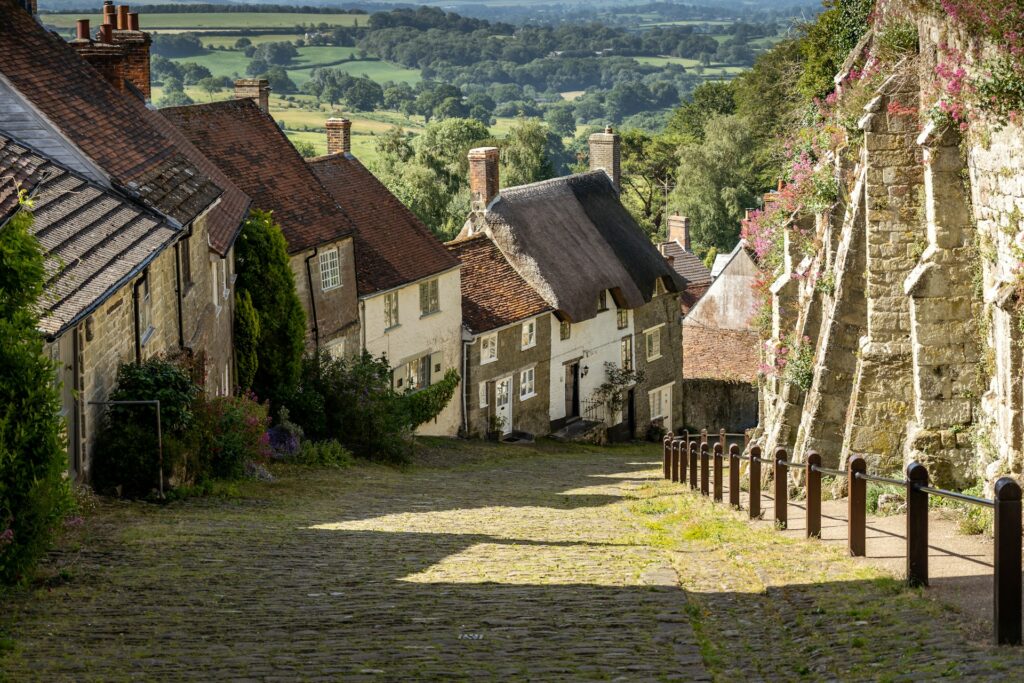
On Bank Street in Rawtenstall, a small Lancashire mill town folded into the Rossendale hills, there is a white shopfront that has been selling the same sort of drink since 1890.
Walk in, and the menu is not what you expect from a place called a bar. There is no beer and no wine. Instead there are cordials, some served cold, one served hot, and the owners will hand you a free taster if you cannot decide.
There is sarsaparilla. There is ginger beer. There is dandelion and burdock.
And there is something called blood tonic.
It is the last one that stops you. Blood tonic. Here is a shop in the north of England selling a glass of it across a counter, and sales have risen sharply in recent years.
What, exactly, is being sold? And why has a drink named after a medical theory that vanished long ago outlived almost every other shop of its kind?
A Cheese-Maker's Idea
The answer begins in 1832, in Preston, with a Methodist cheese-maker named Joseph Livesey.
He is credited with beginning the Temperance Movement, and it caught on, particularly in the industrial north, where a hard day’s work in a mill ended in a pub. The movement’s earliest members only had to give up spirits. Later, joining the Band of Hope meant taking the pledge: no alcohol at all.
A pledge, of course, leaves a gap.
If a man cannot go to the pub, where does he go?
The answer, in Lancashire and across the north, was the temperance bar. Some held licences that let them open on Sundays, when ordinary pubs were shut. They served cream soda, sarsaparilla, Vimto, and dandelion and burdock, and in the early twentieth century they were among the first places in Britain to sell Coca-Cola. For a few decades they were a fixture of the northern high street.
Nearly all of them are gone.
Mr Fitzpatrick’s is the one that stayed.
The Herbalists from Dublin
The Fitzpatricks came from Ireland in the 1880s, and they came as herbalists.
By 1890 they had opened the shop on Bank Street, part of a family chain across Lancashire that, at its height, is said to have run around two dozen outlets. The story the bar tells is that its recipes descend from a Dublin recipe book dating to 1836, though the exact link between that book and the shop is not something anyone can easily check.
Whatever the recipes’ exact ancestry, the names on the menu tell their own story.
Ginger beer was warming. Sarsaparilla was a classic tonic. And the dark red cordial they called blood tonic carried a whole theory of the body in its name.
What a Tonic Actually Is
It is worth being precise about that word, because it has drifted a long way from its origin.
Today a tonic is something you add to gin. The dictionary will tell you it is a medicinal substance that gives a feeling of vigour. But in herbal medicine, the word comes from tone, as in muscle tone, tissue tone. A tonic, in this older sense, is something that restores strength and tone to the tissues of the body.
Herbalists divide them into families: astringents that tighten lax tissue, nutritive herbs that replenish minerals, vital tonics that nourish particular organs, and bitters that wake up digestion and absorption. Tonic water, for the record, is named for its bitterness, not for any benefit to your health.
Blood tonic belongs to a slightly different old idea, the alterative.
An alterative was a herb believed to change the condition of the blood and lymph, to clear what had become sluggish and foul. And of all the alteratives in the British hedgerow, burdock has the best claim to the crown. One modern herbalist calls it the all-purpose alterative, because it was traditionally used to support the skin, digestion, kidneys and lymph all at once.
Its taste says as much: the root is oily, mildly bitter, sweet, and faintly salty, and in the vitalist reading it is neutral to slightly cooling. Unusually, it is said to answer both dry, depleted tissue and damp, stagnant tissue, which is why it sits in so many traditional formulas.
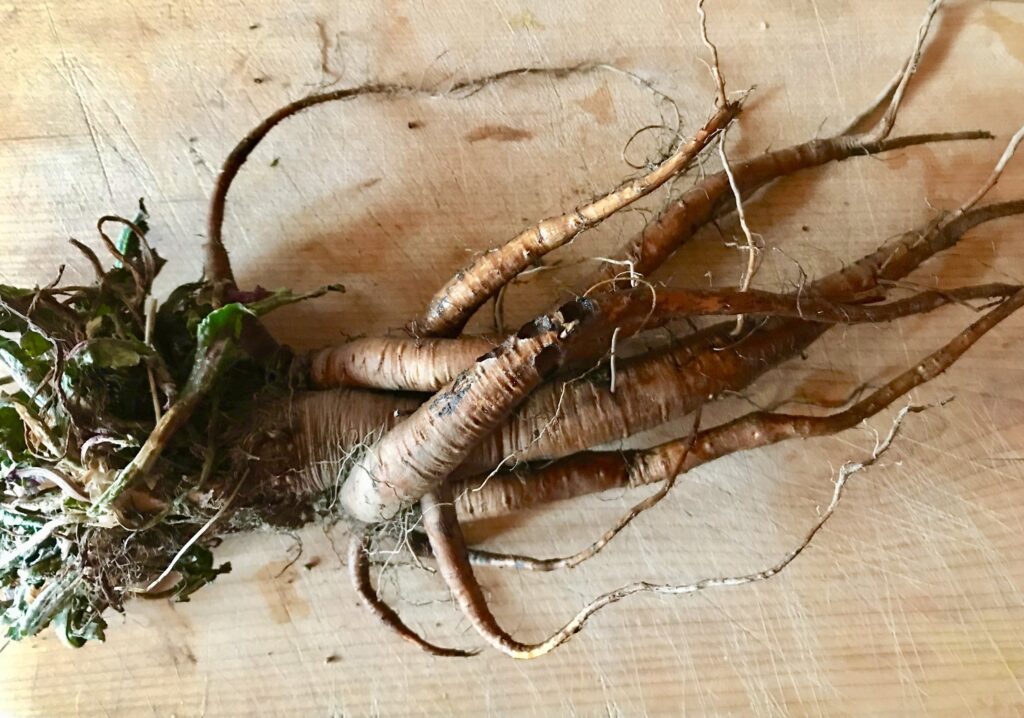
Dandelion root is its natural partner. It is bitter, almost sweet, mineral-rich, and loaded with a fibre called inulin, which feeds the bacteria in the gut. Herbalists have long used it as a digestive tonic, and the two roots are often paired. Both are best dug in autumn, when the plant’s energy has sunk into its roots. Burdock in particular is said to turn starchier and sweeter after the first frost.
Which gives you a glimpse of what the Fitzpatricks were actually selling.
It was a sweetened, fizzy, cordial version of a very old herbal idea: take two bitter, mineral-rich roots from the hedgerow and drink them as a tonic, in the proper sense of the word. A matter of tone and vitality, not of curing disease.
The Drink That Outlived Its Theory
Dandelion and burdock itself is much older than the Fitzpatricks.
It has been drunk in the British Isles since the Middle Ages, beginning as a light mead and later made by fermenting the roots, before becoming the carbonated soft drink on sale today. In Huddersfield, a businessman named Ben Shaw built a company on it and sold it across the country.
After the Second World War, interest in the pledge faded. Sweet, fizzy drinks arrived from America. The temperance bars thinned out, one by one, until only a handful remained.
The Fitzpatrick family kept the Rawtenstall shop going into the 1980s. Then it passed to new owners, and in 1994 to another couple, who renamed it Fitzpatrick’s Herbal Health in 1998.
The history has not been smooth. In 2003, the sarsaparilla briefly disappeared from the shelves because sassafras, its traditional flavouring, had been found to contain a compound that was carcinogenic in rats. It came back, reformulated. In early 2016, the bar closed for a few weeks before reopening under new owners, and after a refit began selling cake and milkshakes alongside the old drinks.
And yet people kept coming.
In recent years, sales have risen sharply, though nobody is quite sure why. It may be the growing number of Britons who are choosing not to drink. It may be that the cordials make good cocktail mixers. Perhaps it is both.
The same drinks that were once the pledge-takers’ consolation are now the sober-curious customer’s choice, and the bartender’s secret ingredient.
Bitter Roots and Long Memories
There is something quietly instructive in a shop like this.
The theory of the blood that gave the tonic its name is long gone. The roots, the habit of bitterness, and the thought that a plant might restore a body rather than merely fix it, are still very much with us.
Learning to see a familiar hedgerow weed this way, as a plant with a character, a season and a long human history, is the kind of patient attention we build slowly in our Herbal Foundations Course. It is how you come to understand that a glass of dandelion and burdock, bought for a few pounds in a Lancashire mill town, is really the end of a very long conversation between people and roots.
The burdock is still on the lane, going to seed in its second year, and the dandelion is still in the verge.
Somewhere in Rawtenstall, a kettle is on, and the old red cordial is being poured.