We Kept the Sachet: How Lavender Became an English Scent and Stopped Being a Medicine
- Roland Koronya


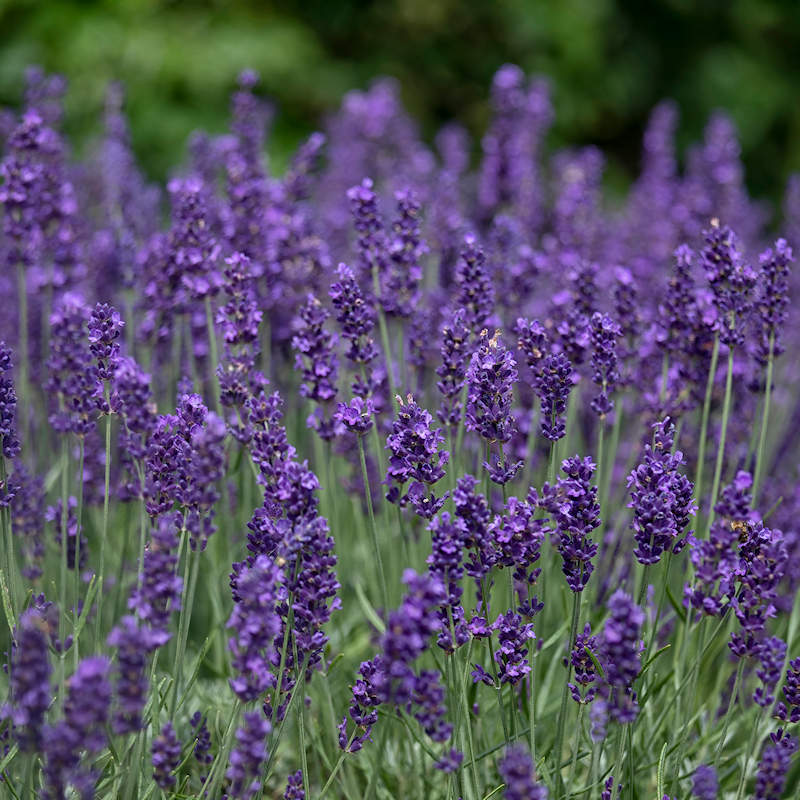
Somewhere between the M4 and the A303, if you take the right minor road at the right time of year, you will find yourself driving through lavender.
Not a plant or two in a garden border, fields of it. Long purple rows running up gentle chalk slopes in the summer heat, the air thick and weighted with scent through the open window.
Norfolk does it. The Cotswolds do it. Hitchin in Hertfordshire has been growing lavender commercially since the 1820s.
These are landscapes so thoroughly associated with English summer that a painting of them, or a postcard, or a sachet of dried flowers from a farm shop, functions as a kind of shorthand for Englishness itself.
And yet lavender is not English.
The Reveal
It is not even British.
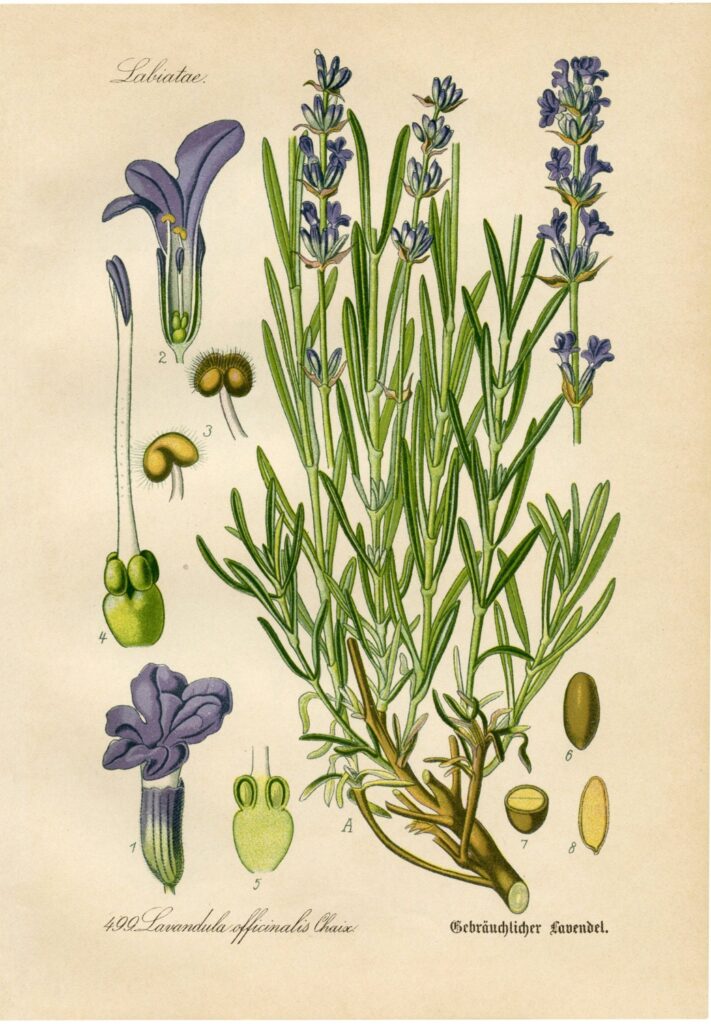
Lavandula angustifolia is native to the western Mediterranean, the rocky, sun-beaten garrigue of Provence and Spain, the limestone hills of Corsica, the dry hillsides of northern Italy where it grows with rosemary and cistus in thin, well-drained soil above the sea.
It arrived in Britain with the Romans. It was cultivated in monastic gardens through the medieval period, reached the height of its popularity in the Elizabethan era, and has been so continuously present in British gardens and British cultural life ever since that most people who grew up here would find it genuinely surprising to learn it does not belong.
This is lavender’s most distinctive quality.
It has made itself at home so completely that the question of whether it is native has simply stopped occurring to people.
But there is a second thing lavender has made us forget and it matters more than the first.
To Wash
The name lavender comes from the Latin lavare, to wash.
The Romans used it in their baths. Medieval Europeans washed laundry in it. The tradition of placing dried sprigs among clean linen survived in British households well into the twentieth century, and in some still does. Yardley’s Old English Lavender soap, first produced in 1770, was one of the most widely distributed British products of the Victorian era.
The scent of lavender and the concept of cleanliness (physical, domestic, moral) became so thoroughly entwined in the British imagination that they are almost inseparable still.
What the Romans knew, and what the British tradition has mostly forgotten, is that lavender was not primarily a perfume.
It was medicine.
The same plant that scented the bath was applied to wounds. The same flowers strewn in linen were steeped in oil for skin conditions and headaches. The lavender sachet in the drawer has a medical origin, not a decorative one: placed near the sleeping person, the volatile oils were understood to ease the nervous system, promote restful sleep, and repel the insects that spread disease.
We kept the sachet.
We lost the pharmacology behind it.
Not Sedation
Here is the first thing most people have wrong about lavender.
It is not a sedating herb. Not in the way that valerian is sedating, or hops.
It is a nervine relaxant, which is a more specific thing. It acts on the autonomic nervous system, shifting the balance from sympathetic dominance toward parasympathetic function, from fight-or-flight toward rest-and-digest.
It does not knock you out.
It changes the conditions that make rest possible.
The volatile oils (linalool and linalyl acetate, comprising between fifty and ninety percent of the essential oil fraction) act on the nervous system to reduce blood pressure, lower heart rate, and slow the respiratory rate. They ease anxiety and support the transition out of the stress state.
This is lavender’s deepest and most documented territory: the wind/tension tissue state. The nervous system under accumulated stress. The muscles holding tension they cannot release. The person who is not dramatically unwell but chronically taut — at the jaw, in the shoulders, behind the eyes, through the gut.
The Cool Herb That Stimulates
Here is the second thing most people have wrong about lavender. And it is more surprising.
Lavender is cooling. But it is also a cerebral circulatory stimulant, a herb that, despite its cooling energetics, drives blood and circulation toward the brain.
This produces a clinical nuance that is easy to miss.
It makes lavender excellent for cold-pattern headaches: the dull, tight, tension-based headache driven by poor circulation and a cold, depressed nervous system, where stimulating cerebral blood flow relieves the congestion causing the pain.
And it makes lavender wrong for heat-pattern headaches: the throbbing, hot, expansive type where increased cerebral circulation would worsen the pain rather than relieve it.
This is one of the most common errors made with lavender.
It is so universally associated with headache relief that people reach for it regardless of headache type, when in fact the energetics make it specific to one pattern.
The cool herb that stimulates rather than simply sedates. It is a small distinction. It is also the difference between relief and aggravation, and it is invisible to anyone working from lavender’s reputation rather than its energetics.
The Sachet Works
Now return to that sachet in the linen drawer, the one placed there for cleanliness, its medical origin forgotten.
Here is what is remarkable about it.
It works.
Not as a placebo. Not as a pleasant association. The nervous system action of lavender is unusual in one important respect: it works through inhalation as effectively as through ingestion. The volatile oils cross the blood-brain barrier readily by both routes.
A sachet of dried lavender near the pillow is a genuine delivery mechanism for compounds that act on the limbic system and the autonomic nervous system.
Research confirms what the tradition always knew: the scent of lavender reduces self-reported anxiety and improves mood across multiple study designs, including clinical settings where pre-operative anxiety was significantly reduced by lavender aromatherapy.
This is folk herbalism that works precisely as described. The grandmother placing lavender by the bed was not performing a superstition. She was administering a nervous system medicine through the most direct route available, the breath.
The Skin
Lavender’s other primary territory is the skin, and here the modern evidence is substantial.
Research demonstrates that topical lavender oil promotes wound healing by stimulating collagen synthesis and accelerating granulation tissue formation through upregulation of TGF-β, the growth factor that signals tissue repair.
The tradition used it for acne, eczema, burns, bruises, insect bites, dermatitis, minor wounds. Three distinct mechanisms explain why it worked across such a range.
The antimicrobial action addresses the bacterial dimension of infected or inflamed skin. The anti-inflammatory quality reduces the redness and heat of irritation. The vulnerary quality drives the repair.
Three mechanisms. Same direction. Which is why lavender-infused oil has been one of the most consistently used skin preparations in European folk tradition for centuries and why the modern research, looking closely, found the tradition was right.
The Aromatherapy Question
Lavender is the most widely used herb in British aromatherapy. This is both its greatest achievement and part of its clinical problem.
Aromatherapy separated the volatile oils from the whole plant, concentrated them into an essential oil, and delivered them through diffusers and topical application, while largely decoupling this practice from the broader pharmacology of the herb.
This made lavender ubiquitous and largely safe. Diluted essential oil on a pillow or in a bath is gentle enough to be genuinely low-risk.
But it also contributed to a picture in which lavender is understood primarily as a pleasant scent with calming associations rather than a clinically specific herb with precise energetics and clear indications.
The whole herb (dried flowers in tea, tincture, or infused oil) delivers the full spectrum: the bitter tonic, the carminative, the wound-healing properties that the essential oil alone does not provide.
Both modes of use are legitimate. They are not the same thing.
The Preparations
Lavender tea: one to two teaspoons of dried flower buds per cup, steeped covered for ten minutes. Floral and slightly resinous, the bitter quality becoming more pronounced at longer steeping times. Combines naturally with chamomile and lemon balm for the nervous, anxious, heat-driven pattern; with linden for the cardiovascular-nervous combination; with wood betony for the depleted, overworked nervous system.
Lavender-infused oil: fill a jar with dried flower buds (dried, not fresh, to prevent moisture contaminating the oil) cover with a light carrier oil, infuse in a warm place for four to six weeks. Strain and press. Immediately useful for skin conditions, minor wounds, and temples for tension headaches.
Lavender tincture: fresh flowers at 60% alcohol, dried at 40%. A few drops in water or added to a nervine formula brings the aromatic quality through clearly.
Lavender is one of the safest herbs available, suitable for all ages including children and during pregnancy at culinary and gentle medicinal doses. The essential oil should always be diluted before skin application, and ingestion of neat essential oil is not appropriate.
The Sachet in the Drawer
There is a particular kind of medicinal knowledge that does not look like knowledge from the outside.
It looks like habit.
Like the lavender sachet that has been placed in the linen drawer for three generations without anyone quite being able to say why, except that it has always been done and it keeps the sheets smelling clean.
The Romans knew why they put lavender in the bath. The medieval infirmarer knew why it was grown in the physic garden. The Elizabethan housewife who dried it and tucked it into the linen press knew, at least in a practical sense, what it did.
What has been lost is not the practice but the understanding behind it, the framework that connects the habit to the pharmacology, the scent to the nervous system, the sachet to the autonomic shift it produces in the sleeping person.
That understanding, once recovered, transforms lavender from a pleasant heritage product into a genuinely useful tool: precise in its indications, specific in its energetics, and available, still, always in gardens across every part of Britain.
The plant that isn’t really British made itself so at home we forgot it was foreign.
The medicine that became a scent made itself so familiar we forgot it was medicine.
The sachet is in the drawer.
Now let us understand why it is there.