The Jar on the Spice Rack: How Thyme Became a Flavouring and Stopped Being a Medicine
- Roland Koronya


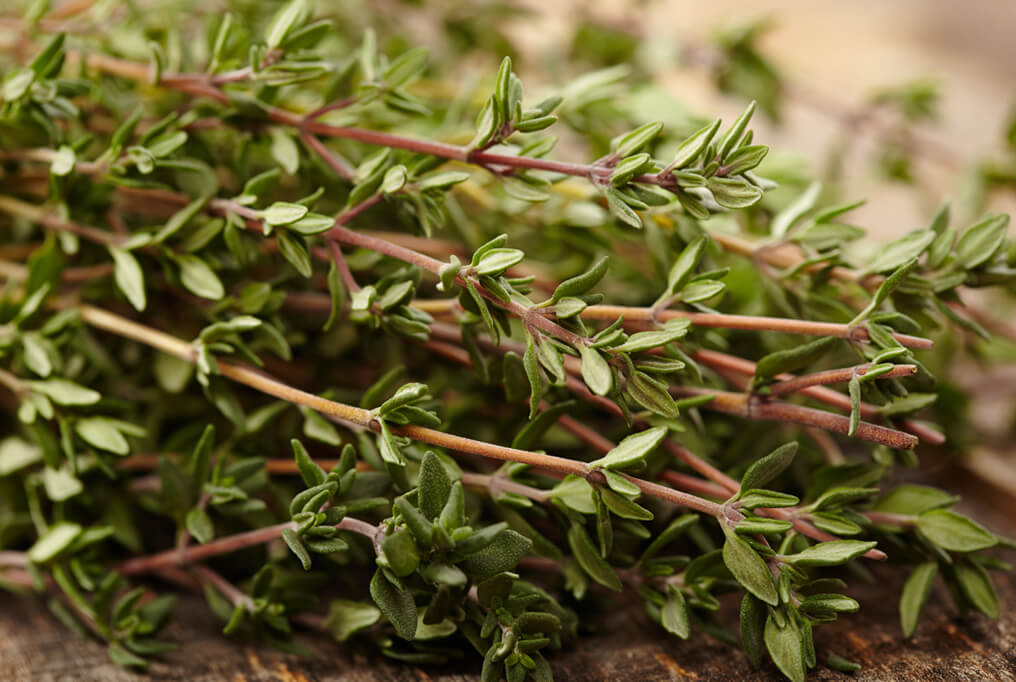
Open almost any British kitchen cupboard and you will find it.
A small jar, probably purchased years ago, the label faded, the contents somewhere between grey and green. Perhaps there are two: one for cooking, one from a different brand, bought with some vague intention and never quite used.
Thyme is one of those herbs so thoroughly assimilated into the kitchen that it has become almost invisible, a flavouring, a seasoning, a thing you add to a roast without thinking.
The average British household owns more thyme than it knows what to do with.
What the average British household does not know is that the jar on the spice rack contains one of the most medicinally potent herbs in the European tradition.
Culpeper's Confidence
Nicholas Culpeper, writing in 1653, was not modest about it.
“It is a noble strengthener of the lungs, as notable a one as grows; neither is there scarce a better remedy growing for that disease in children which they commonly call the chin-cough.”
He went on to describe its uses for shortness of breath, excess phlegm, worms, digestive wind, gout, and sciatica.
He concluded, with a satisfaction that comes through the centuries quite clearly: “It is so harmless you need not fear the use of it.”
Culpeper was describing the same plant sitting in your kitchen right now.
The Two Thymes
A note on species before anything else.
Thymus vulgaris, garden thyme, the Mediterranean species, is the one most commonly found dried in the kitchen and grown in British herb gardens. It arrived with the Romans and has been grown here ever since.
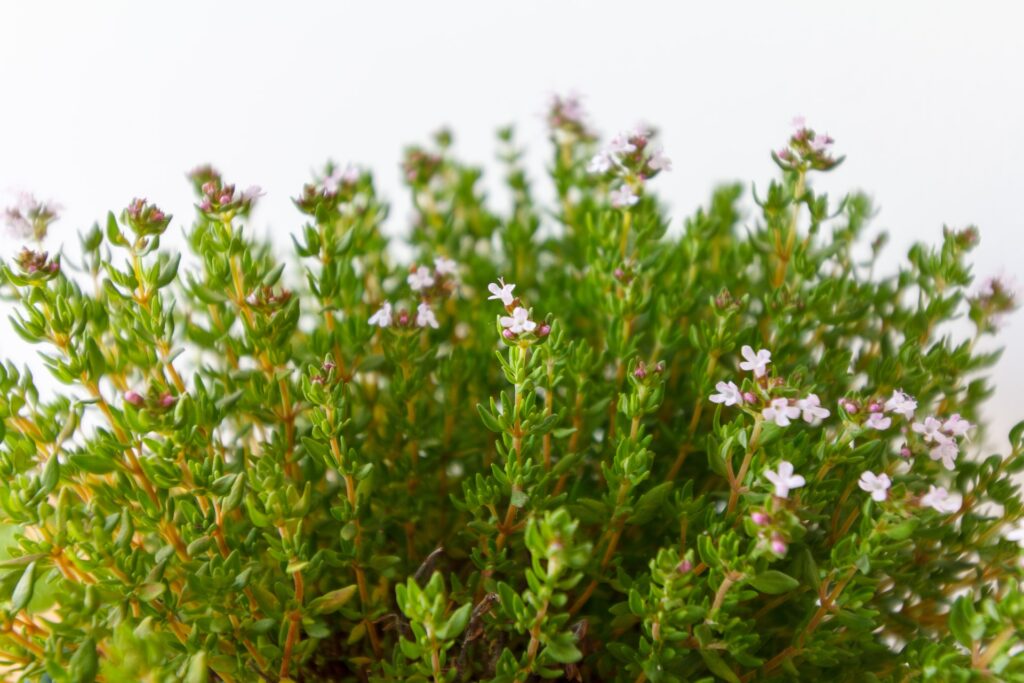
Thymus polytrichus, wild thyme, is the widespread native species, growing low across chalk downland, coastal clifftops, dry heathland, and rocky hillsides throughout Britain from Cornwall to Shetland. Its tiny purple flowers carpet the turf from June to September. Smaller and more delicate than its Mediterranean relative. Here since the last ice age.
Both share the volatile oil profile that makes thyme the herb it is. Both are medicinally coherent.
For most purposes either works. T. vulgaris is preferred for respiratory conditions where the full volatile oil content is needed. The distinction matters most in foraging: wild thyme on a British hillside is genuinely medicinal and available to anyone who knows where to look.
What the Taste Announces
Thyme tastes pungent, aromatic, and slightly bitter, three tastes arriving in tight succession, each one telling you something.
The pungency is the dominant note: sharp, warm, almost hot on the tongue. In the energetic tradition, pungency announces warming action, stimulation of circulation, dispersal of stagnation, and a particular affinity for the mucous membranes where volatile oils can reach directly.
The aromatic quality beneath carries the volatile oils (thymol and carvacrol primarily) responsible for thyme’s antimicrobial, expectorant, and antispasmodic actions.
The faint bitterness underneath both speaks of a mild digestive tonic quality, a gentle stimulation of bile and digestive secretion that explains why thyme has been in food as long as it has been in medicine.
These three tastes together describe a herb that is warming, drying, stimulating, and antimicrobial. Precise in its direction. Unapologetic in its heat.
The Essential Discrimination
Thyme addresses a single dominant tissue state: cold/depression, and the damp/stagnation that cold/depression tends to produce when it has persisted long enough.
Cold/depression in the respiratory system is the pattern that British autumn and winter reliably deliver. The cough that does not shift. The mucus that sits rather than moves. The lungs that feel boggy and heavy rather than clear.
Where there is insufficient heat to move what has accumulated, where the respiratory mucosa is under-stimulated and producing excess thick phlegm, thyme drives heat into that territory and breaks the pattern.
But here is the discrimination that transforms thyme from a general-purpose “good for coughs” herb into a precise clinical tool.
Thyme is contraindicated where heat is already present.
The dry, hot cough. The inflamed, irritated throat that burns rather than congests. The person who already runs warm.
Given to a hot, dry tissue state, thyme will aggravate rather than resolve.
This is not a complex distinction. But it is an essential one. Cold and wet: thyme. Hot and dry: something else entirely.
The Dual Action
Thyme’s primary respiratory action is as a stimulant expectorant.
The volatile oils (thymol in particular) directly stimulate the respiratory mucosa, encouraging a productive cough and thinning the thick, cold, immobile mucus that characterises the damp/cold respiratory pattern.
Simultaneously, the antispasmodic quality of the same volatile oils relaxes the smooth muscle of the bronchioles, easing the bronchospasm that produces tight, wheezy, or convulsive coughing.
Expectorant and antispasmodic at the same time. Stimulating and relaxing at the same time.
This combination suits the pattern where the cough is both congested and tight, neither producing adequately nor releasing easily. The wet, rattling cough of bronchitis. The chest that has been damp for weeks and will not clear.
Culpeper’s chin-cough (whooping cough) is precisely this pattern at its most acute.
The plant on your spice rack has been addressing this pattern since before anyone isolated thymol, before anyone knew what a bronchiole was, before Culpeper was born.
The Kitchen Was the Medicine Cabinet
Here is something worth sitting with.
The reason thyme became a kitchen herb, and has remained one across every culinary tradition that encountered it, is not arbitrary.
It was added to heavy meat dishes, slow-cooked stews, and winter casseroles because it aids the digestion of exactly those foods. As a carminative, it relaxes smooth muscle tension in the digestive tract and disperses gas. As a bitter tonic, it mildly stimulates digestive secretions. As an antispasmodic, it addresses colic, cramping, and the digestive pain that follows smooth muscle tension.
The kitchen use was the medicinal use.
Conducted without the label. Transmitted without the language. Encoded in the ordinary habits of a culture that understood, not through formal education, but through accumulated observation, that winter broths made with thyme kept the chest clear and the digestion warm.
Culpeper knew it too: “It comforts the stomach much, and expels wind.”
The transition from medicine to flavouring happened so gradually that no single person made the decision. It was just what happened when knowledge stopped being transmitted and the jar moved from the apothecary shelf to the spice rack.
What Mainstream Medicine Knew
Thymol (the primary volatile oil constituent) has been shown to be broadly antimicrobial across a wide range of bacteria and fungi.
This is not a new observation.
Isolated thymol was used in medical dressings and surgical antiseptics throughout the late nineteenth and early twentieth centuries. Maud Grieve documented this in A Modern Herbal. The same compound that flavours your roast chicken was being applied to surgical wounds before the age of antibiotics.
The whole herb is considerably milder in action than isolated thymol. But the antimicrobial quality remains clinically significant for respiratory infections, topical wound applications, and the antifungal action that makes thyme a useful herb for conditions like athlete’s foot when applied as a strong tea or infused oil.
Mainstream medicine knew what thyme could do. It extracted the constituent it found useful, put it in dressings, and moved on.
The plant remained in the kitchen.
The Wild Hillside
Thymus polytrichus carpets chalk downland and rocky heath throughout Britain, releasing its scent underfoot, one of the more immediate sensory signatures of a dry British hillside in summer.
The South Downs. The Yorkshire Wolds. Scottish heathland and mountain ledges. Coastal clifftops. The limestone pavements of the Pennines.
It has been here since the last ice age, part of the oldest continuous layer of British flora.
Gathered fresh in June or July, when the volatile oils are at their peak and the small purple flowers just beginning to open, it makes a tea with a particular freshness, lemony, aromatic, distinctly British, that the dried Mediterranean species cannot quite replicate.
This is the plant our grandmothers knew without having to think about it. The one that went into winter broths not because someone had read about thymol but because experience had established, over generations, that it worked.
The Preparations
Thyme as a cooking herb is already in use. Used generously in winter dishes: soups, stews, slow-cooked meats, root vegetable bakes, it delivers carminative, antimicrobial, and warming qualities through the food itself. This is kitchen herbalism in its most integrated form.
Thyme tea is the simplest medicinal preparation. Two teaspoons of dried herb, or a generous handful of fresh, in a covered cup of just-boiled water for ten minutes. Cover while it steeps, the volatile oils escape with uncaptured steam. Drink hot, three times daily for acute respiratory conditions.
Thyme honey (fresh thyme steeped in raw honey for several days) is perhaps the most immediately effective domestic preparation for coughs and sore throats. The honey extracts the aromatic compounds, softens the pungency, and adds its own soothing, antimicrobial quality. A preparation worth keeping on hand through the colder months.
Thyme oxymel (thyme steeped in vinegar and honey) extends this into the full oxymel tradition: simultaneously antimicrobial and carminative, well suited to the chest infection that arrives with digestive sluggishness alongside it.
Steam inhalation using a handful of fresh herb in a bowl of hot water addresses the respiratory mucosa directly through the vapour route, reaching the bronchial tree almost immediately. One of the fastest preparations available for a congested chest.
The Herb That Hasn't Changed
There is a particular kind of oversight that happens when something is too familiar.
Thyme has been in the British kitchen for so long, so unquestioningly, that it stopped being seen as a plant with a character and became simply an ingredient.
The jar is still there.
The herb has not changed.
Thymol is still thymol. The cold, damp cough of a British November is still precisely the pattern that thyme was built to address. Culpeper’s confidence “it is so harmless you need not fear the use of it” is still accurate. The chin-cough is still the chin-cough.
What changed was not the plant. What changed was the knowledge of what to do with it.
Recovering that knowledge does not require finding something new. It requires learning to see what is already in the cupboard, understanding the tissue state it addresses, the pattern it recognises, the conditions under which it helps and the ones under which it doesn’t.
The thyme is already there. It has been waiting for you to know what it is.