Knitbone: The Most Capable Healer in the British Hedgerow (And Why We Became Afraid of It)
- Roland Koronya


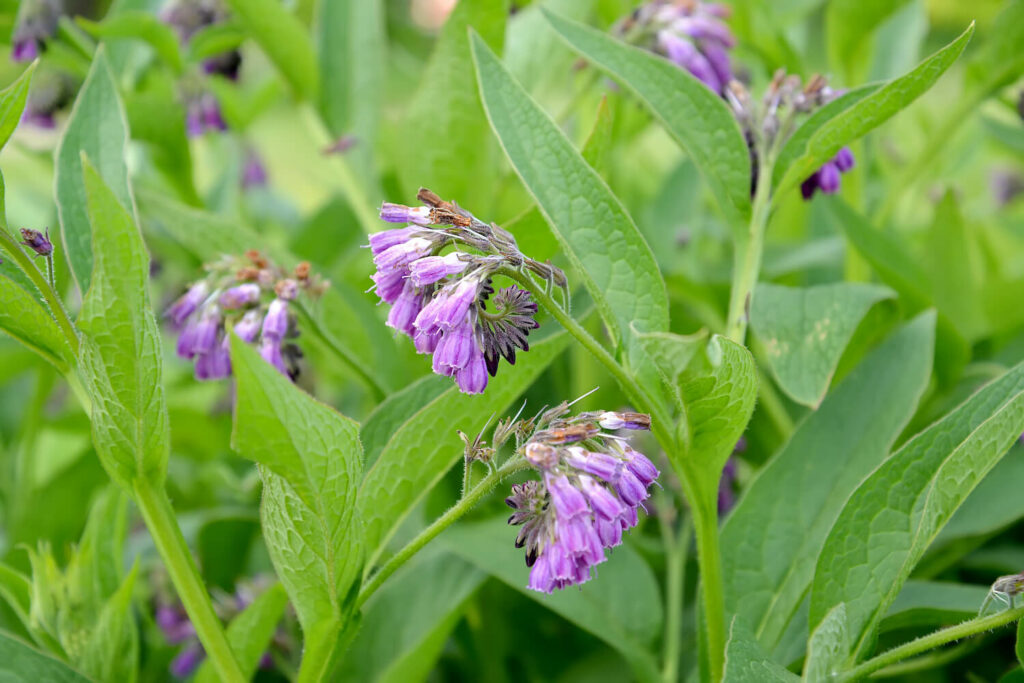
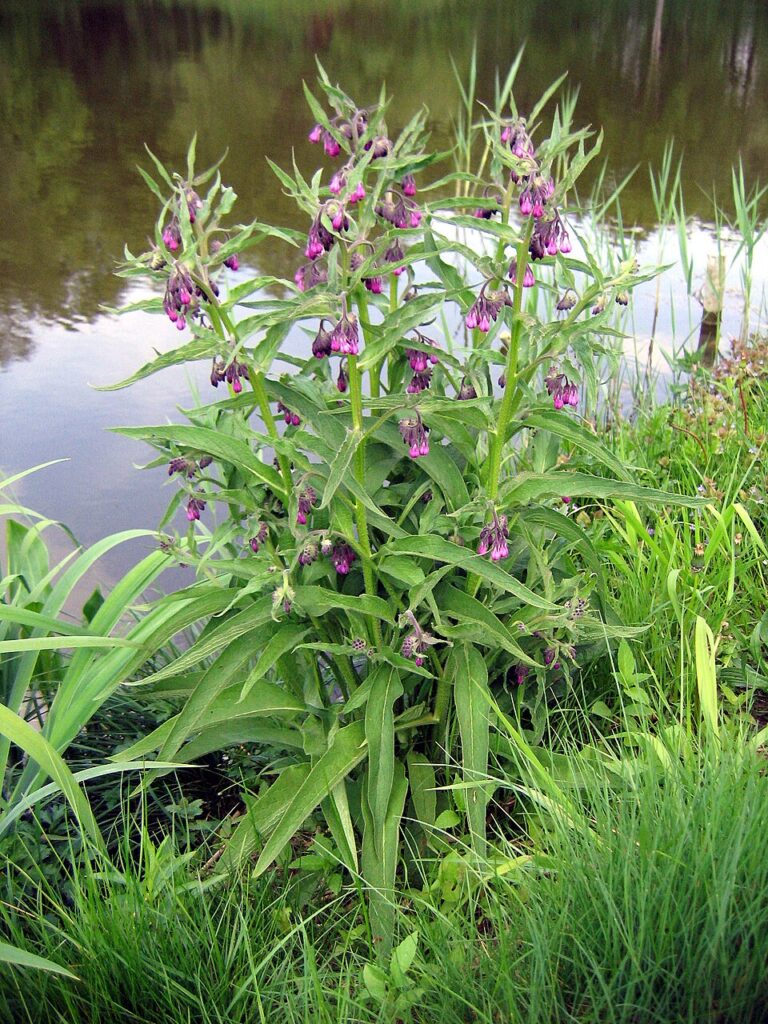
Somewhere in a monastic physic garden, one of those austere, purposeful plots that the Benedictines tended across medieval Britain, there was almost certainly a stand of comfrey (Symphytum officinale).
Tall, rough-stemmed, with leaves wide enough to use as wrapping and small bell-shaped flowers in drooping clusters of purple and cream. Tended carefully, harvested at the right time, applied with knowledge. To broken bones. To torn tendons. To wounds that would not close. To the inflamed gut, the dry cough, the ulcerated stomach.
The monks called it knitbone.
The Romans called it confervere, to grow together.
Both names said the same thing: this plant knits what has come apart.
It still grows in damp corners across Britain. Riverbanks and neglected gardens. Along footpaths and old field margins. Comfrey has not forgotten what it was bred to do.
We, however, have become uncertain about it.
What Happened
That uncertainty has a specific origin. And it deserves a careful examination — not because it is unfounded, but because the response to it has sometimes produced more confusion than clarity.
Somewhere in the late twentieth century, a piece of scientific information about comfrey met a complex traditional picture without enough nuance to hold both at once. The result was a blanket concern that has caused a genuinely extraordinary plant to be abandoned in cases where it could be used safely.
Here is what the plant can actually do.
The Clinical Trial
Comfrey’s primary constituent is allantoin, a compound that stimulates cell proliferation with a speed and thoroughness that has few parallels in the plant kingdom.
Apply comfrey to a bruise, a sprain, or a closed wound, and the allantoin drives rapid tissue regeneration at the site of damage. This is not subtle or slow. A comfrey poultice on a bruised shin produces visible results in a day or two.
The clinical evidence is not merely traditional. Randomised trials with comfrey root preparations have demonstrated measurable reductions in pain, swelling, and recovery time for ankle sprains, knee osteoarthritis, and acute back pain.
One study involving over two hundred patients found that a comfrey root cream outperformed a standard anti-inflammatory diclofenac gel for ankle distortions.
Let that land for a moment. A herb whose name means “to grow together” outperforming a pharmaceutical anti-inflammatory in a controlled trial.
This is not a fringe herb making marginal claims. This is one of the most capable external vulneraries in the British materia medica, with clinical evidence to match its tradition.
Alongside allantoin, comfrey contains tannins, providing astringent, tissue-toning quality, and mucilage, making it simultaneously demulcent and wound-healing. Astringent and demulcent together, contracting and soothing in the same breath. Cooling where heat is present, binding where things have become lax, regenerating where structure has been lost.
The plant builds. It fills gaps. It knits what has come apart.
The Alkaloid Question
So why did we become uncertain about it?
Comfrey contains pyrrolizidine alkaloids, a class of compounds that, in certain forms and at certain concentrations, are hepatotoxic. Metabolised in the liver into reactive intermediates that can, over time and in sufficient quantity, cause liver damage.
This is real. It is not invention. The concern is legitimate.
But here is what gets lost in the headline version of that concern.
Not all pyrrolizidine alkaloids are equal.
The class divides into saturated forms (non-toxic) and unsaturated forms, which carry varying degrees of risk. The unsaturated forms divide further into those with mild-to-moderate toxicity and those with severe toxicity.
Symphytum officinale, true comfrey, the species with the longest British history contains compounds categorised as having mild to moderate toxicity. Considerably less concerning than the macrocyclic diester forms found in Symphytum × uplandicum, Russian comfrey: a common hybrid that grows more vigorously and is often sold without clear species identification.
The alkaloid concentration also varies dramatically by plant part and age. Root contains the highest levels. Young leaves contain more than mature leaves. Mature leaves, the large, fully developed leaves harvested mid-season contain the lowest levels of the plant.
This is why experienced herbalists who have continued to use comfrey internally always specify mature leaf, always avoid root preparations by mouth, and always use it for short courses rather than as a daily long-term tonic.
The clinical reality is this: the evidence for internal comfrey toxicity in healthy humans at appropriate doses of correctly identified Symphytum officinale is limited primarily to case reports in which species identification, dosage, and patient liver health are frequently unknown. The animal studies use isolated alkaloids at concentrations far exceeding any realistic human exposure. There are no clinical trials demonstrating a direct link between comfrey leaf taken at typical doses by healthy individuals and liver toxicity.
As one practitioner puts it plainly: “Here’s a plant that’s been used for a long time and has been used internally. It wasn’t killing anyone. Science discovered it has pyrrolizidine alkaloids.”
The point is not that science is wrong to raise the concern. It is that the concern deserves proportionate, contextualised treatment rather than blanket prohibition.
The Elegant Solution
Here is where the chemistry offers something remarkable.
Pyrrolizidine alkaloids are not soluble in oil.
They are extracted in water and in alcohol, but not in oil.
This means that a comfrey-infused oil, made by steeping dried leaf or root in a carrier oil, extracts the allantoin, the tannins, the mucilage, and the anti-inflammatory compounds while leaving the alkaloids entirely behind.
You receive everything the plant offers medicinally at the site of a bruise, sprain, or musculoskeletal injury, without any alkaloid absorption.
The same is true of a properly made salve or cream using a comfrey-infused oil base.
The external use of comfrey, prepared this way, is essentially uncomplicated. German research, which has studied comfrey preparations extensively, restricts recommended external application to products containing no more than 100 micrograms of unsaturated pyrrolizidine alkaloids. A homemade oil made from mature leaves of Symphytum officinale would not approach this limit.
The plant that seemed to have become complicated turns out, properly understood, to be straightforward.
At least on the outside.
The One Caution Worth Keeping
There is a topical caution that has nothing to do with alkaloids and everything to do with what allantoin actually does.
Comfrey heals tissue from the outside inward. It generates surface-layer cell proliferation with such efficiency that it must never be applied to deep puncture wounds or open lacerations.
The reason is precise: it will close the surface before the underlying tissue has had the chance to heal, creating conditions for abscess.
For superficial wounds, bruises, sprains, closed fractures, and inflamed musculoskeletal tissue it is as good as anything the kitchen apothecary can offer. For deep puncture wounds, leave it alone.
One rule. Worth knowing exactly.
The Three Territories
The musculoskeletal system is comfrey’s clearest territory, and always has been. The knitbone name arose from its use over splinted fractures, applied as a poultice to support bone repair from the outside. For sprains, bruises, and tendon injuries, the combination of allantoin-driven regeneration and tannin-based tissue toning makes it the most capable external vulnerary in the British materia medica.
The digestive system is the internal use with the most traditional grounding and the most cautious modern approach. Comfrey’s demulcent mucilage soothes hot, inflamed, dry gastrointestinal tissue, gastric ulcers, intestinal hyperpermeability, the gut lining damaged by chronic irritation. One of the best leaky gut plants available, combining astringent toning of the gut mucosa with genuine wound-healing action at the mucosal surface. For those who choose to explore internal use, mature leaf preparations used short-term in healthy individuals with no history of liver disease represent the most defensible approach in the traditional literature.
The respiratory system receives comfrey’s demulcent and vulnerary qualities in dry, irritated patterns, the chronic cough where the bronchial mucosa has been damaged and inflamed. A soothing, tissue-restoring herb for exactly this pattern in historical respiratory formulas.
Making the Oil
A comfrey-infused oil is straightforward.
Fill a jar with dried mature comfrey leaf, dried, not fresh, to prevent moisture causing rancidity, and cover generously with a good carrier oil. Olive oil for longer shelf life. Sunflower oil for a lighter texture.
Apply gentle heat for several hours, or leave cold-infused on a sunny windowsill for four to six weeks. Strain, press well, store in a dark bottle. Use directly on bruises, sprains, and sore muscles, or work into a salve with beeswax. Keeps well for a year.
Before any preparation: confirm the species.
Symphytum officinale: cream or pale purple flowers, the species with the long British tradition. Symphytum × uplandicum, Russian comfrey: more robust, often more blue-purple in flower, higher alkaloid content, more commonly sold without clear identification.
The difference matters. If in doubt, source from a reputable dried herb supplier who can confirm the species.
Not Fear. Knowing.
Comfrey is not a plant to use carelessly.
The alkaloid concern is not invented. The guidance to avoid internal use in the presence of liver disease, pregnancy, or hepatotoxic medications is sound and should be followed. The blanket restriction on all internal use in all circumstances, however, reflects regulatory caution appropriate for a mass-market context, one where species identification, dosage, and patient history cannot be assumed, rather than the nuanced clinical judgment that traditional herbalism has always applied.
The external application, meanwhile, is as safe as it is effective when correctly prepared. No pyrrolizidine alkaloids. Multiple well-conducted clinical trials. Outperforming diclofenac gel.
What is asked of the person who works with this plant is not blind confidence or reflexive avoidance. It is the skill to read context, weigh what is known, and apply what is appropriate, the ability to hold both the medicine and the caution without collapsing either into the other.
The monks in the physic garden knew how to do that. They tended the stand carefully, harvested it at the right time, applied it with knowledge.
Knitbone. To grow together.
The name is still right.