The Name in the Lawn: What Self-Heal Knows About Healing
- Roland Koronya


Somewhere in almost every British lawn there is a plant that most people mow without noticing.
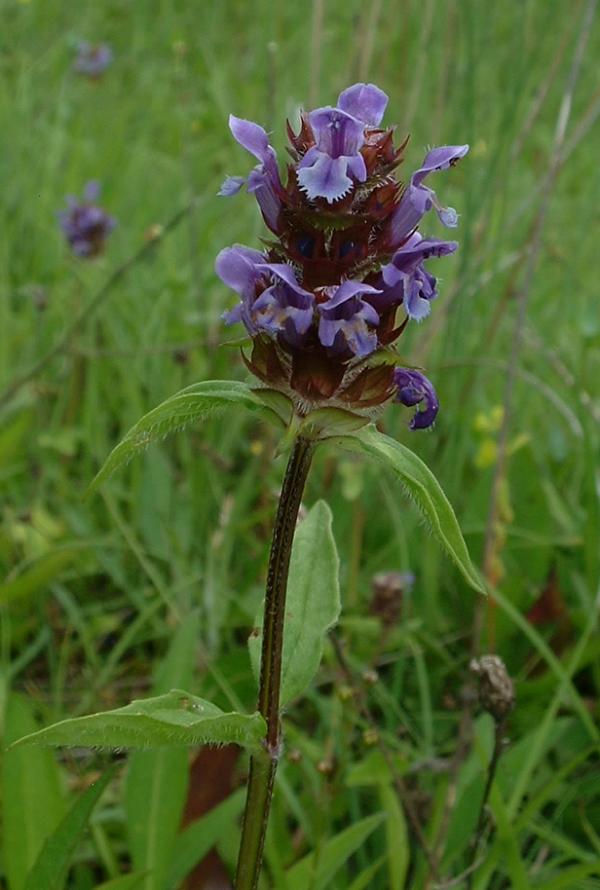
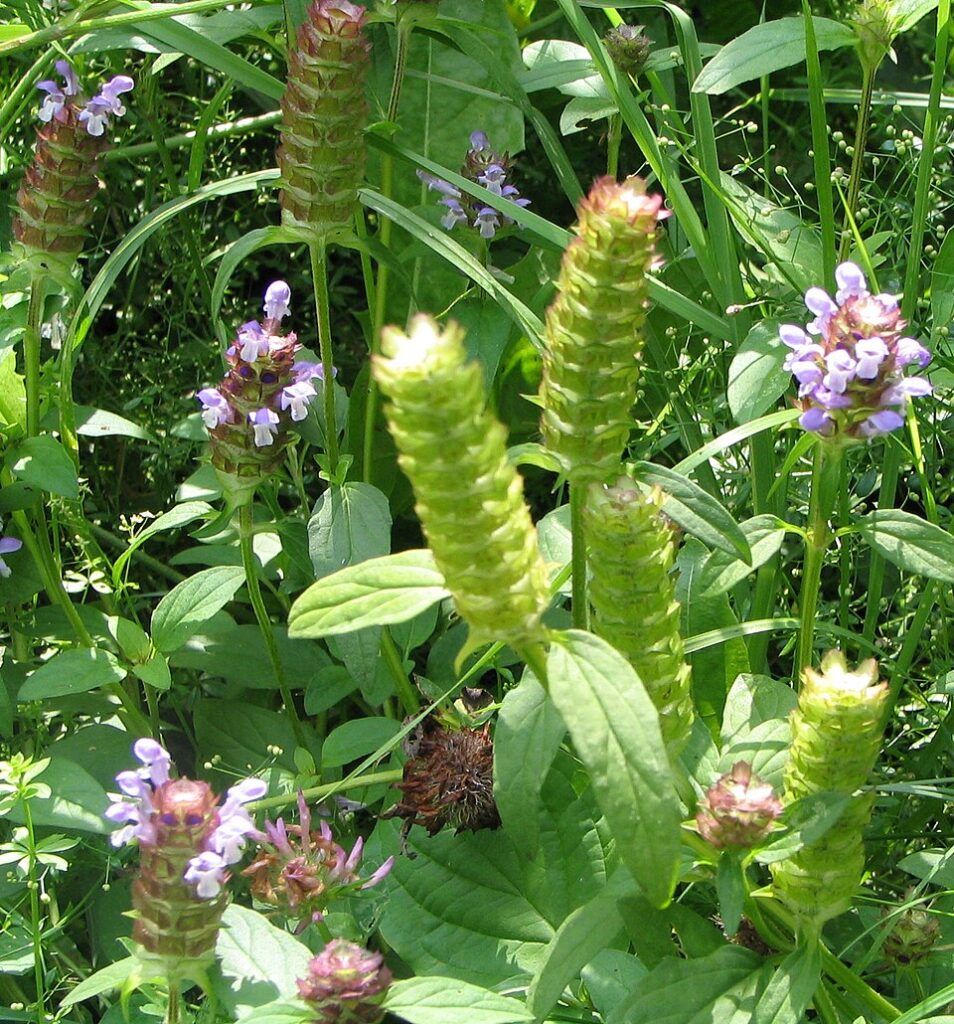
It is small and creeping and does not present itself dramatically. Its leaves are oval, slightly wrinkled, dark green, easy to read as ground cover rather than anything in particular. In late spring it sends up a short flowering spike from which tiny purple blossoms open in whorled rings around a tight oblong head. Each flower is hooded, two-lipped, with white markings on the lower petal that make it recognisable once you have learned to look for it.
But most people never do learn to look for it.
They mow it every fortnight throughout the summer, year after year, for the whole length of a gardening life, without knowing its name.
Its name is Self-Heal.
The Philosophical Claim
This name is not merely descriptive. It is, looked at carefully, a philosophical claim, one that contains within it an entire theory of how healing works and what plants are for.
To name something “self-heal” is to make a precise observation: not that the plant heals you, but that it helps you heal yourself.
The agency remains with the body. The plant is an ally, a restorer of conditions, a supporter of a process that the body already knows how to run.
The herbalist who first gave this plant its name, unknown to us, anonymous in the deep past of British plant knowledge was making the same distinction that vitalist herbalism has always insisted upon: that the body has an inherent intelligence directed toward repair, and that the role of the plant is to work with that intelligence rather than to replace it.
The Name Cluster
Our ancestors evidently believed this plant did that job with unusual breadth.
They gave it not one name but several, and each one says the same thing from a slightly different angle.
Heal-All. All-Heal. Heart of the Earth. Carpenter’s Herb, because the carpenter who cut himself reaching for a tool needed something close at hand and trusted this plant to handle the wound while he kept working.
Roughly four hundred years ago, self-heal was considered one of the finest herbs in its class, sought after by herbalists across Britain and Europe. It was, for much of recorded herbal history, genuinely prominent, not a hedge curiosity but a medicine of first importance.
And then, gradually, it was forgotten.
The same plant is now unknown to most of the people who grow it.
The Modest Persistence
Here is the puzzle: How does the plant named Heal-All become the plant that nobody knows?
Part of the answer may lie in the plant itself.
Self-heal is a plant of disturbed, well-trodden, and compacted places, not the pristine meadow or the deep wood, but the lawn, the path edge, the garden margin, the grazed field. It grows low and presses close to the ground. Its creeping stems spread laterally rather than upward, rooting at intervals, always reaching sideways toward more territory rather than rising to announce itself.
It survives repeated cutting. It comes back.
There is something characteristically modest about its persistence, a quality entirely at odds with the ambition of its names. All-Heal sounds like the most dramatic herb imaginable. The plant itself is easy to overlook.
This contrast is, in the tradition that reads plant character as medicine, not incidental: a herb that heals quietly and persistently, that works at the level of tissue integrity rather than acute crisis, whose action is sustained and gentle rather than immediate and forceful, might reasonably wear its virtues in its behaviour rather than in its appearance.
The mint family’s square stem appears in self-heal, as it does in its relatives, a structural feature that herbalists have associated with organisation and alignment, with the capacity to bring order to disordered tissue.
Whatever one makes of that reading, the physical character of the plant, low, steadfast, creeping, resurgent, square-stemmed matches its medicinal character with a coherence that rewards attention.
The Energetics
Self-heal is cooling and drying, with a primarily astringent and toning action that works on tissue that has become hot, lax, or inflamed.
It is not a herb of crisis or drama. It works slowly and patiently, tightening what has become leaky, cooling what has become overheated, restoring the integrity of surfaces that have been damaged by irritation, infection, or sustained inflammation.
Its primary tissue state is heat/excitation, the hot, red, actively inflamed condition of a wound, a sore throat, an irritated gut lining, a mouth ulcer in its acute phase.
For this pattern, its combination of astringency and anti-inflammatory action provides both the cooling relief and the tissue-toning structure that allow the body’s own repair processes to proceed.
The Three Territories
Mouth and throat. Self-heal has a specific and well-documented affinity for the mucous membranes of the upper digestive tract, the mouth, gums, throat, and tonsils. Its astringency tones and tightens inflamed gum tissue; its anti-inflammatory and antibacterial actions support the healing of mouth ulcers, sore throats, and gum disease from both directions.
John Gerard’s Herball of 1597 records its use, mixed with wine or water, as a wash for mouth and throat conditions. A strong tea used as a gargle or mouthwash is among the most direct ways to experience its action, the slight drying and tightening sensation it produces on the soft tissues of the mouth is the astringency at work, contracting and toning tissue that inflammation has made hot and loose.
Gastrointestinal mucosa. The same cooling, toning, and tissue-regenerative actions that make it useful at the surface of the body apply to the inner surfaces of the digestive tract. For the gut lining that has been abraded by infection, sensitised by food reactivity, or left inflamed after a course of antibiotics, self-heal provides the cooling astringency and the wound-healing chemistry that allows the mucosal surface to rebuild.
It has been described as “a premier vulnerary herb” for internal gut conditions. Taken as a tea over several weeks, it is a patient and reliable ally for the sustained process of gut repair.
Skin and wounds. The Carpenter’s Herb. This is self-heal’s oldest and most direct application: pressed onto a wound, applied as a poultice, used as a compress or wash for minor cuts, bruises, and abrasions.
Its antibacterial action helps to prevent infection in open tissue. Its styptic action arrests minor bleeding. Its astringency tones and contracts the wound edges. Its vulnerary chemistry supports the active regeneration of healthy tissue.
The carpenter who cut himself reaching for a tool needed something close at hand. This plant was it.
Heart of the Earth
Heart of the Earth is, of the herb’s many names, the one that reaches furthest.
Not a description of what the plant does. A description of what it is. Or of where it belongs.
The heart of the earth. The thing at the centre of the ground that is also, in some traditional sense, at the centre of health.
All the other names describe function: it heals, it heals all, it heals the carpenter. But Heart of the Earth describes relationship, the sense that this plant is native to the earth in a way that makes it native to the body too, that its medicine is grounded in an intimacy with the ground itself that is also an intimacy with what it means to be a creature made of the same materials.
In the vitalist tradition, this is not mere poetry. It is the recognition that the plants which grow most commonly, most humbly, and most persistently in a given soil are frequently the ones most precisely adapted to the health needs of the people who have always lived in that soil alongside them.
What Was Lost
Self-heal is not a botanical spectacle. It is not imported or exotic or rare. It is simply here, in the lawn, in the garden margin, in the path edge, available to anyone who knows its name.
Most people do not know its name.
This is the most instructive thing about it. Not the herb’s chemistry. Not its history. Not its four-hundred-year reputation as a medicine of first importance.
The most instructive thing is this: the body’s trust in its own healing intelligence is only as useful as the knowledge that supports it.
To name a plant Heal-All is to perform an act of trust. It is to say: we have watched this plant, over years and generations of watching, and we have seen what it does when the body is trying to repair itself. We have seen it support that repair consistently enough that we named the whole class of action after it.
That trust, accumulated slowly, transmitted carefully across generations of people who paid close attention to the world growing around them is what was lost when the lawn became something to manage rather than something to read.
The plant is there. It has always been there.
The lost thing is the relationship.