White Man’s Foot: The Weed That Followed Britain Around the World
- Roland Koronya


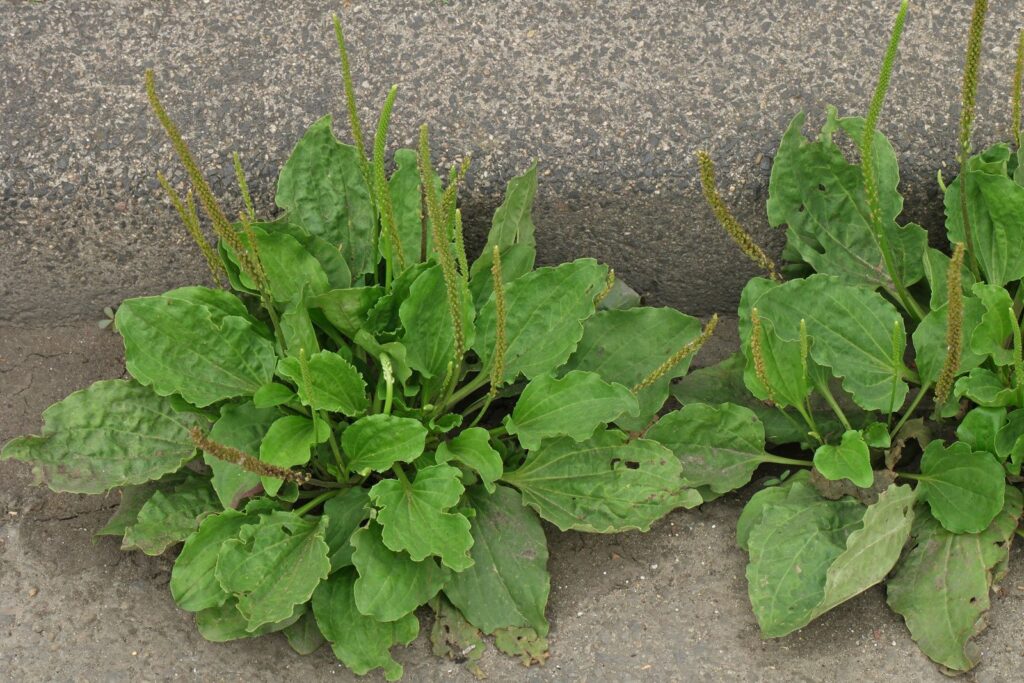
Somewhere in the late seventeenth century, an Indigenous elder in what is now New England looked at the ground near a recently settled European homestead and noticed a plant that had not been there before.
It was growing along the cart paths, pressed flat against the compacted earth, surviving being trodden on with an equanimity that nothing local quite matched.
The elder gave it a name.
White man’s foot.
The Pattern
The same name, or close variations of it, arose independently among peoples across North America.
In Māori communities in New Zealand. Among Aboriginal Australians. Wherever Europeans went, this particular plant seemed to appear in the disturbed soil of their passing, as if it had been following them.
They were not wrong.
The Inadvertent Colonizer
Broadleaf plantain (Plantago major) is a European native that colonised the world not through deliberate cultivation but through inadvertent transport.
Seeds in contaminated grain stores. Mud on boot soles. Soil compacted by the hooves of imported livestock.
It became, in the space of two centuries, the most widely distributed European medicinal plant on the planet.
Today it grows on every continent except Antarctica. It is found in almost every British pavement crack, lawn margin, compacted field path, and grazed verge. It is, by almost any measure, the most available herb in the country.
Almost nobody uses it.
The Way and the Broad
The name waybrede, its Anglo-Saxon name, still recorded in the tenth-century Lacnunga and the Nine Herbs Charm carries the plant’s doctrine of signatures in two compressed syllables.
Weg: the way, the path. Braede: broad. The plant of the broad path.
Plantain does not grow in undisturbed woodland or deep meadow. It grows where the ground has been compacted and disturbed, along cart tracks, at field gates, beside footpaths, in the margins of roads, in the cracks of pavements.
It grows where things have been pressed down repeatedly and had to recover.
It survives being walked on. It springs back.
This is, in the vitalist tradition, a direct mirror of its therapeutic territory.
Plantain’s primary affinity is for the mucous membranes, the body’s internal surfaces that are, like the plant itself, simultaneously exposed and resilient: in constant contact with the outside world, subject to continuous friction, heat, and irritation, and required to recover, to maintain their integrity, to go on functioning as a barrier and a filter despite everything that passes over them.
The respiratory mucosa breathes in cold and pollution and pathogens. The digestive mucosa processes everything we eat. The urinary mucosa carries the waste stream of the kidneys.
All three are precisely the surfaces for which plantain has been found, across thousands of years of use, to be most appropriate.
The Leaf
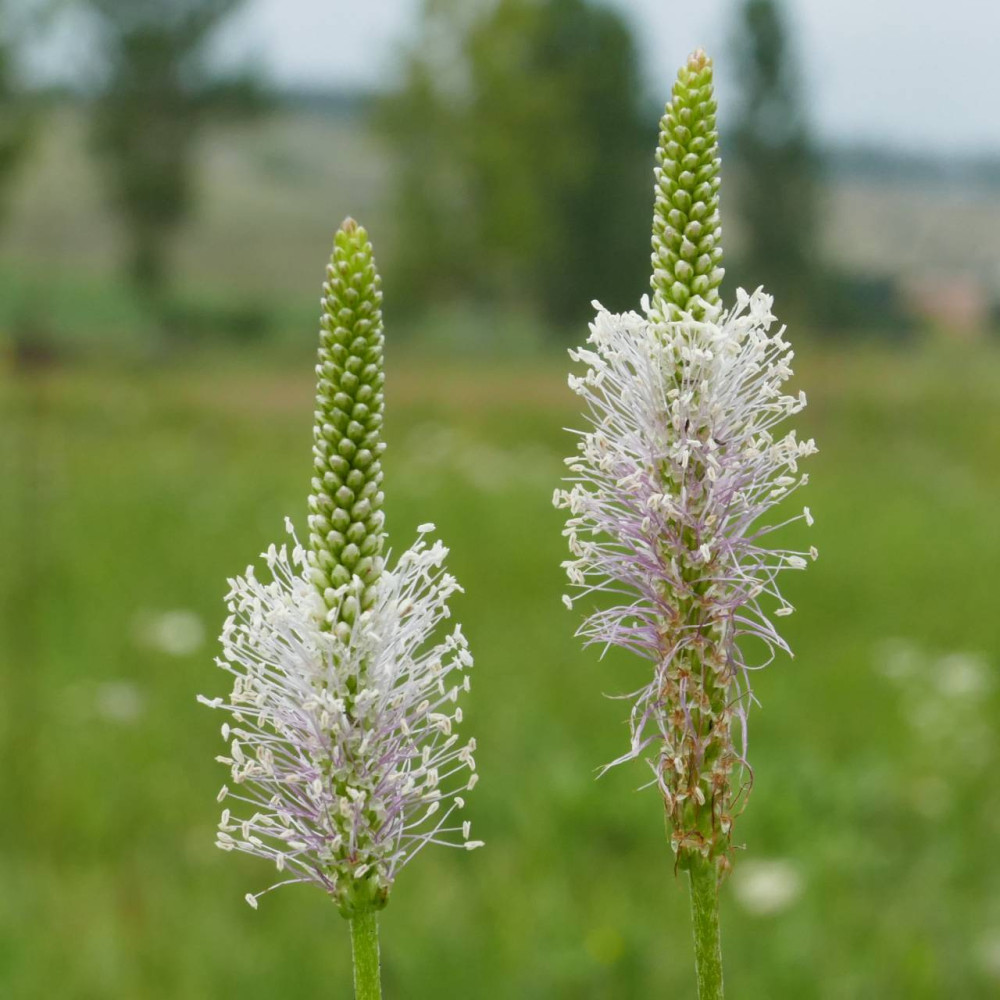
Pick a broadleaf plantain and try to tear it by pulling from either end.
The prominent parallel veins, three to seven of them, running the leaf’s full length hold even as the surrounding tissue tears around them. These are among the toughest structures in a common leaf, fibrous and intact under considerable force.
Herbalists have long associated this structural resilience with the herb’s capacity to restore integrity to tissues that have been compromised.
The Three Surfaces
Plantain is cooling and moistening, one of the clearest examples of a demulcent herb in the British native flora, and one of the most consistently useful across the three organ systems it serves.
The underlying tissue state in all three cases is the same: the dry/atrophy pattern of hot, irritated, depleted mucous membranes that have lost their protective moisture and require both cooling and restoration.
The mechanism is precise: plantain is high in mucilage, which forms a physical coating over irritated mucosal surfaces, creating a protective layer that allows the underlying tissue to heal. It also contains allantoin, the same constituent found in comfrey, which is responsible for that herb’s remarkable wound-regenerating reputation, but in a milder, safer form that makes plantain appropriate for long-term and unrestricted use.
Allantoin actively promotes cell proliferation and tissue regeneration. It does not merely soothe the damaged surface; it assists the underlying tissue in rebuilding.
Respiratory. For dry conditions of the respiratory tract: the dry, unproductive cough; the irritated bronchial tissue parched by cold air or infection; the mucous membrane that has lost the protective moisture film needed to trap and clear particulate matter. It is specifically suited to the hot, dry, and irritated respiratory state: coughs that come from irritation rather than congestion, throats that feel raw and exposed, airways that need coating and cooling rather than further stimulation.
Urinary. For hot, irritated urinary conditions: the burning discomfort of a urinary tract infection, the inflammation of cystitis in its early acute stage. Plantain’s cooling, soothing, and mildly astringent action on the urinary mucosa is among the most immediately useful available in the British native flora.
Digestive. For gut conditions involving hot, irritated, or leaky mucosal tissue, whether arising from food sensitivities, infection, antibiotic damage, or sustained stress on the intestinal lining plantain provides the cooling, coating, regenerative support that allows the gut wall to restore its integrity over time.
The dual astringent/demulcent quality is worth understanding. Plantain tones and tightens slightly while it soothes and moistens, a balance that makes it useful for the full range of mucosal conditions rather than only the most acutely inflamed. The same herb that cools intestinal inflammation also tones lax, leaky gut tissue, working toward restoration from both directions simultaneously.
The Sting
Here is a dimension to plantain’s profile that is not widely known outside clinical herbalism, and that expands its usefulness considerably.
Plantain is a mast cell stabiliser.
The mast cells are the immune cells responsible for histamine release, the mechanism underlying allergic reactions, insect sting responses, and hay fever symptoms. When plantain’s flavonoids interact with mast cells, they help stabilise the cell membrane and reduce the likelihood of degranulation: the event that releases histamine and triggers the cascade of inflammation, swelling, and reactivity.
This is why a spit poultice of fresh plantain leaf applied to a bee sting reduces swelling so rapidly and so reliably.
The effect is not purely analgesic and anti-inflammatory in the conventional sense, it is a direct modulation of the mast cell response at the site.
The same mechanism, applied internally, makes plantain useful in the broader strategy for managing seasonal allergic reactivity, particularly for the hot, reactive, upper respiratory pattern where it combines mast cell stabilisation with cooling, moistening anticatarrhal action
Queen of Weeds
Plantain’s first recorded appearance in British herbal medicine is in the Anglo-Saxon Nine Herbs Charm of the tenth century, but the plant and the knowledge of it are considerably older than the text that recorded them.
Waybrede appears in the Charm as one of nine herbs addressed directly in verse, celebrated for its strength and its position “over all weeds, queen”, a description whose hyperbole reflects genuine esteem.
The Lacnunga records it as a remedy for wounds, poisonous bites, and infection: exactly the applications that would have made it indispensable to a culture without antiseptics, antibiotics, or emergency medicine.
It appears throughout the subsequent British herbal tradition. Culpeper, noting its cooling and binding qualities, recommended it for inflammations of the mouth, throat, bowel, and urinary passages, a list that maps precisely onto the three mucosal affinities the energetics framework would later formalise.
Maude Grieve, in A Modern Herbal, records it as “one of the most useful herbs in the world” and notes its use across European, North American, and Asian traditions.
The plant that various Indigenous peoples named for the colonisers who brought it was, in a quiet irony, itself a medicine of considerable potency, a gift, however inadvertently delivered, to every ecology it entered.
The Spit Poultice
The spit poultice remains the most immediate preparation and the one most likely to be needed in the field.
A fresh leaf chewed briefly to release its mucilaginous constituents and pressed directly onto a sting, bite, or minor wound.
It works within minutes.
Carrying the knowledge of how to do this costs nothing and requires only the ability to identify a plant that grows in virtually every outdoor space in Britain.
For internal use, an infusion of dried leaf, one to two teaspoons per cup, steeped covered for ten to fifteen minutes is the standard preparation for digestive, urinary, and respiratory applications. The cover matters: it helps retain the volatile constituents and allows the mucilage to fully hydrate.
For sustained use in gut inflammation or urinary irritation, a cup taken two to three times daily over one to three weeks provides the best outcome
Underfoot
The plant that Indigenous peoples named for the colonisers’ boots has been here, in British hedgerows and pavement cracks, for as long as this island has had paths to walk.
It grows under the feet of everyone who walks outside in Britain, in every season, in every region, in towns and fields alike and it carries, in its flat resilient leaves and tough parallel veins, one of the most precise mucosal medicines in the native pharmacopoeia.
Learning to see it for what it is, rather than walking past it as we have collectively been doing for several generations is the kind of shift in perception that good herbal education tends to produce.
The plants are there. They have always been there. The knowledge is what needs recovering, and that recovery begins with learning to look at what is underfoot.