The Herb That Contradicts Itself: What Agrimony Teaches About Herbal Medicine
- Roland Koronya


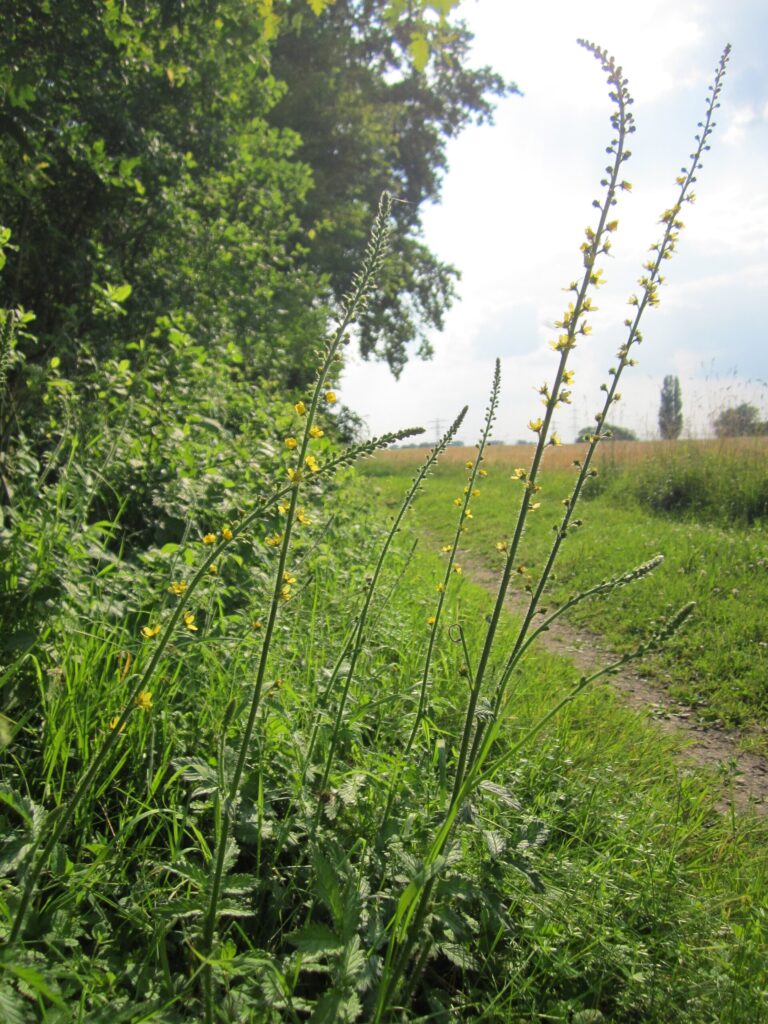
There is a plant growing on hedgebanks and field margins throughout Britain right now that the Elizabethan poet Michael Drayton called an “all-heal.”
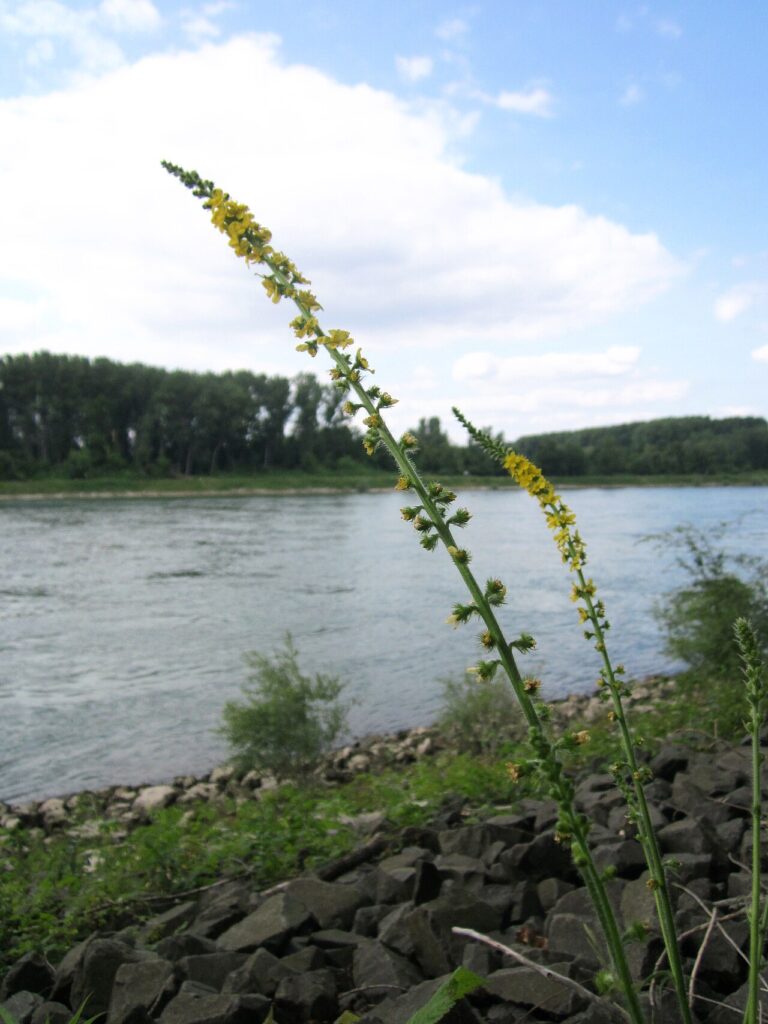
It rises in a single slender spike of yellow flowers, smelling faintly of apricots in the late summer warmth. Its hooked seed burrs catch on dog fur and trouser legs. It has been listed in British herbals since the fifth century. The Anglo-Saxons used it. The medieval physic gardens grew it.
Most people who walk past it every day have never heard its name.
Agrimony (Agrimonia eupatoria) is one of the quieter losses in the British herb tradition, not because it is scarce, but because it has simply been overlooked. The hedgerows are full of it. The knowledge of what to do with it has, for most of us, not quite survived.
The Contradiction
Understanding agrimony properly requires sitting with a genuine puzzle.
It is simultaneously described as an astringent (contracting, tightening, binding) and a nervine relaxant (easing, releasing, softening).
These two actions appear to contradict each other directly. One contracts. One relaxes. One tightens what is too loose. One releases what is too held.
How can a single plant do both?
The answer to that question is, it turns out, a lesson in how herbal medicine actually works.
The Three Tastes
Taste agrimony before it flowers, as experienced practitioners recommend, and you encounter something more complex than a single note.
There is astringency, the puckering, tissue-toning quality of tannins, the first thing you notice. There is bitterness running alongside it, sitting differently on the tongue. And beneath both, a faint sharp acridity at the back of the palate that is easy to miss but worth attending to.
All three tastes speak.
The astringency announces tannins and tissue-toning action. The bitterness speaks of the liver and gallbladder, of bile production and digestive secretion. The acridity hints at the nervine relaxant action: acrid herbs in the Western tradition tend to work on the autonomic nervous system, often via the vagus nerve, easing the constriction that nervous tension creates in hollow organs.
Harvest the herb after it has flowered and the balance shifts. The bitterness and acridity soften and the astringency dominates. This is why timing matters. The full character of agrimon, all three voices, is most legible just before the flowers open.
Not Contradiction. Precision.
Here is the resolution.
Agrimony’s tannins act on mucosal membranes and tissue linings. They tighten what is too lax, bind what is too open, restore structural integrity where permeability has become excessive. Loose stools. Excessive permeability in the gut lining. The passive leaking of urine. These are all expressions of the damp/relaxation tissue state and the astringent action corrects them at the level of tissue structure.
The nervine relaxant action operates on a completely different level.
It works not on tissue structure but on the nerve innervation that governs smooth muscle throughout the body, the digestive tract, the bladder, the hepatic artery. When sympathetic nervous system dominance restricts blood flow to the liver; when gut pain arrives as spasm rather than inflammation; when a tense nervous system communicates itself as bladder urgency, this is the wind/tension pattern, and this is what agrimony’s acrid, vagal quality addresses.
One plant. Two different levels. Two different tissue states.
It does both things simultaneously because the clinical reality it addresses is often both things simultaneously: a gut that is too lax in its mucosal integrity and too tense in its muscular innervation at the same time. A urinary tract that leaks passively but holds tension in its nerve supply.
This is not contradiction. It is precision.
The Three Territories
The digestive system is agrimony’s primary territory, and the pattern it addresses there is exact.
Where the gut lining has lost structural integrity, agrimony’s tannins tighten the mucosal membrane. Its bitter action increases bile flow and digestive secretion, improving the upstream conditions that led to poor mucosal health. And the nervine relaxant quality eases the spasm and pain that frequently accompanies both states.
Three different actions. On three different aspects of the same clinical picture. Simultaneously.
The liver and gallbladder receive the bitter tonic action directly. Agrimony stimulates bile production and movement, addresses the pattern of bile insufficiency, and supports the liver’s blood supply by calming the sympathetic excess that restricts the hepatic artery under chronic stress.
It was used in European herbalism for hepatitis and cirrhosis. Its place in hepatobiliary medicine is documented across the British and broader Western tradition since the medieval period.
The urinary tract is where agrimony’s dual action is perhaps most clearly illustrated.
The astringency tones a weak or lax bladder wall, reducing passive leakage. The nervine action calms the bladder nerve, addressing the pattern in which tension or stress expresses itself as urinary urgency or incontinence.
The same organ. Two different mechanisms. Both addressed by the same plant, simultaneously.
The Torturedly Cheerful
There is a dimension to agrimony’s profile that stops most students short.
Agrimony is one of the original thirty-eight flower essences described by Dr Edward Bach, and the psychological portrait he drew for it is arresting: the person who appears cheerful and untroubled, who makes others laugh, who is the last one suspected of carrying pain.
Matthew Wood describes this as the “torturedly cheerful” type, the person holding themselves taut beneath a pleasant surface, spending considerable energy maintaining a presentation that does not match the interior.
Look at the plant and the description makes immediate sense.
Agrimony grows tall and single-stemmed, held rigidly upright, its narrow spike pressed straight toward the sky. Nothing soft or loose about it. The physical signature and the psychological portrait are the same thing: a presentation of firmness that conceals interior tension.
Whether or not one works with flower essences, this psychological picture has practical diagnostic value. The agrimony pattern, physical and emotional tension held beneath a controlled exterior, manifesting as gut spasm, liver stagnation, urinary tension, is a real and recognisable constitutional type. The herb addresses the same pattern whether it arrives through the body or through the character.
Preparation
Harvest the leaf just before the flowers open, when the full complexity of bitter, acrid, and astringent tastes is present. Once the plant has flowered, the bitterness recedes and you are working primarily with astringency, still useful, but less complete.
A tea of one to two teaspoons of dried leaf steeped for ten minutes is pleasant in a quietly herbal way, mildly bitter and slightly dry, without the sharpness of stronger astringents. As a tincture, fresh plant material at 50–60% alcohol captures the full aromatic and nervine profile; dried herb extracts best at 35–40%.
A note on who it is not for.
Agrimony should not be given to those with dry, tense, or constipated constitutions. Additional drying and toning would worsen an already contracted pattern. It suits those who are damp and lax in their tissue state but tense in their nervous innervation: the digestive system that is simultaneously too open and too cramped, the person who holds tension in their organs while keeping a composed exterior.
The plant and the patient match precisely.
What Agrimony Teaches
There is a tendency, approaching herbal medicine for the first time, to want each plant to have one action, one organ, one use.
Agrimony resists that.
It demands that you understand tissue states, the distinction between what is too loose and what is too tight, and the possibility that these can coexist in the same person at the same time. It demands that you see the nervous system’s role in organ function, not just the organs themselves. It demands that you think about the whole pattern, not the symptom list.
The apparent contradiction that agrimony presents, how can one plant contract and relax simultaneously, turns out not to be a contradiction at all. It is a description of the clinical reality that a great many people carry: tissues that have lost structural tone in their mucosal lining while holding excessive tension in their nervous innervation. Too open and too clenched, in the same body, at the same time.
The herbs are not complicated.
The people are.
Agrimony, growing quietly on every hedgebank in Britain, smelling faintly of apricots, catching its burrs on passing trouser legs. This modest, overlooked plant is one of the better teachers of that distinction.