THE LID MAY BE THE MOST IMPORTANT INGREDIENT.
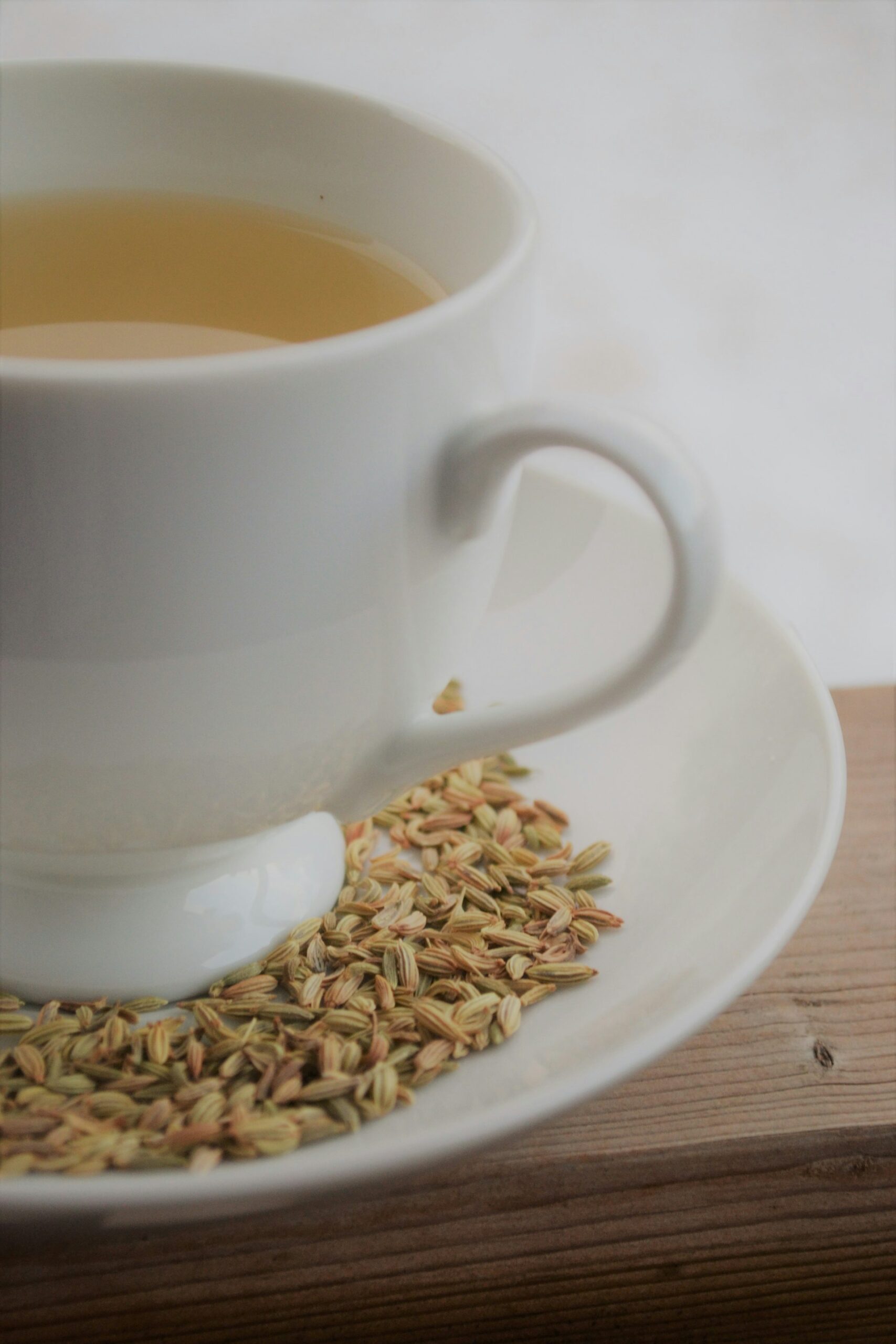
You chose the fennel.
Measured the water.
Timed the simmer.
Then left the lid off.
The kitchen smells wonderful.
That may be the problem.
Fennel contains volatile oils. Some of the lovely aroma drifting through the room is no longer in the saucepan.
The herb was right.
The quantity was right.
The smallest decision may still have changed the preparation.
Herbal Foundations
Ten written lessons in the details that sit between choosing a plant and knowing what to do with it.
Online · Self-paced · No previous herbal training required
We usually treat a strong aroma as evidence of strength.
The kitchen smells intensely of fennel.
Therefore, the fennel preparation must be potent.
But aroma is not proof that everything stayed where you wanted it.
Dense seeds may need simmering to release their constituents.
Yet their volatile oils can leave with the steam.
So you cover the pot.
Not because herbalism requires picturesque rituals.
Because the lid has a job.
It costs almost nothing.
It adds no medicinal compound.
It would never appear on a list of active ingredients.
And, in that moment, it may matter more than anything else you could add.
Peppermint.
Chamomile.
Ginger.
Marshmallow.
Knowing the names is useful.
It is not the whole skill.
You must still decide:
- fresh or dried;
- leaf, root, bark or seed;
- hot water or cold;
- infusion or decoction;
- water or alcohol;
- covered or uncovered;
- taken alone or used in a formula.
The packet gives you the herb.
It does not give you the method.
And method can change what ends up in the cup.

Delicate leaves and flowers often release their constituents through a relatively short infusion.
Roots, bark and seeds tend to resist.
They may need twenty or thirty minutes of gentle simmering as a decoction.
Both preparations may finish in a mug.
That does not make them the same process.
One plant needs encouragement.
Another needs restraint.
Another needs the lid put back on rather quickly.
Herbalism begins when "add hot water" stops being the entire method.
Consider a bitter herb such as artichoke leaf.
Put it into a capsule and the unpleasant taste disappears.
A triumph of convenience.
Except the bitter taste itself helps signal the digestive system.
The herb may reach the stomach.
The tongue never receives the bitterness.
The capsule contains the plant.
It may remove part of the encounter.
This is why preparation is not merely packaging.
It changes how the body meets the herb.
Fresh chamomile looks abundant.
Dried chamomile looks rather diminished.
But much of the fresh plant's apparent volume is water.
As a practical rule, one part dried herb may require roughly three parts fresh.
The same plant.
A different concentration.
Again, the important question is not:
Which one looks better?It is:
What actually changed?The point of Herbal Foundations is not to turn every cup of tea into a chemistry examination.
It is to give you a working framework.
Once you understand the plant's qualities, the tissue pattern, the intended action and the preparation method, small choices stop feeling arbitrary.
You can begin asking:
Why this herb?
Why this amount?
Why this method?
Why this temperature?
Why this combination?
Why the lid?
That is more useful than memorising another remedy.
Read the herb. Read the pattern. Build the formula.
Read the herb
Begin with six fundamental qualities:
warming and cooling;
moistening and drying;
relaxing and astringent.
Ginger warms.
Marshmallow moistens.
Chamomile relaxes.
Yarrow tightens and tones.
These qualities describe the direction in which a plant tends to act.
Read the pattern
Learn six broad tissue states, including:
heat;
cold;
stagnation;
depletion;
tension;
loss of tone.
The name of a complaint tells you where to look.
The pattern helps you consider what kind of action may fit.
Understand the action
Meet 23 herbal actions as practical jobs rather than impressive terminology.
Fennel helps release trapped gas.
Marshmallow soothes dry, irritated tissues.
Oatstraw nourishes.
Valerian relaxes.
Nettle rebuilds.
Yarrow contracts and tones.
Prepare the plant
Explore 19 preparation methods, including:
hot and cold infusions;
decoctions;
tinctures;
syrups;
oils;
compresses;
poultices.
Because choosing the plant is only half the decision.
Build the formula
Learn how primary, supporting, balancing and catalytic herbs work together.
The final lessons include five starter formulas so you can see the structure in practice.
That is deliberate.
Herbal Foundations is not:
- a professional qualification;
- an encyclopaedia of medicinal plants;
- a promise of one remedy for every condition;
- a substitute for individual medical advice.
It is the introduction that helps everything you study afterwards become easier to understand.
Once you have the framework, a recipe stops being a list of instructions.
You can see the reasoning beneath it.
Herbal Foundations contains ten lessons. That is not a way of disguising a much larger course as something quick. Nor is it ten brief emails padded with encouragement and a few recipes. Each lesson has a specific job.
First, you learn how to read the qualities of a plant. Then, how to recognise the pattern beneath a symptom. Then, what different herbal actions actually mean. Then, how preparation changes what the plant gives you. Finally, how those ideas come together inside a formula.
The course is compact because the material has been organised. Not because the difficult parts have been left out.
You will not meet every medicinal plant ever used. You will learn a framework that helps the next plant make more sense. You will not receive hundreds of recipes. You will learn to notice why the ingredients in a formula are there.
You will not finish as a professional herbalist. You should finish with a much clearer idea of how herbalists think.
Ten lessons are enough to establish a foundation. That is what they are there to do.
This course may be for you if…
This fits if you
- Already use herbs but suspect you are missing important details.
- Have wondered whether teas, tinctures and capsules are interchangeable.
- Follow herbal recipes without always understanding why the method was chosen.
- Know several plants, but your knowledge still feels scattered.
- Prefer written lessons you can revisit.
- Want a manageable foundation before taking a much larger programme.
- Are not looking for more recipes. You are looking for a way to understand them.
Probably not for you
This course is unlikely to suit you if you want:
- instant remedies without context;
- miracle claims;
- professional certification;
- recipes without explanations;
- a substitute for medical advice.
There are faster ways to collect herbal instructions. This course is for noticing why the instructions differ.
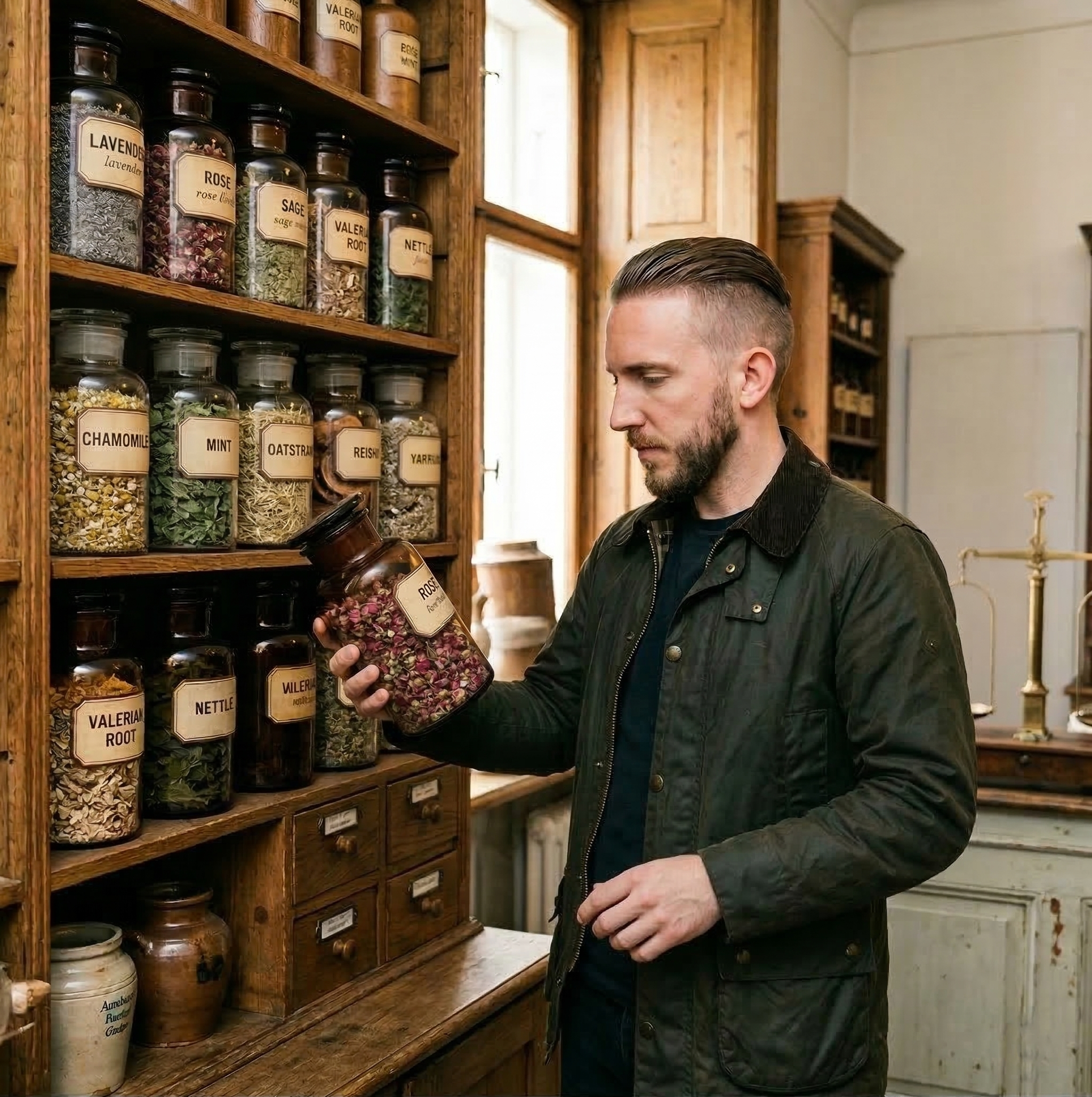
Hi, I'm Roland.
I created Herbal Foundations because I kept seeing people learn more and more uses for herbs without becoming more certain about how to work with them.
They knew fennel supported digestion.
But not always why the lid mattered.
They knew how to make tea.
But not always what kind.
They knew several useful plants.
But not how preparation could change the result.
I have spent the past twelve years studying herbs, preparations and the traditional frameworks used to understand them.
The purpose of this course is not to make herbalism look simpler than it is.
It is to make the distinctions usable.
Everything included
- Ten written online lessons
- Six energetic qualities
- Twelve taste categories
- Six tissue states
- Twenty-three herbal actions
- Nineteen preparation methods
- A four-part formulation framework
- Five practical starter formulas
- Online access at your own pace
- Lifetime access
- 30-day money-back guarantee
Herbal Foundations
Ten written lessons · Online access · Study at your own pace
Deal price — offer ends August 30th
⏳ Deal ends August 30th — price returns to £39.97
Green Guild Guarantee
The risk should be ours, not yours. Take the course. Read the lessons. See whether it changes how you think about herbs.
If, within 30 days, you decide it was not useful to you, email us and we'll refund your payment.
No awkward explanation. No attempt to talk you out of it.
A course should earn its place in your thinking.
Everything you might be wondering.
Is it suitable for beginners?+
Yes. No previous herbal training is assumed. The course begins with the foundational concepts and builds each lesson upon the last.
How is the course delivered?+
Through ten written online lessons that you can study at your own pace.
Will I need specialist equipment?+
No. Most of the methods use ordinary kitchen equipment.
Do I need to buy many herbs?+
No. You can learn the complete framework without building a full home apothecary. Practical preparations can be explored gradually.
Is it a professional qualification?+
No. Herbal Foundations is an introductory educational course. It does not provide professional certification.
Is it mainly a remedy-making course?+
Preparation is an important part, but the course also covers energetics, tissue states, herbal actions and formula design.
Is it mainly a collection of recipes?+
No. Five practical formulas are included, but the more valuable part is understanding why each plant and preparation was chosen.
Does it replace medical advice?+
No. The course is educational and does not diagnose conditions or replace individual advice from a qualified healthcare professional.
The herb matters.
The amount matters.
The water matters.
The heat matters.
The time matters.
And occasionally, the cheapest object in the kitchen matters most of all.
The lid.
30-day money-back guarantee. No awkward explanation. No attempt to talk you out of it. Educational use only. Herbal information is not a substitute for professional medical advice, diagnosis or treatment.